Archive

Tag Archives: XMPie

XMPie Jacob Key Visual.001

Interview: Andreas Weber | Click to access english version

Es ist stets eine große Ehre und Freude, sich fachlich auszutauschen mit Dr. Jacob Aizikowitz, President von XMPie, A Xerox Company. Jacob ist ein echter Pionier in Sachen One-to-One-Kommunikation auf Basis von Innovations-Technologien, die Cross Media-, VDP- und Web-to-Print-Anwendungen möglich machen. Seine Expertise ist einzigartig, weil er sein profundes Technik-Wissen mit der Fähigkeit verknüpft, Marktbedürfnisse und Kundenwünsche voraus zu empfinden. Kein Wunder also, dass XMPie rund um den Globus zu den führenden Multichannel-Lösungsanbietern gehört. Nichtsdestotrotz: Es gibt eine Menge Gesprächsstoff. — Hinweis:  Anfang 2016 wurde die XMPie Website aktualisiert. Das neue Motto: „MANY CHANNELS. ONE CONVERSATION“. Viele spannende Fachinformationen zum Thema Multichannel sind nun verfügbar.


Auf einen Blick:

  1. Entdecken: Multichannel verleiht dem smarten Zusammenspiel von Print und Online eine neue Dimension.
  2. Teilhaben: Cross Media 2.0 via XMPie öffnet für jedermann die Türen, um sich auf digitalem Weg per Multichannel einbringen und teilhaben zu können; v. a. durch XMPie Technologie für die Individualisierung der Print-Kommunikation.
  3. Erfolgsentscheidend: Man muss sowohl das Geschäftliche verstehen als auch die Technologien.
  4. Die größte Herausforderung: Die Automatisierung der Kommunikation!
  5. Das Ziel: ‚One Conversation‘ — sprich eine durchgängige Kommunikation, praktischerweise ohne Einschränkungen bei der Nutzung digitaler Medien im Kommunikationsmix.
  6. Ausblick: Leidenschaft für digitale Innovationen, um klassische Anwendungen zu transformieren. Das beste Beispiel: Verpackungen. Durch Multichannel können Verpackungen den Startpunkt bilden für eine anhaltende Konversation zwischen Marke und Konsumenten.
  7. drupa 2016: Ein großartiger Ort und Anlass, die Wirkungskraft von Multichannel zu erleben. 


„Es geht im Kern darum zu ermöglichen, dass auf kreative Art und Weise individuelle, relevante und interaktive Kommunikation stattfinden kann, die zur richtigen Zeit Berührungspunkte im Mix von digitalen und gedruckten Medien bietet.“


Bildschirmfoto 2016-02-05 um 16.47.25

Teil 1

Fokus auf Multichannel Innovationen

Zuallererst: Was ist Ihre Definition von ‚Multichannel‘?

Jacob Aizikowitz: Es bezeichnet die Interaktion mit dem Publikum — Kunden, Partner, Interessenten — getragen von individueller, zeitlich abgestimmter Relevanz über Berührungspunkte, die das volle Medienspektrum von Print bis Digital abdecken — Man könnte sagen: ‚One Conversation‘ (eine anhaltende Konversation). — Menschliche Befindlichkeiten zu adressieren ist wesentlich, weil eine rein technische ausgerichtete Multichannel-Lösung beim Publikum nicht als interaktiver, persönlicher Dialog aufgefasst wird. Dieses Momentum des ‚One Conversation‘ zu erreichen, ist höchst anspruchsvoll (speziell, wenn Print ein Teil davon ist). Die Aufgabe von Technology ist es, den Koordinationsaufwand zu minimieren, um endlose und unpraktische Abstimmungsprozesse zu vermeiden (z. B. bezogen auf das Zusammenspiel von Marke, Agentur, Mediendienstleister usw.).

Werfen wir einen Blick zurück nach vorne: Vor über 15 Jahren sind Sie als Pionier gestartet, um das ‚One-to-One‘-Prinzip zur Innovation der Printkommunikation als Schlüssel für die Optimierung der Marketing Service-Leistungen zu etablieren. Nunmehr dreht sich alles um Multichannel in einer digitalen Welt. Wie passt das zusammen?

Jacob Aizikowitz: Gute Frage. Zunächst muss man feststellen, dass auch in einer ‚Digitalen Welt’ das Medium Print immer noch einen hohen Stellenwert hat. Für uns alle. Es wäre großartig, wenn dies auch öffentlichkeitswirksam von Markenunternehmen betont würde. Zum anderen: Als wir XMPie gründeten, hatten wir beobachtet, dass Marketing-Profis die Individualisierung mit dem Internet gleichgesetzt haben. Dabei wussten wir damals schon, das Individualisierung und Personalisierung auch im Print möglich sind. Das hat unsere Vision beflügelt, eine Brücke zu bauen zwischen Print als Analog-Medium und der digitale Welt des internets und der Online-Kommunikation. Dadurch wurde es im Marketing möglich, die Individualisierung der Kommunikation als Teil der Strategie zu implementieren und nicht nur als eine Option für Medienauswahl. Diese unsere Vision hat die Evolution von Multichannel ermöglicht.

Cross-media communication

Was hat sich seitdem in Ihrem denken und Handeln geändert?

Jacob Aizikowitz: Über die Jahre hinweg entwickelten wir uns stetig weiter, ergänzten Web2Print, Analyse-Tools, Kampagnen-Planung und automatisiertes Kampagnenmanagement (Circle). Wir stellten fest, dass unsere „Business“-Applikationen für Marketing-Profis relevant wurden und gleichzeitig Dienstleistern halfen, ihr Leistungsspektrum zu erweitern. Ganz entscheidend war, dass wir zu Ende des Jahres 2015 den Ansatz für unsere Cross Media-Lösungen veränderten, indem wir Open XM und Cross Media 2.0 einführten (alles auf Basis des neuen 8.0 Softwareversion für PersonalEffect).

Welcher Nutzen ergibt sich aus dem „Neustart“?

Jacob Aizikowitz: Mit Cross Media 2.0 öffneten wir unsere Lösungen, um Kunden zu erlauben, jede Art von Web Design- und -Entwicklungs-Tools  zu nutzen; ohne jegliche Einschränkung. Dadurch haben wir eine offene Plattform geschaffen, die es ermöglicht, die modernsten Digitaltechnologien flexibel zu nutzen ohne auf unsere innovativen XMPie Individualisierungsmöglichkeiten für Print und digitale Medien zu verzichten. Wir erreichen dadurch Synergien, Konstistenz und Effektivität. Das Herzstück von Cross Media 2.0 ist der ‚Open XM Technology Stack‘. Es erlaubt, von WebStrom, WordPress, Plain HTML bis über das Dreamweaver Plug-In alles iterativ zu nutzen, was für digitale Kommunikation wichtig ist. Natürlich auch Mobile Apps und Responsive Designs. Dadurch können digitale Designer / Programmierer ihre gewohnten Werkzeuge und Workflows nutzen, während neue, individualisierbare, automatisch konsistente, synchronisierte und synergetische Kommunikationsmöglichkeiten im Kommunikationsmix von Online und Print realisierbar sind…

Creative Tools

… das heisst Ihr Fokus liegt stets auf Innovation durch Technologie?

Jacob Aizikowitz: Ja und nein! Am Wichtigsten war, dass wir über die Jahre hinweg gelernt haben, was die Kunden unserer Kunden wollen. Das sind Geschäftsleute, die Möglichkeiten und Werkzeuge brauchen, Marketing- und Kommunikationskampagnen bestens zu managen. Im Zuge dessen haben wir Erweiterungen geschaffen, zum Beispiel durch wirkungsvollen Response via Web/PURLs [personalisierte, geschützte Websites] oder durch unsere Analyse-Tools via ‚Dash Boards’. Letztendlich geht es darum, für Multichannel sinnvolle Multitouch-Funktionalitäten zu schaffen!

Klingt danach als hätten Sie eine interessante Entdeckungsreise gemacht, oder?

Jacob Aizikowitz: In der Tat. Aber wir mussten nie unseren originären Plan ändern. Unser Ansatzpunkt war und ist immer richtig! Von Anbeginn an war unser Interesse für unsere Kunden Mehrwerte zu schaffen, um die richtige Balance zu finden zwischen Technologie und Kundennutzen. Es ist für uns stetes wichtig, das Geschäft unserer Kunden genau so kompetent zu verstehen wie die Technologien.

Date Print VDP

Auf den Punkt gebracht: Was ist das ‚Geheimnis’ all dieser Entwicklungen bei XMPie?

Jacob Aizikowitz: Das sind im Kern drei Aspekte: 1. Zu Verstehen, was im Markt vor sich geht und welche (neuen) Entwicklungen kommen werden. 2. Zu verstehen, Technologien in einer innovativen und eleganten Weise zugänglich zu machen, um neue Trends aufzugreifen und neu entstehende  Bedürfnisse anzusprechen. Und 3. einen umfassenden, holistischen Blick auf Lösungen beizubehalten, der unser Ursprungsmotto ‚One-to-One in One‘ weiterführt.

Meinem Verständnis nach gelingt das bei XMPie durch ein perfektes Teamwerk. Oder? — Was sind dafür die wichtigsten Kriterien?

Jacob Aizikowitz: Das stimmt. Gutes Team-Arbeiten ist die Grundvoraussetzung. Die wichtigsten Kriterien sind zunächst smarte Mitarbeiter, die neue Dimensionen und Präferenzen für Technologien einbringen. Dann müssen wir immer auf Augenhöhe mit unseren Kunden sein. Und letztlich pflegen wir eine offene Kultur, um in kreativer Art und Weise Meinungen offen auszutauschen.

Die Digitalisierung verändert alles — jede Art von Geschäft inklusive den Marketing- und Kommunikationsprozesse. Das Internet-of-Things (IoT) und Industrie 4.0 treiben rasch die Automatisierung auf allen möglichen Ebenen voran. Sehen Sie das als Chance oder als Bedrohung?

Jacob Aizikowitz: Komplexe Frage, aber aus meiner Sicht relativ einfach zu beantworten. IoT bedeutet, dass alles vernetzt ist. Wir haben es also faktisch mit mehr Daten zu tun, die zu handhaben sind. Das funktioniert weiterhin bestens, weil wir gewohnt sind, mit großen Datenmengen umzugehen. Industrie 4.0 wird getrieben durch die Automatisierung. — Meiner Ansicht nach ist das, was wir mit Personalisierung der Kommunikation und der Interaktion mit allen Beteiligten über alle Medienkanäle mit dem richtigen Timing hinweg ermöglichen, das widerspiegelt, was IoT und Industrie 4.0 bedingen. Es bieten sich beste Synergie-Effekte.

Dennoch, was sehen Sie als die größte Herausforderung?

Jacob Aizikowitz: Die größte Herausforderung besteht in der Automatisierung der Konversation! Hier haben wir bereits vor einiger Zeit schon einen Quantensprung vollzogen, indem wir als spezielle Lösung ‚Circle‘ anbieten. Dadurch ermöglichen wir Durchgängigkeit vom Story-Boarding bis zur Automatisierung von Kampagnen.

Campaign Management

Hinweis: Circle ist eine SaaS-Lösung (Software-as-a-Service) um Multichannel- und Multitouch-Kampagnen zu steuern. Inhalte-Akzeptanz, Kampagnenverlauf, Nutzerreaktionen etc. können per Tracking kontrolliert und in Echtzeit optimiert werden. Siehe: http://www.xmpie.com/products/campaign-management/circle/


Circle stellt damit einen weiteren großen Schritt dar, der ermöglicht, neue Geschäftsmöglichkeiten zu entwickeln?

Jacob Aizikowitz: Ganz sicher! In jedem Fall wird damit XMPie zum Ermöglicher von Industrie 4.0-kompatiblen Lösungen. Das Maß aller Dinge ist das Automatisieren von Dialogen mit jedem Einzelnen, unter Beibehaltung eines dauerhaften Kontakts, einer stets hohen Relevanz und maximaler Effektivität. Das ist extrem herausfordernd, wenn viele ‚Touchpoints‘ (Berührungspunkte) zu nutzen sind im Dialog von Print und digitalen Medien. Viele bemühen sich darum bei der „Marketing Automation’   — Stichworte sind DRIP Campaigns, Nurturing usw. —  aber unser XMPie-Angebot ist da einzigartig, weil wir die Automatisierung des individualisierten Dialogs mit der umfassenden Medien-Personalisierung bündeln. Wie gesagt unter Einbeziehung von Printmedien (sogar wenn „nur“ PDF-Dateien „ungedruckt“ genutzt werden!) und Interaktionsmöglichkeiten. Wir packen alles unter ein Dach — One-to-one in one.

Heißt das, dass Kunden, die ihre Lösungen umfänglich zu nutzen wissen, quasi zu einen ‚Hub’ [Knotenpunkt] für neue Dienstleistungen werden?

Jacob Aizikowitz: Unser Ziel ist es stets, unsere Kunden mit neuen technischen Möglichkeiten zu unterstützen, die in der Lage sind, relevant und attraktiv für deren Kunden zu bleiben. Daraus schöpfen wir unsere Innovationskraft und unsere Visionen, die dafür sorgen, dass Kunden mit unserer Hilfe ihre eigenen neuen Ideen umsetzen können.

Begründet dies die Aussage, die dir Analysten von Gartner Group in ihrem Report Ende 2015 getroffen haben: „XMPie’s rating as a Challenger in this Magic Quadrant reflects its strong ability to execute on marketing communications.“

Jacob Aizikowitz: Wir sind froh und stolz, ein Herausforderer zu sein. Gartner nennt eine Reihe renommierter Firmen, die die technische Verbindung  mit anderen Systemen über Schnittstellen ermöglichen. Deren Fokus liegt auf dem sog. „Customer Communication Management“ [CCM]. CCM war entwickelt worden im Zuge der Evolution von ‚Transpromo‘-Lösungen, das sich aus dem transaktionsbezogenen Dokumenten-Management heraus ergab. Mit XMPie sind wir aber einen Schritt voraus: Unsere Technologie ist offen zugänglich, da sie dem neuen Paradigma von Multichannel und Multitouch folgt!

drupa 2016 highlights ENG

Teil 2

drupa 2016 im Fokus: Zeit für Veränderungen!

Die drupa 2016 verspricht ein echter Meilenstein zu werden. Multichannel ist eines der drupa Themen-Highlights. Das drupa-Motto lautet: Touch the Future. Was ist in diesem Kontext ihr Leitlinie? Ist die Druckindustrie immer noch der wichtigste Markt für XMPie?

Jacob Aizikowitz: Die drupa liefert wie bisher eine guten Kontext für XMPie und unsere Kunden. Es zeigt sich, dass der Grafische Markt und die Druckdienstleister eine solide Kundenbasis darstellen. Sich um Multichannel zu kümmern, ist nunmehr eine kritische, wichtige Aufgabe für Druckdienstleister. Die Unternehmens- und Markenwelt wendet sich in Lichtgeschwindigkeit der Individualisierung, dem Kundendialog, dem ‚Lead Nurturing‘, der Automatisierung und anderem mehr zu. Dabei weiß oder berücksichtigt niemand mehr so recht, welche Rolle Print in Multichannel-Szenarien spielt. Druckdienstleister müssen also ihre Geschäftsmöglichkeiten Richtung Multichannel und Automatisierung neu ausrichten, um Kundenanforderungen künftig erfüllen zu können. Der durch die Digitalisierung geschaffene Umschwung zur Individualisierung und Automatisierung in Marketing und Kommunikation ist nicht umkehrbar. Unsere Technologie macht diesen notwendigen Transformations-Prozess bei Druckbetrieben möglich und ist für uns Ansporn, relevante Innovationen weiter voranzutreiben.

Web2print

Aus Ihrer Sicht bietet also die drupa 2016 noch die beste Gelegenheit, etablierte Druckerei-Geschäftsmodelle zu transformieren?

Jacob Aizikowitz: Ganz bestimmt. Gerade im Zusammenspiel mit Digitaldruck ergeben sich vielfältige Erfolgsaussichten, die sogar über das boomende Online-Printing hinausführen. Um veränderte Kundenbedürfnisse zu erfüllen, sind neue, andere Konzepte unter Einbindung von Innovations-Technologien unabdingbar. Unsere Cross Media 2.0-Lösung ermöglicht es Druckereien und ihren Kunden, Multichannel und Print im Kommunikationsmix zu praktizieren; mit der vollkommenen Freiheit und Flexibilität, ihre bestehenden Produktionsmittel und -abläufe beizubehalten und mit den neuen digitalen Werkzeugen zu kombinieren. Das öffnet die Türen für zeitgemäße digitale Neuangebote, für die Kollaboration, Durchgängigkeit und Synergien zwischen Online- und Print-Touch-Points für den perfekten Dialog.

Übrigens, dieser Neustart mit Cross Media, im Team mit Circle, erhöht die Relevanz von XMPie für Unternehmen und Marken indem es die Zusammenarbeit mit Medienproduktion-Dienstleistern verbessert. Das Marktspektrum erweitert sich, denn alle werbungtreibenden Unternehmen profitieren von Multichannel-Lösungen. Durch unsere drupa 2016-Präsenz steigern wir die Vernetzung und die Möglichkeit, Kunden und deren Kunden kompetent zu begleiten.

Holistic View

Sie zählen bereits rund um den Globus eine ganze Reihe führender Marketing-Dienstleister zu Ihren Kunden. Was macht diese einzigartig?

Jacob Aizikowitz: Die meisten unsere erfolgreichen Kunden bieten herausragende, fortschrittliche  Marketing-Services an, die per Multichannel einen nachhaltigen Kommunikationserfolg bewirken. Das funktionierte, weil unsere Kunden sehr frühzeitig klare Vorstellungen hatten, was man verändern musste, um neue Wege und Möglichkeiten zu nutzen. Das Wichtigste dabei: Alle unserer sehr erfolgreichen Kunden haben keine Scheu vor digitalen und/oder disruptiven Technologien. Sie sind offen für jede Art der Innovation.

Denkt man Multichannel zu Ende, steht die sogenannte „Customer Centricity“, die völlige Kundenorientierung im Fokus. Stimmen Sie dem zu? Oder nicht?

Jacob Aizikowitz: Natürlich stimme ich dem zu! Das Digitalzeitalter ist das Zeitalter des Kunden. Warum? Das Publikum, das man bedient, ist immer vernetzt und Online. Man muss Teil der sich daraus ergebenden immer währenden Konversation und Vernetzungen werden. Die Marketing-Methoden der alten Schule passen für diese neuen Szenarien nicht mehr. Per Massenmedien große  Reichweiten und Aufmerksamkeit zu erzielen bringt nicht mehr die Erfolge wie ehedem. Markenunternehmen machen es vor, wie man sich mit Kunden und Interessenten in Beziehung setzt und durchgängige, nachhaltige Dialoge führt.

Overview

Das ist klar ersichtlich durch hohe Investments, die Marken in Social Media-Kampagnen tätigen, stets auf der Suche nach „Likes“, die nachbearbeitet werden. Neue Wege sind auch hier möglich und äußerst willkommen, die von den digitalen Marketing-Experten aber nicht von alleine erkannt werden. Das beste Beispiel: Die Verpackung. Für Käufer liegt hier die höchste Attraktivität. Und für Marketing-Profis bietet sich die Möglichkeit per Multichannel per Mobil-/Smartphone-Technik mit den Kunden in den Dialog zu treten, Gerade auch nach dem Kauf! Sprich: Multichannel im Kontext mit der Verpackung ist ein heißes, hochattraktives neues Betätigungsfeld, das wir mit unserer Technik unterstützen.

Dafür gibt es großartige, geradezu begehrenswerte Anwendungsmöglichkeiten, weil Multichannel-Lösungen dann ihre Vorzüge voll ausspielen können. Unsere fortschrittlichen Kunden sind also prädestiniert, im Verpackungsbereich neue Lösungen zu realisieren.

Ressources


Besten Dank für diese werthaltigen und anregenden Diskussionspunkte. Wie lautet Ihr Resümee?

Jacob Aizikowitz: Auf den Punkt gebracht, es geht um Strategie und Technologie. Wir haben unsere Strategie über die Jahre hinweg konsistent weiterentwickelt. Konkret über die Erweiterungen mit Web2Print, Analytics, Campaign Management (via Circle) und Cross Media 2.0. Die XMPie-Technologie hat sich als führend in der digitalen Welt etabliert. Unsere Kunden profitieren davon, weil sie die Welt ihrer Kunden, die sich primär um Webdesign, Apps und Online-Medien dreht, einbinden und erweitern lässt. Die entsprechenden Mitarbeiter/Teams und deren Workflows können wir nahtlos integrieren. Und wir erlauben gleichzeitig kollaboratives, vernetztes Arbeiten, die das volle Spektrum der digitalen Werkzeuge und Methoden ausschöpft. Die einzigartigen XMPie Personalisierungs-Möglichkeiten bleiben dabei stets als Option erhalten, um One-to-One-Inhalte quasi auf Knopf-Druck für Print- und Online-Kommunikation verfügbar zu machen. — Es geht also im Kern darum zu ermöglichen, dass auf kreative Art und Weise individuelle, relevante und interaktive Kommunikation stattfinden kann, die zur richtigen Zeit Berührungspunkte im Mix von digitalen und gedruckten Medien bietet. 

—Vielen Dank für das ausführliche und tief gehende Gespräch! Wir sehen uns spätestens auf der drupa 2016!


Services


Hinweis: XMPie bietet einen lesenswerten Fachartikel zu Erfolgsfaktoren per Multichannel:

”Ten Steps to Hitting the Sweet Spot with Your Multichannel Campaign“


Jacob Aizikowitz

Zur Person:

Dr. Jacob Aizikowitz erhielt die Doktorwürde für Computer Science an der Cornell University und ist Präsident von XMPie, ein Unternehmen, das er im Jahr 2000 mit Israel Roth und Reuven Sherwin gründete. Im Jahr 2006 übernahm Xerox Corporation (XRX) die erfolgreich gewachsene Firma, die seitdem unter der Marke „XMPie, A Xerox Company“ firmiert. Dr. Jacob Aizikowitz arbeitete seit den 1990 Jahren für EFI (EFII) an neuen Lösungen wie Fiery, EfiColor und Cachet, später dann bei Scitex, wo er Scitex VPS mitentwickelte, das die Inspirationsquelle für XMPie darstellte.


XUG Christian Kopocz Key Visual.001


Multichannel demands quite a bit new from our members as marketing service providers: Focus is on business transformation and expanded expert knowledge on the impact of digitalisation.“ —Christian Kopocz


Christian Kopocz struck out in a new direction from being a businessman with marketing experience. Some 10 years ago, he became a multichannel communications entrepreneur and has been involved in his own small companies ever since. At home and abroad, he campaigns for the dynamic development of multichannel services. In his many years as a member of the Board of Directors and since January 2016 as the Executive Director of the XMPie Users Group (XUG), he took a firm stance: Market and customer orientation are the measure of all things, coupled with consideration of cultural peculiarities. In summer 2015, he initiated the 1st European XUG Conference on the topic of multichannel innovation in Berlin, doing so in a very short time using multichannel communication. More than 130 participants came from 17 countries! The response was overwhelming. Bingo!

Interview: Andreas Weber | Click to access the german text version

You have an excellent overview through XUG of highly topical issues surrounding multichannel communications. What is of greatest concern at the moment?

Christian Kopocz: We have been successfully supporting our members for years through the XUG in the use and marketing of campaigns and solutions created with XMPie. Technical implementation, tips, tricks and closeness to the XMPie developer team are always in great demand. Since last year particularly, we have noted increased interest in case studies, practice-oriented approaches and marketing support.

Bildschirmfoto 2016-02-06 um 17.13.39

What new challenges do you derive from that?

Christian Kopocz: Multichannel demands quite a bit new from our members as marketing service providers: Focus is on business transformation and expanded expert knowledge on the impact of digitalisation. Another thing is that access to the customer is no longer what it used to be: In place of or in addition to the purchasing managers, marketing managers as well as decision-makers for CRM, social media, web, e-mail marketing, etc. need to be in on the talks to be able to act powerfully. In addition to time and patience, all that requires the corresponding knowledge, which we will be focusing on with XUG this year in particular. Especially with regard to drupa 2016, the world’s leading trade fair for graphic communications, where multichannel is positioned as one of the six themes highlighted.

How do you personally define the term multichannel?

Christian Kopocz: The customer decides how, when and where he would like to be addressed. For me, multichannel is the communication of relevant content to the preferred channels of the customer!

XUG Neu 01

Where do we stand today as to how the whole topic of multichannel communications will change with regard to the IoT/Industry 4.0?

Christian Kopocz: Fridges that order lactose-free milk from Amazon… A horror for some, a blessing for others. The concept of the IoT can indeed make our lives easier and more comfortable. As long as everyone knows how to deal with it, that is. If in the end, it is not even noticed how and where IoT simplifies our lives, then it has fit in. This requires intuition in the development phase, and particularly when it comes to market positioning. To know what the customer needs and from that develop an application, that is what the requirement should be — not “do or die!” These changes in customer demand caused by digitalisation and automation are clearly on the table!

What are the consequences for service providers?

Christian Kopocz: Both today and tomorrow, service providers are and will be constantly required to think ahead and become pro-active. I see that as a real mammoth task since up to now, even with multichannel innovations, everything was undertaken in a very linear manner: Investment was made in a new business model that was brought to market and then practically, like a loan repayment, was worked off monthly. Less thought was given to continuous, 100% customer-oriented, sustained development and none at all to it as an investment in the future. The result was then often in the form of bad figures. It doesn’t have to be that way at all: Stay curious and don’t let the contact with your customer flag – that will always take you to your goal!

Thanks for the inspiring talk.  Happy to keep in touch and to see you at drupa 2016 in Düsseldorf.

XUG Neu 02


Read as well great insights shared by XUG members:

ValueDialog —  Renato Vögeli, Vögeli AG, Switzerland:
Multichannel turns communication into a personal experience!

ValueDialog — Patrick Donner, TraffIC Print Online Solutions GmbH, Germany:
New take on multichannel communications:  “There is no either/or!” 


Bildschirmfoto 2016-02-08 um 08.07.40
Graphic Repro On-line News Review to Friday 05 February 2016

Welcome to another week of news highlights which has seen 45 articles go online since last Monday, including new additions to our FESPA and drupa Newsrooms, and Laurel Brunner’s Verdigris Blog from last Monday. 

Major announcements this week include Xerox poised to separate into two public companies in a major structural review in Monday’s headlines, along with its latest figures for Q4 and 2015. These were carried over from Saturday a week ago’s late additions, together with Andreas Weber’s take on the announcement. Tuesday’s headlines were led by UPM-Kymmene’s extremely positive Interim Report for Q4 and 2015.

Wednesday saw this week’s most impressive order for Screen highlighted, as Screen accelerates its expansion into the Chinese digital press market with an order for no less than eight Truepress Jet520HD high-speed inkjet presses; while Heidelberg UK announces the appointment of a new Finance Director, succeeding Roderich Kirschenlohr who has returned to Germany, but remains within the Heidelberg Group.

On Thursday Ricoh South Africa took the lead, as it announces that it has extended its South African marketing programme by including digital channels that feed an analytics system. The system includes digital content marketing that includes blogs, social media channels including LinkedIn, Facebook, and Twitter, automated e-mail newsletters, as well as an engagement tracking and escalation system linked to its customer relationship management (CRM) tool, with ties to the sales and marketing teams. Esti Kilian, newly appointed GM of marketing operations, explains more in the article below. Thursday also saw a new key appointment within UPM, as Winfried Schaur is appointed executive vice president responsible for UPM Paper in Europe and North America.

Friday saw drupa 2016 take the lead once more, as it announces its primary partner for development and delivery of innovative content for the drupa cube 2016, as international innovation firm The Medici Group, and its founder and CEO Frans Johansson, who are set to spur out-of-the-box thinking throughout the duration of the show.

Johansson caused somewhat of a furore with his 2004 book ‘The Medici Effect’, and since then has been ‘the’ go-to expert for the concepts of thinking and acting outside fixed limits and the “out-of-the-box principle”. Worldwide brands such as American Express, IBM, Nike, Volvo and The Walt Disney Company have already drawn on the strategic expertise of The Medici Group. Now drupa 2016 will do the same in drupa cube.

‘With The Medici Group, we have precisely the right partner at our side for drupa cube. A consistent approach to change management is absolutely necessary to master the challenges in the print, packaging and media sectors,’ said Sabine Geldermann, director of drupa, ‘and we are extremely pleased that we will be presenting a high quality and clearly structured programme that will appeal both to the print and media industry, as well as to web agencies, brands and print buyers, with The Medici Group and other impressive thought leaders at its core.’

More outstanding recent sales and installations this week include Imprimerie de l’Avesnois in France on Friday, as it commissions a Kodak Prosper 6000C high-speed inkjet line with FoldLine finishing from Manroland Web Systems. You’ll also find more this week from KBA in Japan and North America; CHILI Publish in North America; IFS with Horizon; and Edale in the UK, Heidelberg in the USA; and lastly from Fujifilm in the UK with more inkjet.

New kit this week is led by Canon on Tuesday, as it announced the global launch of the new Océ Arizona 1200 Series of UV flatbed printers. Also on Tuesday, System Brunner’s Instrument Flight colour control software with KBA Inline QualiTronic Color Control. On Thursday KBA also returned with its new TouchTronic user interface.

A tailender for you this week from FINAT on Thursday, as it lists its key labelling community activity events for 2016, comprising ts Labelling Competition, Technical Seminars, Webinars Series’, Young Managers Congress, European Label Forum, and much more.

There’s a lot more for you to explore below if you scroll down carefully.

I’ll be back next week around the same time.

With my best regards,

Mike Hilton 

Bildschirmfoto 2016-02-08 um 08.03.10
Our e-News comprises:  Headline News – Online Feature Articles – the Verdigris initiative from Digital Dots. Our Drupa and FESPA Newsrooms can be accessed from the Index on our Home Page, as well as News in Review, which provides a weekly overview and listing of all news added to the site. 

Headline News
Over 27,000 news items have now gone online since we launched our Website in September 2001. News for the past 24 months can still be accessed via the Home Page and its continuation news pages

Mon 01 Feb…   Xerox to separate into two market-leading Public Companies
Following completion of a comprehensive structural review, Xerox separation expected to be complete by the end of 2016…

Xerox reports Fourth-Quarter 2015 earnings
Strong earnings and cash flow as a result of continuous focus on productivity and business model optimisation…

Xerox: no risk – no fun!

During the last three years Xerox was not able to speed up its premium graphic communications business. My take: by Andreas Weber…

Hybrid Software teams up with Think Laboratory
Hybrid Software teams with key global player in gravure, Think Laboratory, in worldwide OEM deal…

Screen expands Schneidler Grafiska distributorship
Screen expands Schneidler Grafiska distribution portfolio with Truepress Jet digital label press for Scandinavia…

Sign & Digital UK 2016 third year of growth
Show size has increased by 33 per cent since 2013 with a further 10 per cent growth expected for 2016…

Verotec enhances its digital printing capability
New high performance Mimaki UJF-6042 UV curing LED digital inkjet printer is extremely versatile…

Tue 02 Feb…   UPM-Kymmene Corporation Interim Report for Q4/2015
Interim report Q4/2015: UPM finished 2015 with a strong quarter, while growth projects deliver earnings…

Canon launches Océ Arizona 1200 Series of UV flatbeds
Canon Europe announces global launch of the Océ Arizona 1200 Series of UV flatbed printers for unrivalled quality and versatility…

Xerox at drupa 2016 in Hall 8b from 31 May – 10 June

Helping print service providers transform and grow…

Two Rapida 106 presses with LED-UV at Tosho Printing

Japanese print firm enhances productivity with KBA LED-UV…

Fineline chooses CHILI publisher for Finelink 2.0
CHILI enables marketing service provider to keep pace with client’s demands for its print procurement platform…

KBA customers embrace System Brunner’s Instrument Flight
System Brunner’s Instrument Flight colour control software with KBA Inline QualiTronic Color Control…

Wed 03 Feb…   
CNPIEC Digital Printing orders eight Truepress Jets
Screen accelerates expansion into Chinese digital press market with order for eight Truepress Jet520HD presses…

Heidelberg UK appoints new finance director
Simon Gamble has joined Heidelberg UK as finance director and is impressed by company’s positive approach…

Fujifilm Europe partners with Aleyant Pressero
New streamlined and robust Web-to-Print order entry integration to be deployed across Europe, following US success…

SPGPrints at Label & Print 2016 at the NEC Birmingham
SPGPrints to highlight DSI digital UV-inkjet press and variLEX CTP processor at the NEC 24 – 25 February 2016…

Lion FPG brings binding in-house with Horizon

New contract win prompts four clamp binder investment…

Edale compact FLI flexo press for Kelgray
Kelgray has recently installed its fifth Edale press, a 250mm wide Edale FL1, at its West Sussex, UK plant…

Thu 04 Feb…   
Ricoh SA extends lead-generation marketing programme
Ricoh extends the sophistication of its South African marketing by including digital channels that feed an analytics system…

Attractive offers for drupa travel and accommodation
Use Print@home and free transport to drupa by bus and train. The drupa online ticket shop opened on 2 January, 2016.

Record bookings for InPrint 2016 show in Milan
InPrint 2016 in November now 80% sold as organisers consider extending floor space for this year’s event…

Winfried Schaur appointed to UPM Paper ENA
Winfried Schaur appointed executive vice president responsible for UPM Paper in Europe and North America…

FINAT reveals events agenda for 2016

Key labelling community activity signposts hot topics for 2016…

Print more intuitively with KBA TouchTronic
A maximum of two clicks to every operating function…

Fri 05 Feb…  drupa cube: The Medici Group to spur out-of-the-box thinking
Best selling author Frans Johansson and other thought leaders to deliver keynotes in the cube during drupa 2016…

FESPA Awards gala dinner to showcase incredible talent

Book now for the glittering ceremony which will take place at Beurs van Berlage, Amsterdam on Wednesday 9 March 2016…

Newspapers à la carte with Kodak Prosper and Manroland Web Systems
Imprimerie de l’Avesnois commissions Kodak Prosper 6000C inkjet line with FoldLine finishing from Manroland Web Systems…

Komori and Highcon announce strategic partnership
Komori is to sell and supporting the Highcon Euclid digital cutting and creasing solutions in Japanese market…

Speedmaster CD 102-X with coating and UV for Classic Litho

Classic Litho and Design, Inc. to ramp up productivity with Speedmaster CD 102-X-6+L UV from Heidelberg USA…

AB Print Group latest to invest in Acuity LED 1600

Yorkshire printing company can now offer full in-house service after installing the Fuhifilm Acuity LED 1600…

Achieving fixed colour palette printing with Asahi
By reducing the number of inks to a very low number through smart extended colour gamut design, the entire supply chain benefits…

Lead articles from Friday in last week’s update…

Last Friday’s leads…   Add More KBA to your day [at drupa 2016]
A confident statement for print in a digitalised world is the press manufacturer’s slogan for drupa 2016…

EXCLUSIVE Report…   EFI Connect 2016: Welcome to the Future of Printing
EFI reveals its clear and focused picture of the future of printing, and how it plans to respond to market changes…

GraphicRepro.Net e-News  (ISSN 1814-2923) is sponsored and made possible by:

Heidelberger Druckmaschinen AG  (Heidelberg), The world’s largest printing press manufacturer for the industry worldwide. Heidelberg customers enjoy the most comprehensive and extensive sales and service network in the industry for JDF compliant workflow, computer-to-plate, sheetfed offset, Web-to-print, digital printing, digital inkjet for labels and packaging, packaging and finishing, all with complementary consumables. Heidelberg has offices in around 170 countries. Visit the Heidelberg Website for more information.

drupa 2016 (drupa), the international flagship fair of the printing and media industry, responds to the challenges of the changing market and provides pioneering solutions for the future. This is highlighted by the new marketing and communication strategy where drupa claims its position as ‘No.1 for Print & Crossmedia Solutions’ with the slogan ‘touch the future’. The issues of ‘package printing’, ‘multichannel’, ‘green printing’, ‘3D printing’ and ‘functional printing’ will become increasingly important to the overall communication strategy. To find out more, visit the drupa 2016 Website.

Online Feature articles 2014 – 2015
There were again well over 90 last year, including nine downloads, as well as 92 articles in 2013 which can still be accessed via the Index on the Home Page, with prior years’ via Search Archives (option 2) on the Website.

Downloads in 2015 Chapter 01
There are currently three downloads available for you in this Chapter , where you can download the PDF.

Technology-related 2016 Chapter 02
You will find 20 current feature articles in this Chapter, with the most recent from Heidelberg.

Previous…   TCL Packaging adopts Water Washable Asahi Plates
TCL Packaging teams with Creation Reprographics and Asahi Photoproducts to deliver premium performance and to challenge gravure…

Online Features 2016 Jan/Feb  Chapter 03

EXCLUSIVE Report…   EFI Connect 2016: Welcome to the Future of Printing
At EFI Connect 2016, EFI revealed its clear and focused picture of the future of printing, and how the company plans to respond to market changes…

Major order for Heidelberg from Atta.45 in Sweden
Swedish print shop invests Euro13 million: Biggest part is comprehensive product, service and consumables package….

Verdigris – Environmental Initiative

Laurel Brunner’s weekly Verdigris Blogs 2016

Doing It
The weekly Verdigris blog by Laurel Brunner – Mon 01 Feb

Previous…    Spotters Guide to Greenwashing
The weekly Verdigris blog by Laurel Brunner – Fri 22 Jan

Sounding Out Instruments for Growth

The weekly Verdigris blog by Laurel Brunner – Fri 15 Jan

Carbon Balanced Paper

The weekly Verdigris blog by Laurel Brunner – Fri 08 Jan

Drupa Newsroom
Our Drupa Newsroom with news from Messe Düsseldorf and for Drupa 2016 can be found in the Index, as well as via the special Newsroom button on the right of the Home Page near the top. It is divided into the following Chapters for your convenience and ease of use…

drupa 2016 Expert Article Series
Can be found in our Drupa Newsroom via the Index on the Home page.

LATEST…   Large Format and Wide Format inkjet printing
Touch the future. Drupa Expert Article No 7 by international independent consultant Sophie Matthews-Paul who has been involved at the start of wide-format developments following their evolution into the devices they are today…

Also new in 2016…   The digital transformation of industrial printing
Touch the future. Drupa expert Article No 6 by Ron Gilboa, a director of InfoTrends’ Production & Industrial Printing Advisory Service…

drupa 2016 News from Messe Düsseldorf

drupa cube: The Medici Group to spur out-of-the-box thinking

Best selling author Frans Johansson and other thought leaders to deliver keynotes in the cube during drupa 2016…

drupa cube: Die Medici Group ist Innovationspartner der drupa

Bestseller-Autor Frans Johannsson und zwei weitere Vordenker halten die Keynotes im cube während der drupa 2016…

Attractive offers for travel and accommodation
Use Print@home and free transport to drupa by bus and train. The online ticket shop opened on 2 January, 2016…

Passende Angebote für Anreise und Unterkunft

Print@home und kostenlos zur drupa mit Bus und Bahn. Online-Ticketshop geöffnet am 2. Januar 2016…

MUST READ…    2nd drupa Global Insights Report Executive Summary
Touch the future – Applications that can create growth. Printfuture (UK) and Wissler & Partner (Switzerland) were appointed by Messe Düsseldorf to conduct these two report series…

drupa 2016 News from Exhibitors
Latest additions can now be accessed in our Drupa Newsroom.

Lake Image Systems at drupa 2016 in Hall 11

Lake to showcase a full range of variable data integrity and print quality inspection for packaging, labels and commercial print…

Xerox at drupa 2016 in Hall 8b
Helping print service providers transform and grow…

Last time…   Add More KBA to your day
Confident statement for print in a digitalised world is the press manufacturer’s slogan for drupa 2016…

GMG Academy offers a colour management training drupa extra
GMG Academy offers drupa attendees comprehensive colour management training program at its headquarters in Tübingen, Germany, from 9 – 11 June…

FESPA Newsroom
The dedicated FESPA Newsroom can be found via the Index on our Home Page.

FESPA Digital 2016 in Amsterdam

J-Teck3’s portfolio of five collections at FESPA

J-Teck3 to showcase its market-leading digital inks for textile and graphics applications at FESPA Digital…

Sawgrass will showcase full portfolio at FESPA Digital
Sawgrass to present award-winning Virtuoso 630mm 8-Colour HD Product Decorating System at FESPA Digital in Amsterdam in March,,,

Kiian to showcase wide variety of textiles at FESPA
Kiian Digital to present diverse applications achievable with its full sublimation range at FESPA Digital…

Mimaki set to inspire Digital Print Heroes at FESPA Digital 2016
The future of digital printing for signs & display graphics and textiles is available today…

European debut for Onyx 12 at FESPA Digital
Onyx Graphics driving ONYX Thrive software at FESPA Digital…

Fujifilm reveals more for FESPA Digital in March
Fujifilm the perfect business partner at FESPA Digital 2016…

Last week…   Mimaki adds Light Black to its portfolio of sublimation inks
Spot colour ink options expanded from February 2016 to support greater apparel and textile production possibilities…

Ricoh to launch new eco-friendly AR latex inks at FESPA 2016
Ricoh to launch own aqueous resin (AR) latex ink for the Ricoh Pro L4100 series of wide-format printers at FESPA Digital…

European debut for four new Epson printers at FESPA Digital
At FESPA Digital, Epson will show its latest range of wide-format SureColor aqueous, solvent and dye-sublimation inkjet printers…

FESPA Federation News 2016

FESPA Awards gala dinner to showcase incredible talent
Book now for the glittering ceremony which will take place at Beurs van Berlage, Amsterdam on Wednesday 9 March 2016…

FESPA Textile partner lineup revealed
8 – 11 March: The biggest textile event with the most comprehensive showcase of digital textile print technologies in Europe this year…

Last week…   FESPA Africa Forum to visit Lagos and Nairobi
The first FESPA Africa Forum will be hosted in the growth economies of Lagos, Nigeria and Nairobi, Kenya in April 2016…

European Sign Expo 2016 announces packed programme
ESE feature content includes Seminars, Workshops and live demonstrations to take place daily in Hall 2, 8 – 11 March…

The Graphic Repro On-line Website is supported and sponsored by: 

Antalis South Africa, Canon SA, Dainippon Screen,  Drupa 2016,  EFI, Esko,  Epson Europe BV,  FESPA. Goss International Inc,  Heidelberger Druckmaschinen AG,  HP Graphic Solutions,  Kodak,  Koenig + Bauer AG,  Kemtek Imaging Systems,  Krause-Biagosch,  Leonhard KurzStiftung,   Manroland Web Systems GmbH, Muller Martini AG,  POLAR-Mohr, QuadTech Inc,  Quark Inc,  Ricoh Europe,  Sappi LimitedThunderbolt Solutions, and UPM-Kymmene.

If you would like to send news for consideration for the Graphic Repro On-line Website (ISSN 1814-2915) or to submit comments, please e-mail Mike Hilton at: graphicrepro.za@gmail.com.

Our Website urls are:
http://www.graphicrepro.co.za
http://www.graphicrepro.net

GraphicRepro.Net e-News (ISSN 1814-2923)  provides weekly updates from the Graphic Repro On-line Website and is  compiled and
published by Mike Hilton, graphicrepro.netPO Box 10 Peterburgskoe Shosse 13/1, 196605 Pushkin 5, St. Petersburg, Russia.
e-mail graphicrepro.za@gmail.com

XMPie ValueDialog Renato Vögeli.001


It’s worth a visit to the beautiful Emmental region of Switzerland. Here I met up with Renato Vögeli in his family-run business. Vögeli AG has firmly established itself as a solutions provider for “marketing production and printing”. Their expertise in multichannel solutions and print in the communications mix attracts interest beyond just Switzerland. Renato Vögeli focuses less on disruption than on a careful step-by-step process to take customers along on a journey, keeping in mind their sensitivities and their needs. I call that quite simply first-class “communications empathy”! — 

Interview: Andreas Weber | Click for the german text

Key messages: Fulfil customer wishes. Create trust!

  • In focus: Fulfil customer wishes, create individual experiences. 
  • The particular: The target group is taken along on a journey in a mix of online and offline that offers various points of contact.
  • The result: Multichannel communications ensures optimal customer connectivity, creates trust and brings the personal relationship with the customer to a higher level!


Bildschirmfoto 2016-02-07 um 11.36.07

There are many definitions, some conflicting, for the term multichannel communications. What is yours? 

Renato Vögeli: We understand multichannel communications to be the individual addressing of the target group across various channels in order to reach the individual wherever he or she may be. With that, we can take the target group along on a journey in a mix of online and offline that offers various points of contact.

What are the consequences of that?

Renato Vögeli: In a certain sense, we are always thinking of the target group and their sensitivities. To fulfil their wishes, we accompany interested parties through multichannel communication who engage in it on the basis of trust and their actual needs. This has to happen at the right time, in the right way and on the right track. Unlike in advertising, we do not want to create any needs, but rather specifically address latent ones.

What are the prerequisites for this form of “communications empathy”?

Renato Vögeli: There are three decisive factors. First, you need to know exactly where and how to reach your target group. Second, this is not about advertising products, but about creating added value, the enrichment, that is important to the customer. And third: you cannot and should not tempt people with offers that do not make them happy or that are not even necessary. Even if you could earn a lot of money from it. Mutual success is what matters and in our opinion multichannel communications is the appropriate way. The more so, as we can better control and measure the success.

Bildschirmfoto 2016-02-07 um 11.37.54

Based on your experience, what are the factors that inhibit the marketing of multichannel services/solutions?

Renato Vögeli: The crux is that whenever we offer new clients our innovative solutions, we always attract their interest. But new and complex things also cause anxiety or raise doubts. Many feel uncertain. Then comes the question: What are others doing?

… and why is that? 

Renato Vögeli: Initially, innovations are very abstract and fulfil their purpose only if they can be individually employed. Citing examples of others may be inspiring, but are rarely suitable for oneself. After all, there are many possibilities and channels that can be employed. Successful teamwork is therefore difficult at first to reconstruct, especially since you have to bring together many parties on the customer’s side. Here’s an easy example: Marketing relegates a task to IT who has too little background knowledge as to the purpose and objectives of the action. The art is in being able to bring together the right project team from the beginning based on a concrete common objective. It is easier for us to bring together the right decision-makers as a homogenous group so that everyone is pulling together in medium-sized companies than it is in large firms or corporate groups.

Can you give us some examples from your experience?

Renato Vögeli: The following was a tricky case. In a banking company, they wanted to know immediately if similar innovation projects were being conducted in other departments in the same building. That means that in large firms it is difficult to develop an overall strategy to generally answer the question that leads to success through multichannel communications: How can we jointly manage to address our customers individually across all channels?

Very open to multichannel communications are basically all sectors that, due to their customer structures and faster sales cycles, are heavily reliant on innovation, particularly, for example, in trade. Here we no longer talk in the beginning about how one can do something, but rather the benefits that come from new solutions. That changes the task of sales enormously. Focus is on optimisation, efficiency and a change in thinking. You cannot sell multichannel communications as a product off the rack. Targeted solutions are what count. 


What does that mean for the marketing of multichannel communication?

Renato Vögeli: Marketing multichannel communication means that you have to listen, analyse and advise to arrive at a specific solution. For us, that means initiating processes that pique curiosity and stir up enthusiasm. We have employed sales specialists who do not come from a traditional sales background for print or media products, but rather who deal with marketing issues. We spread knowledge about multichannel communication early on through seminars and presentations. Today, we approach customers in a targeted way with workshops that are geared specifically to the needs of that customer in order to work out possible solutions.

With regard to the digitalisation of all business processes that is inevitably fast-forwarding us into a new dimension via the Internet of Things and Industry 4.0: What remains? What needs to be rethought?

Renato Vögeli: Digitalisation is clearly charting the course, but at the same time is a natural part of multichannel communications for minimising effort. Up to now, we have focused on reproducing our customer’s marketing processes in B2B portals that we call marketing portals. In the end, they are web shops, developed also in conjunction with third-party providers, for standardising ordering processes and making them more flexible.

Bildschirmfoto 2016-02-07 um 11.35.30

Sample for a Web shop created by Vögeli AG


How will multichannel services change? 

Renato Vögeli: Individual projects will increasingly turn into perpetual, integrated communications campaigns that permanently promote customer connectivity. The web shops we create, for example, can be optimally combined with multichannel communications activities. Events, for instance, are predestined for this. Focus is on the when, where and how that we can individually augment with images, maps created through geo-mapping, etc., to enthuse the person invited in a multimedial and very personal way. From the sending of invitations, an interactive campaign is then established that offers great benefit through extended communications possibilities that can also be continued after the event…

… are you technologically equipped for that step?

Renato Vögeli: Thanks to our XMPie software, we are fully equipped technically for that. Our strengths lie, among other things, in that we can integrate customer addresses from ERP systems to be combined in the mix of print mailings with PURLs [personalised websites with protected customer data], e-mails, text messages, etc. for a package solution. Everything that happens in the dialogue with the customer can be immediately measured, documented and evaluated to be of use for subsequent activities. This occurs automatically and reduces effort significantly.

That means we decisively help our customers in that respect to intensify the contact with their customers over the long term so that emotions and expectations are sustained. In the end, it is all about the personal relationship, not just the administration of contacts in databases. In B2B particularly, that is the key!

Thank you for the great conversation. See you again soon, maybe in the beautiful Emmental valley. Or lastest at drupa 2016.

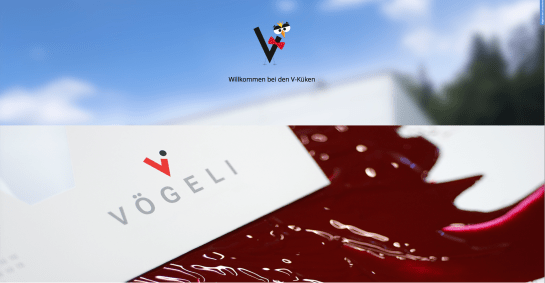
Vögeli 01_januar16-7e3f4b70

Contact:

Vögeli AG Marketingproduktion & Druck
Sägestrasse 21-23
CH-3550 Langnau
T. +41 (0)34 409 10 10
voegeli@voegeli.ch

XMPie ValueDialog Renato Vögeli.001


Ein Besuch im wunderschönen Schweizer Emmental lohnt sich. Hier trifft man Renato Vögeli in seinem Familienbetrieb. Die Vögeli AG hat sich als Lösungsanbieter für „Marketingproduktion & Druck“ bestens etabliert. Die fundierte Expertise für Multichannel-Lösungen und Print im Kommunikationsmix findet über die Schweiz hinaus Beachtung. Renato Vögeli setzt dabei weniger auf „Disruption“ als auf eine umsichtige Schritt-für-Schritt-Vorgehensweise, um Kunden in ihrer Befindlichkeit und gemäß ihren Bedürfnissen auf eine Reise mitzunehmen. Ich nenne das ganz einfach „Kommunikations-Empathie“ vom Feinsten!

Interview: Andreas Weber | Click to access english text version


Kernaussagen: Wünsche erfüllen. Vertrauen schaffen. 

  • Im Fokus: Kundenwünsche erfüllen, individuell erfahrbare Erlebnisse schaffen.
  • Das Besondere: Das Zielpublikum wird im Mix von Online und Offline auf eine Reise mitgenommen, die verschiedenste Berührungspunkte bietet.
  • Das Ergebnis: Multichannel sorgt für optimale Kundenbindung, schafft Vertrauen und hebt das persönliche Verhältnis zu Kunden auf eine höhere Ebene!


Bildschirmfoto 2016-02-07 um 11.36.07.png

Für den Fachbegriff Multichannel gibt es viele, teilweise widersprüchliche Definitionen. Wie lautet Ihre? 

Renato Vögeli: Wir verstehen unter Multichannel die individuelle Ansprache des Zielpublikums über verschiedene Kanäle, um den Einzelnen dort anzusprechen, wo er sich aufhält. Wir können damit das Zielpublikum im Mix von Online und Offline auf eine Reise mitnehmen, die verschiedenste Berührungspunkte bietet.

Welche Konsequenzen ergeben sich daraus?

Renato Vögeli: Wir denken im gewissen Sinne stets vom Zielpublikum und seiner Befindlichkeit aus. Um Wünsche zu erfüllen, begleiten wir durch Multichannel Interessenten, die sich darauf einlassen, auf Basis von Vertrauen und ihrer tatsächlichen Bedürfnisse. Dies muss im richtigen Moment, auf die richtige Art und Weise, auf dem richtigen Weg erfolgen. Anders als in der Werbung wollen wir keine Bedürfnisse wecken, sondern latent vorhandene konkret ansprechen.

Welche Vorraussetzungen braucht diese Form der „Kommunikations-Empathie“?

Renato Vögeli: Drei Faktoren sind ausschlaggebend. Man muss erstens genau wissen, wo und wie die Zielgruppen erreicht werden. Zweitens geht es nicht um das Bewerben von Produkten, sondern um das Schaffen von Mehrwerten, die das Bereichern, was für den Kunden wichtig ist. Und Drittens: Man kann und darf Leute nicht mit Angeboten verführen, die nicht glücklich machen oder gar nicht nötig sind. Selbst wenn man damit Geld verdienen könnte. Der gemeinsame Erfolg ist das Entscheidende und dazu ist Multichannel in unserer Sichtwiese der geeignete Weg. Zumal wir den Erfolg besser steuern und messen können.

Bildschirmfoto 2016-02-07 um 11.37.54

Was sind aufgrund Ihrer Erfahrungen bei der Vermarktung von Multichannel-Services/-Lösungen die Hemmfaktoren?

Renato Vögeli: Der Knackpunkt ist: Wenn wir einem Neukunden unsere innovativen Lösungen anbieten, stoßen wir immer auf Interesse. Aber das Neue und Komplexe macht auch Angst oder schürt Bedenken. Viele fühlen sich unsicher. Daher kommt die Frage: Wie machen das andere?

… und woran liegt das? 

Renato Vögeli: Innovationen sind zunächst sehr abstrakt und erfüllen ihren Zweck, wenn sie individuell nutzbar sind. Beispiele anderer können inspirieren, taugen aber nur selten für einen selbst. Denn es gibt viele Möglichkeiten und Kanäle, die einsetzbar sind. Das erfolgreiche Zusammenspiel ist darum zunächst schwierig nachzuvollziehen, zumal man auf Kundenseite viele Parteien zusammenbringen muss. Einfaches Beispiel: Marketing verweist an die IT, die dann aber zu wenig Hintergrundwissen zu Sinn und Zielen der Aktion hat. Die Kunst ist also, dass man von Anfang an die richtigen Projektteams zusammenführen kann, auf Basis einer konkreten gemeinsamen Zielsetzung. Bei mittelständische Firmen gestaltet es sich für uns einfacher als bei Großfirmen oder Konzernen, die richtigen Entscheidungsträger als homogene Gruppe zusammenzubringen, damit alle an einem Strang ziehen.

Können Sie Beispiele aus Ihrer Praxis nennen?

Renato Vögeli: Ein kniffliger Fall war folgender. Bei einem Bank-Unternehmen wollte man sofort wissen, ob im selben Haus mit anderen Bankabteilungen bereits ähnliche Innovationsprojekte vorangetrieben werden. Das heisst, in Grossunternehmen ist es schwierig eine Gesamtstrategie zu entwickeln, um generell die Frage zu beantworten, die per Multichannel zum Erfolg führt: Wie schaffen wir es gemeinsam, unsere Kunden individuell über alle Kanäle hinweg anzusprechen?

Sehr offen für Multichannel sind aber grundsätzlich alle Branchen, die aufgrund der Kundenstrukturen und schneller Verkaufszyklen auf Innovationen dringend angewiesen sind, vor allem etwa im Handel. Hier sprechen wir zu Beginn nicht mehr darüber, wie man was machen kann, sondern über den Nutzen, der aufgrund neuer Lösungen entsteht. Das verändert die Aufgabe der Vertriebsarbeit enorm. Optimierungen, Effizienz und Umdenken stehen im Fokus. Man kann Multichannel nicht als Produkt von der Stange anbieten. Es zählen gezielt Lösungen.


Was bedeutet das für die Vermarktung von Multichannel?

Renato Vögeli: Multichannel zu vermarkten heisst, man muss zuhören, analysieren und empfehlen, um zu spezifischen Lösungen zu gelangen. Das heisst für uns, Prozesse zu initiieren, die Neugier und Begeisterung wecken. Wir haben Vertriebsspezialisten eingestellt, die nicht klassisch aus dem Vertrieb für Drucksachen oder Medienprodukten kommen. Sondern die sich mit Marketingthemen beschäftigen. Wir haben auch schon früh mit Seminaren und Vorträgen Wissen rund um Multichannel vermittelt. Heute gehen wir gezielt auf Kunden zu mit Workshops, die sich konkret am Bedarf des Kunden orientieren, um Lösungsmöglichkeiten zu erarbeiten.

Mit Blick auf die Digitalisierung aller Geschäftsprozesse, die zwangsläufig via Internet-of-Things und Industrie 4.0 in neue Dimensionen vorstößt: Was bleibt bestehen, was muss neu durchdacht werden?

Renato Vögeli: Die Digitalisierung gibt ganz klar die Richtung vor, ist aber zugleich natürlicher Bestandteil Teil der Multichannel-Kommunikation, um den Aufwand zu minimieren. Bislang liegt der Schwerpunkt darauf, die Marketing-Prozesse der Kunden bei uns abzubilden, über B2B-Portale, die wir Marketingportale nennen. Letztlich sind das Web-Shops, auch in Verbindung mit Drittanbietern, um Bestellprozesse zu standardisieren und zu flexibilisieren.

Bildschirmfoto 2016-02-07 um 11.35.30

Beispiel für einen der Web-Shops, die Vögeli AG betreibt.


Wie werden sich Multichannel-Services verändern? 

Renato Vögeli: Einzelprojekte werden sich zunehmend in dauerhafte, durchgängige Kommunikationskampagnen wandeln, die Kundenbindung dauerhaft fördern. Die von uns geschaffenen Web-Shops zum Beispiel lassen sich bestens kombinieren mit Multichannel-Aktivitäten. Prädestiniert sind zum Beispiel Events. Im Fokus stehen das Wann, Wo, Wie, das wir individuell mit Bildern, Karten per Geomapping etc. anreichern können, um die Eingeladenen „multimedial“ und ganz persönlich zu begeistern. Aus dem Versenden von Einladungen wird dann eine interaktive Kampagne, die hohen Nutzen durch erweitere Kommunikationsmöglichkeiten eröffnet und auch nach dem Event weitergeführt werden kann…

… sind Sie für diesen Schritt technologisch gerüstet?

Renato Vögeli: Technisch sind wir mit unserer XMPie-Software dafür bestens gerüstet. Unsere Stärke liegt unter anderem darin, Kundenadressen aus ERP-Systemen einbinden zu können, die wir im Mix von Print-Mailings mit PURLS [Personalisierte Websites], Emails, SMS etc. zu einer Gesamtlösung verbinden. Alles, was im Kundendialog passiert, ist sofort messbar, dokumentiert und auszuwerten, um für nachfolgende Aktivitäten genutzt zu werden. Dies erfolgt automatisiert und reduziert den Aufwand erheblich.

Das heisst, wir helfen unseren Kunden ganz entscheidend darin, die Kontakte zu Ihren Kunden nachhaltig zu intensivieren, um Emotionen und Erwartungen aufrecht zu erhalten. Es geht letztendlich um das persönliche Verhältnis, nicht nur um die Verwaltung von Kontakten über Datenbanken. Gerade im B2B ist das entscheidend!

Besten Dank für das informative Gespräch. Und bis bald im schönen Emmental. Oder spätestens auf der drupa 2016.

Vögeli 01_januar16-7e3f4b70

Kontakt:

Vögeli AG Marketingproduktion & Druck
Sägestrasse 21-23
CH-3550 Langnau
T. +41 (0)34 409 10 10
voegeli@voegeli.ch
XMPie TraffiC Patrick Donner.001

© 2016 Collage: Andreas Weber, Mainz/Germany. Photos/Einzelbild-Nachweise: http://www.traffic-bs.de/footer/impressum.html


Patrick Donner, founder and managing partner of TraffiC in Brunswick, Germany, has been a multichannel communications entrepreneur right from the very start – and with a pronounced penchant for communications of value. For him, there is no either/or. He takes everything that makes communicating across media highly effective and capable of drawing strong response into consideration for his innovative solutions. That is why his company slogan “Print, Direct Marketing, Digital Media” has now become “Print. Online. Solutions.”. 

Interview: Andreas Weber | German text version by click

Key messages and tips for successfully employing multichannel communications:

  1. Graspable: Tactile messages take on more value through digitalisation as they are strongly sensory and more eye-catching and extremely stimulating online.
  2. Acceptance: Reduce complexity, erase fears, strengthen the exchange of knowledge and interlinking, and create transparency.
  3. Flexibility: Multichannel communication is more individual, more interactive, more customer friendly and more market oriented than any other medial means of communication.


csm_unternehmen_02_73d4266a68

There are many definitions, some conflicting, for the term multichannel communications. What is yours? 

Patrick Donner: We at TraffiC define multichannel communications quite specifically and very pragmatically: bringing communications from different media together with focus on print, e-mail, web and social media. The aim is to bring about emotional experiences that effectively deliver a haptic sensation via print as well as the speed and round-the-clock availability of digital communication. Here, individuality in the interlinking of print and online is the key to attracting the interest of the communications partner. To our way of thinking, multichannel communication creates effective personal experiences as opposed to the ‘one-for-all actions’ that are otherwise customary.

Is print an important pillar for you in multichannel communications?

Patrick Donner: Absolutely. Communicating only “digitally” is not enough. For online actions, print is quite a significant enhancer for making the multichannel experience the most ‘graspable’. Grasping in both senses of the word are mutually dependent, an evolutionary part of our existence that is characterised by the senses. Printed matter not only presents content attractively, it makes it a sensory and strong experience.

Based on your experience, what are the factors that inhibit the marketing of multichannel services/solutions?

Patrick Donner: Our focus on “Online. Print. Solutions.” permits us to use multichannel communication as a firm base for a customer- and market-oriented solutions business that achieves its greatest success through scalable campaigns in our customers’ dialogues with their customers. There are actually no real inhibiting factors. There are just doubts that are either reasonable or unsubstantiated. That is partly due to the differing degrees of knowledge in dealing with data. All too often, there are technical and legal misunderstandings that come up that make it difficult to clearly see what makes sense, what is allowed or not allowed. On the other hand, from the customer’s side, intensive interdisciplinary dialogue and the bringing together, for example, of print buyers with those responsible for online marketing is not highly developed if they are allocated to different departments within the organisation. Often the necessary IT interfaces are then not available which puts the brakes on the development of multichannel communication. A third factor is anxiety about the complexity of multichannel communication.

csm_SLIDER_TRA_Prinzip_47cccba743

What do you do to fight this? Which success factors do you employ?

Patrick Donner: We provide the best possible transparency, clarity and flexibility, not least through the smart Marketing Cockpit of our XMPIe software architecture. Our demos and case studies are well-received because we do not just produce media products, but, as a solution provider, offer campaigns that can be measured in real time, thanks to clear technical structures and processes. We reduce or completely erase the fear of complexity because we offer value-added services. Customers feed us their content, as usual, and we transform it so that it can be used for multichannel communications. No additional time is spent by the customer and the costs are clear in advance, just as are the increasing chances of success. The art lies in being able to portray this and that is the great benefit of multichannel communications: there is lucrative potential in value-added solutions!

What added value do you get by employing multichannel communications?

Patrick Donner: We obtain greater response, in any case, that is well proven through sample campaigns as well as in the initial stages. As I said, our strength lies in the interlinking of print and online. Customers know from their own experience that in direct marketing, for example, e-mail marketing alone achieves little effect because so much is sent by e-mail these days. The receiver is overwhelmed. Multichannel communication campaigns permit the precise catering to specific communications needs and sensitivities. Campaign content as well as the time frame can be changed or optimised “on-demand” in order to achieve marketing objectives and develop them. We provide the measurement data for that.

Can you give us some examples from your experience?

Patrick Donner: A very good example are recalls in the automotive sector. These have to be carried out quickly and reliably. Moreover, it must be guaranteed that the vehicle user is not only informed, but also reacts. We have campaigns that provide recourse to the user’s vehicle per PURL [personalised website with protected customer data] and capture the reaction of the vehicle user. We then transfer the data to the IT system of the automotive firm.

csm_online_02_3751733c27

Does your multichannel communications concept also work with new customer acquisition or for expanding regular customer business?

Patrick Donner: Sure! Superbly! My favourite example with measureable validated data is this: 40,000 policyholders were to be addressed by multichannel for prolonging their expiring policies in three phases: 1. Print mailing, 2. E-mail follow-up through PURL. 3. Thank-you to the policyholders. The result: More than 30%, or 14,031 policyholders to be precise, extended their policies. What was fascinating: Of those, 6,619 responses were ‘analogue’ by postcard, the others online through PURL. No one at the insurance agency had expected that; at first, they had wanted to do away with the printed postcard. Now everyone knows: in communications, it is best to let the end consumer have the freedom to choose between digital and analogue!

How will multichannel services change with regard to the digitalisation of all business processes that is inevitably fast-forwarding us into a new dimension via the Internet of Things and Industry 4.0?

Patrick Donner: Our solutions are designed to meet the challenges of Industry 4.0. In the communications of our customers with their customers, everything is pretty much automated. Job, workflow and project management is all digital. The “fault” lies in the transformation of the content. There is already partial automation in this area, though. Likewise, the “automated” switching from analogue (via print) to digital (per web and social media), since with XMPIe software all content is already on file and automatically transformed.

csm_solutions_03_4c82031d18

What will remain and what will need to be rethought? 

Patrick Donner: On the customer side, many companies will rethink the topic of multichannel communications, adjust themselves organisationally and technically for this and give multichannel communications a much higher profile in their own company. Multichannel communications will thus become more popular and gain in significance – because there is no either/or in communication! As far as print is concerned, we are highly stable and secure for the coming years, thanks to our innovative premium digital print solutions. Things are trickier when it comes to online. Because of the boom in mobile communications, there is a growing diversity of requirements for content design which is closely linked to the distribution and display on screens. We will certainly have to process some things manually for quite some time since current tools do not allow otherwise or since content still has to be thought out as before and edited to a certain extent. We are always on the ball, though, and right at the forefront!

Thanks for the great and inspiring conversation.
We’ll meet latest at drupa 2016 in Düsseldorf/Germany.


csm_unternehmen_01_8ee2be936c

Contact:

Traffic Print · Online · Solutions GmbH
Heesfeld 7 – 8
38112 Braunschweig | Germany
Telefon: +49 531 256 32 0
Telefax: +49 531 256 32 22
E-Mail: info[at]traffic-bs.de


XMPie TraffiC Patrick Donner.001

© 2016 Collage: Andreas Weber, Mainz. / Einzelbild-Nachweise: http://www.traffic-bs.de/footer/impressum.html


Patrick Donner, Gründer und Geschäftsführender Gesellschafter von TraffiC in Braunschweig, ist ein Multichannel-Unternehmer der ersten Stunde. Mit ausgeprägtem Hang zu werthaltiger Kommunikation. Ein Entweder-Oder gibt es für ihn nicht. Alles, was Kommunikation über Medien hochwirksam und response-stark macht, zieht er für seine innovativen Lösungen ins Kalkül. So wurde aus dem Firmen-Zusatz „Druck, Direktmarketing, Digitale Medien“ zwischenzeitlich „Print Online Solutions“. 

Interview: Andreas Weber | Click for English Text Version

Kernaussagen & Tipps für den erfolgreichen Einsatz von Multichannel:

  1. Begreifbarkeit: Haptisch erfahrbare Botschaften erfahren durch Digitalisierung an Wert, weil sinnlich-nachhaltig, auffälliger und für Online extrem stimulierend.
  2. Akzeptanz: Komplexität reduzieren, Ängste abbauen, Wissensaustausch und Vernetzung stärken, Transparenz schaffen.
  3. Flexibilität: Multichannel ist individueller, interaktiver, kundenfreundlicher und marktorientierter als jede andere mediale Kommunikationsform.


csm_unternehmen_02_73d4266a68

Für den Fachbegriff Multichannel gibt es viele, teilweise widersprüchliche Definitionen. Wie lautet Ihre? 

Patrick Donner: Multichannel definieren wir bei TraffiC sehr konkret und ganz pragmatisch: Kommunikation aus differenzierten Medien zusammenführen. Mit Fokus auf Print, Email, Web und Social Media. Das Ziel lautet, emotionale Erlebnisse herbeiführen, die sowohl die haptischen Erlebnisse via Print als auch die Schnelligkeit und Rund-um-die-Uhr-Verfügbarkeit digitaler Kommunikation zur Wirkung bringen. Dabei bildet Individualität in der Vernetzung von Print und Online den Schlüssel für das Interesse beim Kommunikationspartner. Multichannel in unserem Sinne schafft effektive persönliche Erlebnisse im Gegensatz zu sonst üblichen ‚Gießkannen-Aktivitäten’.

Print ist für Sie eine wichtige Säule bei Multichannel?

Patrick Donner: Unbedingt. Nur „digital“ zu kommunizieren, reicht nicht. Print ist für Online-Aktivitäten ein ganz wesentlicher Wirkungsverstärker, um das Multichannel-Erlebnis bestens ‚begreifbar‘ zu machen. Greifen und Begreifen bedingen sich, sind evolutionärer Teil unserer Existenz, die sensorisch geprägt ist. Bedruckstoffe haben die Eigenschaft, Inhalte nicht nur attraktiv darzustellen, sondern diese sinnlich und nachhaltig erfahrbar zu machen.

Was sind aufgrund ihrer Erfahrungen bei der Vermarktung von Multichannel-Services/-Lösungen die Hemmfaktoren?

Patrick Donner: Unser Fokus auf „Online. Print. Solutions.“ erlaubt, dass wir Multichannel als solides Fundament für ein kunden- und marktorientiertes  Lösungsgeschäft nutzen, das durch skalierbare Kampagnen beste Erfolge im Dialog unserer Kunden mit ihren Kunden erzielt. Echte Hemmfaktoren gibt es eigentlich keine. Es gibt unbegründete und begründete Zweifel. Das liegt zum einen am unterschiedlichen Wissen im Umgang mit Daten. Hierbei entstehen noch zu oft technische und rechtliche Missverständnisse, um klar zu sehen, was Sinn macht, erlaubt ist oder was nicht. Zum anderen ist auf Kundenseite der intensive interdisziplinäre Dialog und die Vernetzung etwa von Printbuyern und Online-Marketing-Zuständigen nicht ausgeprägt, wenn diese organisatorisch unterschiedlichen Bereichen zugeordnet sind. Dann sind oft auch die nötigen IT-Schnittstellen nicht vorhanden, was Multichannel in seiner Entfaltung bremst. Als Drittes entsteht dann Angst vor der Komplexität von Multichannel.

csm_SLIDER_TRA_Prinzip_47cccba743

Wie steuern Sie dagegen? Welche Erfolgsfaktoren nutzen Sie?

Patrick Donner: Wir ermöglichen beste Transparenz, Anschaulichkeit und Flexibilität, nicht zuletzt durch das smarte Marketing-Cockpit unserer Software-Architektur von XMPie. Unsere Demos und Fallbeispiele kommen sehr gut an, weil wir nicht einfach nur Medienprodukte herstellen, sondern als Lösungsanbieter in Echtzeit messbare Kampagnen aufgrund klarer technischer Strukturen und Prozesse anbieten. Angst vor Komplexität reduzieren oder schalten wir ganz aus, da wir Mehrwert-Services anbieten. Kunden steuern wie gewohnt ihre Inhalte bei, die von uns medial transformiert, also für multichannel verwendungsfähig gemacht werden. Der Zeitaufwand für den Kunden wächst damit nicht und die Kosten sind im Vorfeld klar darstellbar, ebenso wie die steigenden Erfolgsaussichten. Dies darzustellen, darin liegt die Kunst und der riesige Vorzug bei Multichannel: Lukrative Potentiale ergeben sich durch Mehrwert-Lösungen!

Worin liegt dieser Mehrwert bei und durch Multichannel?

Patrick Donner: Wir erzielen in jedem Fall höheren Response, der recht gut durch Musterkampagnen sowie bereits in der Anbahnungsphase belegbar ist. Wie gesagt liegt unsere Stärke in der Verknüpfung von Print und Online. Kunden wissen aus eigener Erfahrung, dass z. B. im Direktmarketing durch reines Emailmarketing zu wenig Wirkung erreicht wird, weil heutzutage zu vieles per Email versendet wird. Das überfordert die Empfänger. Multichannel-Kampagnen erlauben, exakt auf die spezifischen Kommunikationsbedürfnisse und Befindlichkeiten einzugehen. Kampagneninhalte wie auch der Zeitraum können „on-demand“ verändert und optimiert werden, um Marketingziele zu erreichen und auszubauen. Wir liefern dazu die Messdaten.

Können Sie dies durch Beispiele aus Ihrer Praxis erläutern?

Patrick Donner: Ein sehr gutes Beispiel sind Rückrufaktionen im Automobilsektor. Dies muss schnell und zuverlässig ablaufen. Zudem muss sichergestellt werden, dass der PKW-Nutzer nicht nur informiert wird, sondern auch reagiert. Wir bieten Kampagnen an, die per PURL [Personalisierte Website mit geschützten Kundendaten] Rückgriff auf das eigene Fahrzeug bieten, die Reaktion des PKW-Nutzers erfassen und über uns in das IT-System der Automobilfirma zurückgespielt wird.

csm_online_02_3751733c27

Funktioniert Ihr Multichannel-Prinzip auch bei Neukundengewinnung oder dem Ausbau des Stammkundengeschäfts?

Patrick Donner: Klar! Bestens! Mein Lieblingsbeispiel mit messbaren, validierten Daten: 40.000 Versicherte sollten per Multichannel angesprochen werden, um auslaufende Verträge zu prolongieren. In drei Phasen: 1. Print-Mailing. 2. Email-Nachfrage mit PURL. 3. Dank an den Versicherten. Das Ergebnis: Mehr als 30 %, exakt 14.031 Versicherte haben verlängert. Spannend: Davon haben 6.619 ‚analog‘ reagiert per Postkarte, die anderen online per PURL. Das hatte seitens der Versicherung niemand erwartet, man wollte anfangs die gedruckte Postkarte weglassen. Jetzt wissen alle: Am besten fährt, wer in der Kommunikation dem Endkunden die Freiheit der Wahl lässt zwischen digital und analog!

Wie werden sich Multichannel-Services verändern mit Blick auf die Digitalisierung aller Geschäftsprozesse, die zwangsläufig via Internet-of-Things und Industrie 4.0 explosionsartig in neue Dimensionen vorstößt? 

Patrick Donner: Unsere Lösungen sind auf Industrie 4.0-Anforderungen  bestens vorbereitet. In der Kommunikation unseres Kunden mit dessen Kunden läuft weitgehend alles automatisiert. Das gesamte Job-, Workflow- und Projektmanagement ist digital. Die „Sollbruchstelle“ liegt in der Transformation der Inhalte. Hier sind Teilautomatisierungen bereits möglich. Ebenso das „automatisierte“ Umlegen des Schalters von analog (via Print) auf Digital (per Web und Social Media), da bei der XMPIe-Software alle Inhalte bereits hinterlegt sind und automatisch transformiert werden.

csm_solutions_03_4c82031d18

Was bleibt bestehen, was muss neu durchdacht werden? 

Patrick Donner: Auf Kundenseite werden viele Firmen das Thema Multichannel neu durchdenken, sich organisatorisch und technisch darauf einstellen und im eigenen Unternehmen Multichannel einen wesentlich höheren Stellenwert einräumen.  Multichannel wird dadurch populärer und in seiner Bedeutung noch wichtiger. Denn: Es gibt in der Kommunikation kein Entweder – Oder!  — Im Print-Bereich haben wir durch unsere innovativen Premium-Digitaldruck-Lösungen eine hohe Konstanz und Sicherheit für die nächsten Jahre. Kniffliger gestaltet sich der Onlinebereich. Durch das Boomen der mobilen Kommunikation wächst die Vielfalt der Anforderungen an die Gestaltung von Inhalten, eng gekoppelt mit der Distribution und Darstellung auf Displays. Einiges muss von uns sicher noch eine ganze Weile manuell bearbeitet werden, weil die jetzigen Werkzeuge es nicht anders zulassen oder weil Inhalte nach wie vor durchdacht und quasi redaktionell angepasst werden müssen. Wir bleiben wie immer am Ball und sind ganz vorne dabei!

Vielen Dank für das aufschlussreiche Expertengespräch.
Wir sehen uns spätestens auf der drupa 2016!


csm_unternehmen_01_8ee2be936c

Kontakt:

Traffic Print · Online · Solutions GmbH
Heesfeld 7 – 8
38112 Braunschweig
Telefon: +49 531 256 32 0
Telefax: +49 531 256 32 22
E-Mail: info[at]traffic-bs.de


XUG Christian Kopocz Key Visual.001

„Das zentrale Thema Multichannel verlangt unseren Mitgliedern als Marketing Service Providers einiges Neue ab: Im Fokus stehen Geschäfts-Transformationen und erweitertes Experten-Wissen rund um die Folgen der Digitalisierung.“ Christian Kopocz


Christian Kopocz ging als Kaufmann mit Marketing-Erfahrung neue Wege. Vor rund 10 Jahren wurde er Multichannel Entrepreneur. Seitdem engagiert er sich in eigenen, kleinen, aber feinen Firmen. Und setzt sich national wie international für die dynamische Weiterentwicklung von Multichannel-Dienstleistungen ein. In seiner langjährigen Funktion als Mitglied im Board of Directors und seit Anfang 2016  als Executive Director der XMPie Users Group (XUG) vertritt er einen klaren Standpunkt: Markt- und Kundenorientierung sind das Maß aller Dinge, gekoppelt mit der Berücksichtigung kultureller Besonderheiten. Im Sommer 2015 initiierte er in kürzester Zeit per Multichannel-Kommunikation die 1. XUG Conference zum Thema Multichannel-Innovation in Berlin. Über 130 Teilnehmer kamen aus 17 Ländern! Das Echo war überwältigend. — Bingo!

Interview: Andreas Weber | Click to access english version

Sie haben per XUG einen ausgezeichneten Überblick über hochaktuelle Themen rund um Multichannel. Was bewegt momentan am meisten?

Christian Kopocz: Seit Jahren unterstützen wir erfolgreich mit der XUG unsere Mitglieder beim Einsatz und der Vermarktung der mit XMPie erstellten Kampagnen und Lösungen. Die technische Umsetzung, Tipps, Tricks und die Nähe zum XMPie Entwicklerteam stehen stets hoch im Kurs. Insbesondere seit dem vergangenen Jahr verzeichnen wir erhöhtes Interesse an Case Studies, praxisrelevanten Ansätzen und Unterstützung in der Vermarktung.

Bildschirmfoto 2016-02-06 um 17.13.39

Welche neuen Herausforderungen leiten Sie daraus ab?

Christian Kopocz: Das zentrale Thema Multichannel verlangt unseren Mitgliedern als Marketing Service Providers einiges Neue ab: Im Fokus stehen Geschäfts-Transformationen und erweitertes Experten-Wissen rund um die Folgen der Digitalisierung. Zum anderen ist der Zugang zum Kunden nicht der, der es gestern war: Anstelle oder neben dem Einkäufer müssen Marketing Manager sowie Entscheidungsträger für CRM, Social Media, Web, E-Mail-Marketing etc. mit im Gespräch sein, um kraftvoll agieren zu können. All dies erfordert neben Geduld und Zeit auch entsprechende Erkenntnisse, auf welchen wir uns bei XUG in diesem Jahr besonders einstellen. Gerade auch mit Blick auf die drupa 2016, die globale Leitmesse für Graphic Communications, die Multichannel als eines der wichtigen sechs Highlight-Themen positioniert.

Wie definieren Sie ganz persönlich den Begriff Multichannel?

Christian Kopocz: Der Kunde bestimmt wann, wo und wie er angesprochen werden möchte. Multichannel ist für mich die Kommunikation mit relevanten Inhalten auf vom Kunden bevorzugten Kanälen!

XUG Neu 01

Wo stehen wir heute? Respektive wie wird sich mit Blick auf IoT/Industrie 4.0 die Multichannel-Thematik verändern?

Christian Kopocz: Kühlschränke, die selbst bei Amazon die laktosefreie Milch ordern… Ein Schreck für die einen, ein Segen für die anderen. Das Prinzip des IoT kann unser Leben einfacher und angenehmer gestalten. Sofern jeder versteht damit umzugehen. Wenn es am Ende gar nicht auffällt, wo und wie IoT unser Leben vereinfacht, dann passt es. Dies erfordert Fingerspitzengefühl bei der Entwicklung, vor allem aber bei der Marktpositionierung. Wissen, was der Kunde braucht, und daraus eine Anwendung zu entwickeln, das sollte die Maßgabe sein — und nicht das „friss oder stirb!“. Diese durch Digitalisierung und Automatisierung veränderte Kundenanforderung liegt klar auf dem Tisch!

Welche Konsequenzen ergeben sich für Dienstleister?

Christian Kopocz: Dienstleister sind heute und morgen gefordert stetig weiter zu denken und sich zu pro-aktiv zu entwickeln. Das sehe ich als echte Mammut-Aufgabe, da bisher auch bei Multichannel-Innovationen sehr linear vorgegangen wurde: Per Investition wurde ein neues Geschäftsmodell auf den Markt gebracht und dann quasi wie bei einer Kredittilgung monatlich abgearbeitet. An eine stetige, hundertprozentige Kundenorientierung und permanente Weiterentwicklung wurde wenig gedacht, und schon gar nicht als Invest in die Zukunft eingestuft. Das Ergebnis kam dann oftmals in Form schlechter Zahlen. Das muss aber gar nicht sein. Denn: Neugierig bleiben und den Kontakt zum Kunden nicht erlahmen lassen, das führt immer ins Ziel!

Danke für das informative Gespräch.
Wir sehen uns spätestens auf der drupa 2016.

XUG Neu 02

XMPie Jacob Key Visual.001

Interview by Andreas Weber | Click to access german version

It is always a great honor and pleasure to carry on a conversation with Jacob Aizikowitz, President XMPie, a Xerox Company. He was a pioneer in one-to-one communication solutions driven by technology innovations when he started XMPie to enable Cross Media, VDP and Web-to-Print applications. His expertise is unique because he is able to bridge his profound technical knowledge with market needs that anticipate customers’ demand. No wonder that XMPie today is one of the most advanced multichannel solution providers around the globe. Nevertheless there are a lot of news to talk about. —Note: right at the beginning of 2016 Jacob and his team sharpened what they do. They created a new Web platform to share their state-of-the-art multichannel knowledge, headed by the claim: MANY CHANNELS. ONE CONVERSATION.

At a glance:

  1. Discover: Multichannel gives the smart collaboration of print and online a new dimension.
  2. Participate: XMPie’s Cross Media 2.0 opened the door to everybody doing digital media to contribute / participate in multichannel with print using XMPie personalization technology.
  3. Crucial: to understand the business and to understand the technology.
  4. The biggest challenge: automation of the conversation.
  5. The Target: to achieve ’One Conversation’, practically with no constraints on what and how one does in the digital media.
  6. Outlook: embrace digital innovation to transform applications. Best example: packaging. Via multichannel, packages will become the starting point of a conversation between the brand and its consumers.
  7. drupa 2016: a great place to experience the power of multichannel!


Jacob’s key message:
”It is all about to enable creating individually relevant and timely interactive customer communications that span time and a mix of digital and print media touch points”.


Bildschirmfoto 2016-02-05 um 16.47.25


PART 1

Focus on multichannel innovation

Before we start our conversation: What is your definition of ”multichannel“?

Jacob Aizikowitz: Interacting with your audience — customers, partners, prospects — with individually relevant and timely communications across time and along touch points that span the media spectrum from print to digital. — One should say: “One Conversation”. — Without that, the communications might be technically multichannel but not appear to the audience as a continuous interactive and relevant individualized dialogue. Achieving “One Conversation” is the tough part (especially when multichannel includes print). This is exactly where technology comes in to make it possible without endless and impractical team coordination that sometimes spans different organizations (e.g., the brand, its print agency / provider, its digital agency …).

Back to the future: You started more than 15 years ago as a pioneer with a 121 approach to innovate print production and marketing services processes. Nowadays it is all about multichannel in a digital world. How does that matter?

Jacob Aizikowitz: Good question. First of all, in a digital world it is so important not to forget that Print is still important. For all of us. It would be great if more enterprises and brand owners point that out. Secondly, in founding XMPie we observed that for the marketing professionals personalization equated with Internet. And we knew that personalization is also possible in digital printing. This triggered our vision to bridge print and digital for personalization. Such a vision enabled the marketing professional to practice personalization as a strategy and not as a media choice. Such a vision enabled the evolution of Multichannel. 

Cross-media communication

What kind of changes in mindset or improvements did you made?

Jacob Aizikowitz: Now, through the years, we evolved our direction, adding Web2Print, adding analytics, and adding campaign planning and automation (Circle). We realized that these business applications became relevant to the marketing professionals and to service providers who want to upgrade the type of services they provide. Most recently — end of 2015 — we changed dramatically our approach to cross media, introducing Open XM and Cross Media 2.0 (all with our 8.0 software release for PersonalEffect).

Read as well:
”Ten Steps to Hitting the Sweet Spot with Your Multichannel Campaign“


What is the benefit?

Jacob Aizikowitz: With Cross Media 2.0 we opened our solution to enable our customer to use any choice of web design / development tools, not constraining them to one specific tool that comes with the solution. This made our solution an open platform, enabling state-of-the-art digital while still using the XMPie personalization so that print and digital — while being each state-of-the-art — will be synergistic, consistent, and effective. The heart of Cross Media 2.0 is the Open XM Technology stack. It allows one to use, say, WebStorm, WordPress, just plain HTML, and also, our Dreamweaver plug-in, all interchangeably, while developing communications for digital. It also allows to develop mobile apps and responsive designs. In a way it allows the digital designer / developer to continue using their tools and their workflows while developing individualized communications that are automatically consistent and synchronized and synergistic with the individualized communications that are developed for the print media.

Creative Tools.png

… so your focus was always on technology innovation?

Jacob Aizikowitz: Yes and no. Most important was that we learned through the years what the customers of our customers wanted. Those are business people and they need business tools to manage marketing and communication campaigns properly. So we integrated responses via Web/PURLs and we established business analytics available via dash boards. Finally we learned and promoted: multichannel includes multitouch functionalities!

Sounds that you made a very interesting journey…

Jacob Aizikowitz: …indeed. But what we never changed is our original design. Our fundamental view was right and still is! From the very beginning we give a lot of value to our customers helping them find the right balance of technology and client needs. It is always important for us to understand the business as well as to understand the technology.

Date Print VDP

In summary, what is the secret of all those technical inventions you made via XMPie? 

Jacob Aizikowitz: There are three main aspects: 1. Understanding the market and where its going. 2. Understanding how to apply technology in an innovative and elegant way in order to enable the market trends and address its emerging needs. 3. A holistic view at solutions, which was also reflected in our tag line: One to One in One.

In my understanding XMPie’s success is a result of a perfect team work. What are the top criteria to characterize that?

Jacob Aizikowitz: I agree. Team work is a must. Our top criteria are: Smart people who bring new dimensions and flavours of technologies. — Alignment which is focused on the customer. — An open culture to exchange opinions frankly and in a very creative way.

Digitalisation changes everything — all kind of biz, marketing and communication processes. IoT and Industry 4.0 make big progress to automate what we have to do. Is this a threat or a chance?

Jacob Aizikowitz: Tough question but not that difficult to answer. IoT means everything is connected. So in fact we have more data to deal with. That works well because we are already familiar in handling huge amounts of data. Industry 4.0 is driven by automation. — What I feel is that personalization and the ability to interact across time and media touch points are very much related to IoT and Industry 4.0. So, these are synergistic trends.

What is the biggest challenge?

Jacob Aizikowitz: The big challenge in my view: automation of the conversation. Therefore we made a big progress and are able to offer a special solution, named Circle which leads you from storyboarding to campaign automation.

Campaign Management.png

Note: Circle is a Software-as-a-Service (SaaS) solution for managing your multichannel plus multitouch marketing campaigns. Users can track results and find out which messages are working best with which people, in which context and in which media a.s.o.


Circle seems to be the next big step based on a new business level for your customers? Right?

Jacob Aizikowitz: Surely. In any case XMPie is an enabler for Industry 4.0 compatible services. Automating the dialogue with the individual, while keeping it engaging, relevant, and effective is the main challenge; this is extremely challenging when the dialogue spans print and digital touch points. Many in ’Marketing Automation’ are after this — DRIP campaigns, Nurturing, etc. — but the XMPie offering is unique as it blends the automation of the individualized dialogues with the powerful media personalization — including print media (even if not printed — like PDF) and interactive capabilities. All under one roof — One to One in One.

Sounds good for your customers. So, if they follow our advice XMPie customers will become the HUB for new services?

Jacob Aizikowitz: We aim to provide our customers with technology that will allow them to stay relevant and attractive to their customers. We need our customers to have the vision and innovation; our role is to bring them technology that lets them pursue their vision. Some were influenced by our technology innovation to take the visionary view and go after their dreams.

Is that the reason why Gartner Group analyzed end of 2015: ”XMPie’s rating as a Challenger in this Magic Quadrant reflects its strong ability to execute on marketing communications.“

Jacob Aizikowitz: We are happy about being a challenger. Gartner addresses a number of other players who make technology integratable with other systems. Their focus is on customer communication management [CCM]. The notion of CCM was invented as an evolution of transpromo coming from transaction document management solutions. But with XMPie we made already a step ahead: our technology is accessible and much more open following the new paradigm of multichannel and multitouch.


drupa 2016 highlights ENG

PART 2

Focus on drupa 2016: time for a change!

A milestone this year will be drupa 2016 end of May 2016 in Düsseldorf/Germany. Multichannel is one of the trade show high-lights. The drupa motto: Touch the future. What is your guideline and vision to create further success? Is the Graphic Arts market or the print industry community still the best target group for XMPie? 

Jacob Aizikowitz: As always drupa delivers a good context for XMPie and our customers. I recognize the fact that graphic arts and print service providers (PSP) are solid customer bases. Going after multichannel vision is now very critical for PSPs. This is because the enterprises — the brands — are shifting at light speed rates to individualization, dialogues, nurturing, automation a.s.o. Except that they have no clue how to properly blend it with multichannel that has print media in it. The PSPs must shift their business and capabilities to multichannel and automation in order to provide their customers with services that match their needs as they (the brands) shift to digital and automatic individualized marketing. Our technology is a critical enabler for these transformations that the PSPs must make; and it is our goal to continuously innovate to make sure that we stays relevant, technology-wise, for our customers!

Web2print

You mean at drupa there are still opportunities to transform established print businesses?

Jacob Aizikowitz: Certainly. The opportunities are huge especially when relating to digital printing business models beyond online printing. It is all about bridging concepts and technologies to be still relevant to new customers needs. With our recently released Cross Media 2.0 technology, we make it possibility for PSPs (and their customers) to practice multichannel with print in the mix, while having the freedom to use their tools and workflow of choice for the digital elements in that mix. This opens the door to state of the art digital solutions, to collaboration, and consistency and synergy between the digital and print media touch points in a dialogue.

This new approach for Cross Media, combined with Circle, makes the XMPie technology also directly relevant to the enterprises themselves, and it opens many possible avenues for Enterprise / PSP collaboration and business workflows. In addition for a future multichannel success all kind of brands and enterprises are relevant. We have to continue to involve and to guide them step by step to experience our drupa 2016 presentation.

Holistic View

You serve a range of premium marketing service solution providers around the globe. From your point of view, what make them unique?

Jacob Aizikowitz: Most of our customers are serving their customers in the best way to achieve a sustainable benefit from multichannel communication success. They had in an early phase clear visions to change what they did and are able to transform it into new business opportunities. Very important fact: all of our very successful customers are not afraid of all kinds of digital and/or disruptive technologies. It is all about the readiness to embrace innovation!

Last but not least: In my opinion the main challenge will be ”customer centricity” driven by high-value multichannel capabilities. Do you agree or disagree?

Jacob Aizikowitz: Of course I agree. The digital age is the age of the customer. Why? Your audience is always connected. You have to become part of their conversation and to be connected all the time. The old school marketing methods don’t fit in that scenario anymore. To create reach and awareness by mass media is no longer working in the same way as in the past. Brands are interested in a relationship, a dialogue, on-going, continuous, with their consumers or prospects. 

Overview

This is very clear from the high investments brands make in social media, seeking “likes” and leveraging these likes for marketing. One exciting avenue for such a relationship between the brand and its consumers is something most digital-centric brand marketers have not yet seen — its packaging. The package — a nicely engaging and attractive piece — is the perfect starting touch point for a dialogue with the mobile-holding individual. The ability to offer multichannel in a packaging context is hot and attractive, and we enable this.

So the best and most desirable example comes from the packaging world. Brand owners realized that a package achieved by a consumer is not the end of the story. It is the starting point of a conversation which will be managed by innovative multichannel communication processes. This is a huge opportunity for our customers to develop breathtaking new applications.


Ressources

Thanks for the great conversation, Jacob. What is the essence to summarize our talk?

Jacob Aizikowitz: Finally, it is all about strategy and technology. We kept our strategy pretty much consistent through the years. Main changes were adding Web2Print, adding Analytics, adding Campaign Management (Circle), and revising our approach to cross media. This last point is what we call Cross Media 2.0, and it embraces into the XMPie fold the leading methods and workflows of state of the art in digital today. It’s open and ready for collaborations. The reason this last point is important is because a service provider who wants to provide Multichannel services, must recognize that its customers most likely have capability in web design, web sites, etc. The brands most likely have a web team or a digital agency. So, for our customer to offer multichannel they cannot just dismiss the brands web team or web agency. With Cross Media 2.0 it’s now possible to collaborate and share and work together, using the full spectrum of tools and methods available for digital, while still leveraging the XMPie personalization engine — the exact same engine that will feed the print side of the multichannel endeavor.

Services

In summary: It is all about to enable creating individually relevant and timely interactive customer communications that span time and a mix of digital and print media touch points. —Jacob Aizikowitz

—END—


Jacob Aizikowitz

About Jacob Aizikowitz, XMPie, Inc. 

Dr. Jacob Aizikowitz is the president of XMPie, which he founded in 2000 with Israel Roth and Reuven Sherwin, as a spin off from Scitex. XMPie has since grown to become the leading brand for integrated cross-media personalization solutions. In 2006, Jacob and the team led XMPie to a successful acquisition by the Xerox Corporation (XRX), where it now operates under the name, “XMPie, A Xerox Company”.

In the early 90’s, while at EFI (EFII), Jacob guided the early stages of the Fiery™ and led the development of EfiColor™ and Cachet™. These technologies, together with work by Adobe and Apple, brought user-friendly, quality-color to desktop publishing. In the late 90’s, during Jacob’s second term at Scitex, he led the early stages of the R&D of the Creo Controller. In parallel, he and his colleagues developed Scitex VPS™ which became a leading, objects-based, page description language for variable data printing.

The success of VPS, indirectly, inspired the founding of XMPie, and promoted the vision of cross media personalization and the democratization of variable data publishing.

Jacob holds a Ph.D. degree in Computer Science from Cornell University.

Bildschirmfoto 2016-02-05 um 09.04.27

Von Andreas Weber | Click to access english version

Selten war es so spannend im Vorfeld einer drupa als globaler Leitmesse für Print- und Papiertechnik. Selten konnte man vor drupa-Beginn so viele attraktive Gespräche führen wie zur Zeit. Kaum einer der Aussteller kann noch in Silos denken („Meine Innovationen — Meine Welt“). Vielmehr geht es um die Frage „Wie ordnen wir uns in einer durch die Digitalisierung geprägten, vernetzten Welt ein?“.

Weitere Lesetipp:
drupa ante portas — Highlight Topic Multichannel: „Individuelle Lösungen sind gefragt!“

drupa ante portas: Ist Print (wieder) auf der Überholspur? JAEIN. — Kommentar zur drupa media conference (29. Februar bis 2. März 2016)

Branchenprimus Heidelberger Druckmaschinen AG brachte dies als erster Aussteller Anfang Dezember 2015 mit seinem neuen drupa-Motto „Simply Smart“ auf seiner Jahresendpressekonferenz zum Ausdruck. Smart bedeutet: Vernetzt, relevant, durchgängig und interaktiv neue Lösungen für die Kommunikation mit Drucksachen auf unterschiedlichsten Ebenen ermöglichen. (Siehe meinen Kommentar und Echtzeitbericht „Heideldruck 4.0: Zurück in die Zukunft | Back to the future“).

Value Blog Dialog Harald Weimer 12-2015 ENG.001

Die klug gewählten Highlight-Themen der drupa 2016 weisen den Weg. Und betonen ein stark erweitertes Spektrum des Ausstellerangebots: Neben den „Standards“ Print und Packaging sowie Green Printing erscheinen 3D Printing, Functional Printing und Multichannel.

Reflektiert man diese Themen gründlich, kommt man zur Erkenntnis, dass diese keine neuen Silos eröffnen. Im Gegenteil. So ragt Multichannel in alle Themenfelder der drupa 2016 hinein, da es das Grundprinzip definiert, wie Innovationen inszeniert werden müssen. So eröffnen Packaging, 3D Printing und Functional Printing ganz neue Geschäftsmöglichkeiten, was die drupa im Jahr 2016 attraktiver für neue Zielgruppen macht denn je. Das Novum: Die neuen Möglichkeiten erfordern auch ein neues Miteinander von Technikanbieter, ihren Anwendern sowie deren Auftraggebern (Marken/Wirtschaftsunternehmen, Organisationen etc.).


MSD_Banner_257_drupa2016_48_619x180_US-Static1


„Time for a Change: Touch the Future NOW!“

Unser Fokus in der Berichterstattung und Kommentierung wird sich am o. g. neuen Verständnis der drupa 2016 orientieren. Erstens durch eine hundertprozentige Multichannel-Ausrichtung bei der Fachkommunikation per ValuePublishing. Zweitens durch die Adressierung neuer Zielgruppen aus der Kultur- und Kreativwirtschaft — mit ihren 146 Mrd. Euro hohem Jahresumsatz — als dem wichtigsten Innovationstreiber für die Gesamtwirschaft.

Inhaltlich begleiten wir hochaktuell und in Echtzeit alle drupa Highlight-Themen. Bei Print und Packaging finden gemäß den Technik-Trends die neuesten Digitaldruck-Anwendungen unsere volle Aufmerksamkeit. Aber auch die Weiterverarbeitung sowie innovative Lösungen aus Papiertechnik sind relevant, wenn es um den Erfolg von Print im Kommunikationsmix geht.

Spannend ist für uns zudem zu analysieren, welche Aussteller welche Bandbreite an Themen und Aktivitäten aufbieten können. Hier wird es einige Überraschungen geben. Zum Beispiel, dass HP mit seinem Graphic Solution Business-Bereich wohl erstmals der größte drupa-Aussteller sein wird. Oder, wenn wir unsere Analysen via Canon Expo 2015 betrachten, dass der Imaging-Konzern Canon wohl als einziger Aussteller alle sechs drupa Highlight-Themen abdecken wird!

Höchst aufschlussreich wird auch sein, wie sich die Aufspaltung des Xerox-Konzerns auswirken wird und wie sich dessen Führungsanspruch darstellt. Mit seiner Tochterfirma XMPie ist Xerox in jedem Fall der Trendsetter bei Multichannel-Innovationen. Wir haben dazu bereits eine Reihe von Expertengespräche geführt:

  1. ValueDialog mit Jacob Aizikowitz, XMPie President  — Multichannel führt im Digitalzeitalter zu nachhaltigem Geschäftserfolg! 
  2. ValueDialog mit Christian Kopocz, Multichannel Entrepreneur und Executive Director XMPie User Group (XUG): „Multichannel sorgt für Relevanz!”
  3. ValueDialog mit Patrick Donner, TraffiC Print Online Solutions GmbH Neuer Blick auf Multichannel: „Es gibt kein Entweder — Oder!“
  4. ValueDialog mit Renato Vögeli, Vögeli AG Medienproduktion & Druck: Multichannel macht Kommunikation zum persönlichen Erlebnis!

XMPie Jacob Key Visual.001

Unsere Schwerpunkte in der Vor-drupa-Berichterstattung gestalten sich wie folgt:

  • Tägliche Tweets/Posts über LinkedIn, XING (Gruppe DigitaldruckForm), Facebook, Google Plus sowie Twitter via @ValueCommAG und @zeitenwende007.
  • Wöchentlicher Überblick über die globalen Neuheiten bei Print und Publishing im Team mit unserem ValuePublishing-Partner Mike Hilton, Chefredakteur Graphic Repro On-Line via ValueBlog.
  • Serie von dutzenden Exklusivinterviews mit hochkarätigen drupa-Ausstellern. Siehe Interview mit Heidelberg-Vorstand Harald Weimer, drupa ante portas: Print ist SMART!
  • Expertenkommentare und Gespräche zu Trends und Erwartungen aus Sicht von Messebesuchern.
  • Live-Berichterstattungen von ausgewählten Aussteller-Pressekonferenzen sowie von der drupa media week am 1. und 2. März 2016 in Düsseldorf.
  • Kommentierung der aktuellen Marktdaten des VDMA, Sektion Druck- und Papiertechnik, am 4. April 2016 bei einem exklusiven Expertenmeeting in Frankfurt am Main.


Bildschirmfoto 2016-02-05 um 15.09.55

Weiteres und hoch Aktuelles in Kürze. Die Spannung steigt. Wir freuen uns. Denn: drupa ante portas!

ValuePublishing Teil 3 Facts Figures Zielgruppen Reichweite UPDATE SELFRUNNING.002