Archive

Tag Archives: Value innovation

ValuePublishing VDMA pre-drupa Pressekonferenz 2016.001

By Andreas Weber | GERMAN version

My comments: This was probably the most productive and therefore the most important event (with the business press) associated with drupa. Yes, market figures were given, but only as a guideline and to demonstrate that print is a growth market. The focus was far more on explaining from various perspectives how successful print business has transformed. No doubt some things will sound familiar. The important thing, though, in the run-up to drupa 2016 – which must cover a wider range of topics and exhibits than ever before – was to clearly establish the true context. And it was revealing to see how wholeheartedly all the key players (in this case the main decision-makers) at drupa, the world’s number one industry trade show, are behind their statements and publicity.

There’s no doubt about it – the world of printing isn’t what it used to be, but people have stopped bemoaning this fact and pressed the reset button. Nonetheless, anyone who still believes buying new equipment will ensure business success is mistaken and will fail. The new recipe for success will include holistic thinking outside the box, a comprehensive knowledge and excellent command of all process steps, automation, and the right, enlightened approach to digitization in the context of the sudden and rapid change in the demands placed on the printing sector.

In what was in my personal opinion the key speech, Dr. Gerold Linzbach talked about the true significance of digitization. Here’s an extract: “We’ve taken the vital step from focusing on technology to focusing on customers. (…) The benefit to customers is the top priority. We don’t simply apply technology for the sake of it.”

As Linzbach stressed, technology has to deliver “the optimum benefit for our customers and ultimately for whatever takes the industry forward.”

Welcome to the “Haus des Buches”

My report: The time and place for the exclusive pre-drupa business press conference were well chosen. We met on April 4, 2016 at the Haus des Buches (literally: house of the book) in the heart of Frankfurt am Main, a key financial center. The topics under discussion were market analysis, packaging, Print 4.0, and digitization. Our host was Dr. Markus Heering, Managing Director of the VDMA Printing and Paper Technology Association, who optimistically pronounced: “Print is an industry with a future.” As he sees it, print products are more than ever an everyday part of our lives and exhibit greater diversity than ever before. In his brief words of welcome, Messe Düsseldorf President and CEO Werner Matthias Dornscheidt was confident that the preparations for drupa 2016 couldn’t have gone better and it would be a resounding success, with appealing special events such as the drupa cube and an excellent supporting program providing the icing on the cake.
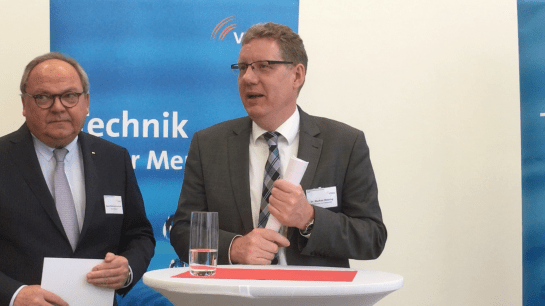
W M Dornscheidt und Dr. HeeringWerner Matthias Dornscheidt from Messe Düsseldorf and Dr. Markus Heering from the VDMA Printing and Paper Technology Association. Photo: Andreas Weber


Broad-based dynamic growth

“The global trend toward flexibilization and automation is currently playing into our hands. Germany’s press and paper machine manufacturers have been more successful than virtually any other mechanical engineering sector in making Industry 4.0 a reality,” continued Dr. Heering. Print 4.0, he said, was supporting Industry 4.0, and the extent to which print shops can improve their productivity and flexibility using fully networked digital work processes was already evident. Incoming orders for printing and paper technology were 10 percent up on the previous year in 2015, while press manufacturers saw a 9 percent increase in orders along with a slight fall in sales, especially in Germany. For manufacturers of postpress equipment, the increase in orders was as high as 21 percent. As Dr. Heering explained, “The sales figures also show it’s a long time since postpress technology was in such high demand. Sales climbed 13 percent in Germany and 9 percent in other countries.” He sees this as good reason to approach drupa 2016, the industry’s leading trade show worldwide, with renewed energy.

According to the VDMA, the key elements of networking and flexibility are emerging as visions and guiding principles for printing press and paper machine manufacturers, and there are three topic areas to be addressed:

  1. Flexibility in meeting specific customer needs
  2. Merging of technologies and functions
  3. Cooperation and standardization of interfaces

The focus is on the declared goal of strengthening print and paper by moving into new applications.


Claus Bolza-Schünemanndrupa president Claus Bolza-Schünemann, Chairman of the Executive Board of Koenig & Bauer AG (KBA). Photo: Andreas Weber


Packaging printing as a driver of print shop business

drupa president Claus Bolza-Schünemann, Chairman of the Executive Board of Koenig & Bauer AG (KBA), trained the spotlight on the packaging sector as a growth driver, stressing that traditional printing methods are leading the way here and are indispensable for the time being, but digital printing offers the possibility of new uses. “Together, flexographic and offset printing currently account for around two-thirds of the international packaging printing market, which was valued by Smithers PIRA at around US$415 billion in 2015. Digital printing’s share is still relatively small at approximately 3 percent, which leaves plenty of room for growth,” he said, adding that the packaging market for print shops is growing at a high level of 4 to 5 percent annually.

Bolza-Schünemann underlined that the total global sales volume for print was so high that it was hard to imagine. According to forecasts, sales will rise from their current level of just over US$900 billion to almost US$1 trillion by 2018. “The fact that ten years ago KBA was still generating a good 60 percent of Group sales in media-oriented print markets and only around 20 percent in packaging printing highlights the extent to which the printing world has shifted in the direction of packaging. Not entirely unintentionally, packaging now accounts for over 60 percent and publication printing just over 10 percent,” added the drupa president. In addition to outer packaging with high design and production standards, everyday packaging is now also becoming more important. Bolza-Schünemann is expecting the brown corrugated cardboard packaging currently used as standard in e-commerce to become increasingly colorful and believes this makes high-performance rotary inkjet printing ideal for the corrugated cardboard market.


My interim comments:

Global sales figures always sound good. And the prospect of print media manufacturers soon generating US$1 trillion is impressive, but at the same time highly abstract. Newspapers such as the Frankfurter Allgemeine Zeitung did pick up on this after the VDMA business press event, referring to signs of life from the world of printing on page 18 of its April 5, 2016 edition, confirming that print is a growth market, and pointing out that the printing industry’s turnover exceeds that of the automotive industry – but what does that really tell us? What’s more, these figures have been around for nearly 15 years. manroland AG defined them as the basis for its market research, but they were evidently little use given that the company went bankrupt. Far more exciting in my view is the question (which is not easy to answer) of the role print media are playing in the improvement in overall macroeconomic performance. If packaging is now being called the printing industry’s growth driver, all companies that are looking to physically sell products must focus 100 percent on print. That’s a clear and obvious statement, isn’t it? The imaging group Canon – also known for excellent specialist surveys about print and multichannel applications – has developed a convincing chart and is using it for
presentations. This makes the significance of print even clearer!


drupa president Bolza-Schünemann listed the following reasons for the strong, sustained growth of packaging:

  1. Printed packaging serves a protective, preservative, and advertising function for its contents and, increasingly, a communication function, too. Just think of consumer protection with appropriate references on the packaging.
  2. Packaging cannot be replaced by flatscreens or smartphones. Unlike printed newspapers or catalogs, it remains unaffected by the changed media behavior and actually tends to benefit from this.
  3. The global population is rising and international prosperity is increasing. The middle class with disposable income is growing in emerging markets such as China, India, and Brazil. Growing prosperity goes hand in hand with higher consumption and that in turn means more packaging and printing, all the more since shopping malls are springing up everywhere in emerging markets, too.
  4. Packaging is becoming increasingly classy and sophisticated – the only way to attract the necessary attention at the point of sale. This trend results in greater added value for the printing industry and machines with more elaborate configurations for the supply industry.
  5. More single-person households with a preference for ready meals and the booming online mail-order business are also driving growth.

What’s more, the influence of multichannel solutions, augmented reality, and personalization – which make all types of packaging the starting point for new contact and dialog options with the buyer – is creating huge potential for brand organizations (see the ValueDialog with multichannel developer Jacob Aizikowitz).


Kai Büntemeyer

Kai Büntemeyer, Chairman of the VDMA Printing and Paper Technology Association and Managing Partner of Kolbus GmbH & Co KG. Photo: Andreas Weber


The only solution – digital networking of the entire value-added chain

Businessman Kai Büntemeyer, Chairman of the VDMA Printing and Paper Technology Association and Managing Partner of Kolbus GmbH & Co KG, dismissed the prejudiced view that postpress is more or less an add-on to print media production. He warned against being tempted by offers to buy attractive new presses without thinking, and thus failing to consider the entire process chain and assess all networking options within and outside the print shop. It’s essential to have “a process world characterized by interoperability, open systems, and harmonized interfaces. The speed of the evolutionary processes under Print 4.0 stands and falls with the transparency of the players involved,” emphasized Büntemeyer, citing the example of the interface syntax provided by his company to download free of charge.

In the case of the printing and paper industry, he said it was important to distinguish between digitization on the one hand and digital printing on the other: “Digital inkjet printing is simply another process to be integrated into digitized process chains in the same way as conventional offset, flexographic or gravure printing. The printing process is just a small part of the complete chain.”

According to Büntemeyer, the overall process chain is as follows:

  • It starts with the receipt of digital job data;
  • continues with software-based job planning for optimized machine capacity utilization with minimal makeready times;
  • includes purchasing and HR planning;
  • and naturally all prepress and postpress process steps;
  • and it only ends with automated packaging, addressing, and shipping of the print products.

Although all this has long been established, he explained, it is only now feasible thanks to today’s high-performance technology, because only very recently have processor capacities, real-time communication, and big data software solutions enabled implementation in a way that is geared to the market.

Büntemeyer developed the following scenario, which shows postpress in a whole new light: “Sensory inline monitoring ensures consistently high quality, but the data collected can unlock added value. Monitoring the status of machines makes it possible to carry out preventive repairs, which enables downtimes to be planned. And service specialists can rectify many a fault remotely. The data collected is also used for anonymized benchmark comparisons in cutting-edge printing systems. Users can compare their performance and productivity with that of other users of the same systems.”

However, Büntemeyer also recognizes that, broadly speaking, the industry’s equipment is lagging behind these possibilities – by at least 10 to 15 years. During this period, there was too little process/solution-oriented thinking and insufficient investment. Networking between print shops is also recommended.


My interim comments:

It’s good that this has now been made clear, because I conclude that it’s ultimately no longer a case of optimizing details and maintaining the traditional silo mentality. New, sometimes disruptive, holistic, automated business processes and the corresponding reorientation of business models are now the order of the day. (N.B.: The 4th Online Print Symposium, which took place in Munich on March 17 and 18, 2015, revealed how far this has already progressed at extremely successful online print shops such as Onlineprinters, Flyeralarm, United Print, and CIMPRESS (see the article entitled “Zipper’s Insights: reporting from the 4th Online Print Symposium”).


Dr. Gerold Linzbach, CEO of Heidelberger Druckmaschinen AG, has realigned Heidelberg to focus on customers. Video: Andreas Weber (in german language).


“Digitization isn’t the same as digital printing!”

Dr. Gerold Linzbach, CEO of industry leader Heidelberger Druckmaschinen AG, followed his statement at the VDMA press event by summing up the company’s new role: “We’ve taken the vital step from focusing on technology to focusing on customers.” He said it was important not to make digitization just another buzz word that everyone uses without really knowing what it means or agreeing on a standard definition.

According to Dr. Linzbach, Heidelberg has, in discussions with customers and numerous market partners, defined three essential elements or levels of digitization for the print market. When understood correctly, digitization thus makes it possible to embrace the digital era through the automation and flexibilization of print.

The first essential element is networking in the sense of automatically passing on data (for press and downstream postpress operations) between machines with adequate interfaces to make all process steps transparent to users. Especially these days, when fragmented order books set the rhythm, automation through networking is absolutely vital. It’s the only way Heidelberg customers can, among other things, complete 3,000 or more orders per day. Success in smoothly incorporating digital printing systems via the print shop network also really pays off. In a short space of time, this has enabled Heidelberg sales staff to succeed in selling 1,000 OEM digital printing systems from Ricoh to print shops.

Once the job data has been received, the customer – that is to say the print shop – is automatically relieved of the decision as to the best production process to use, i.e. offset or digital printing. According to Dr. Linzbach, then, it’s all about seamless integration of all production resources that a print shop must use to minimize the data handling outlay. This is already standard in online printing and will spread to all areas of the printing industry. It’s also necessary if, as in the area of packaging, there is a huge increase in the amount of documentation required to prove, for example, that food was packaged in line with regulations.


Dr. Gerold Linzbach at the press conference. Photos: Andreas Weber


The second essential element is the variabilization of print, that is to say personalization or customization in the sense of frequently changing the print content, together with a wide variety of substrates/printing stock – by its very nature a strength of digital printing processes. Heidelberg has configured and developed a whole package of digital printing solutions for drupa 2016. This even involves printing at different locations, for example end customers printing muesli packaging with personalized designs at the mymuesli.com shop.

Connectivity plays an important role. According to Dr. Linzbach, it’s a mistake simply to rely on equipping presses with thousands of sensors that can read data in seconds and then store it in huge volumes. For a responsible technology manufacturer like Heidelberg, the challenge is to move from big data to smart data. In other words, data that is essentially suitable for any use needs to be filtered, selecting only the most important details from the mass of job, customer, and application data – that is to say the very things that are really relevant. It must be possible for this to happen automatically. To stop this sounding too theoretical, Dr. Linzbach gave an example. Heidelberg will be creating an e-commerce platform that automatically tells customers, for example, if something they order is incompatible with the equipment installed at their company. The aim must be to avoid outlay and above all mistakes, and to lessen customers’ workloads so that they can concentrate on their core activities.

Dr. Linzbach holds out the prospect of soon being able to operate even the most complicated technologies very easily, almost at the touch of a button – just like smartphones and tablets, which operate in a virtually self-explanatory way and produce exactly the desired results without the consumer needing to know about each and every technical function.

This is the only way to ensure that customers from the print shop sector can get on with their real work. According to Dr. Linzbach, the main task of someone running a print shop is not to deliver perfect print quality – that must be ensured by the company providing the technology – but above all to manage jobs and high order volumes, undertake marketing activities, and maintain contacts with customers.

And that brings us to the third essential element of digitization –reduce to the max using appropriate filters developed from customer and application know-how to combine all the technical possibilities and focus on what is actually relevant so as to turn data into productive information.

Dr. Linzbach’s conclusion: “The benefit to customers is the top priority. We don’t simply apply technology for the sake of it, nor do we simply install the maximum that is technically possible. We always try to combine it in such a way as to offer the optimum benefit for our customers and ultimately for whatever takes the industry forward.”


msd_banner_257_drupa2016_48_619x180_us-static1


N.B.: ValuePublishing offers comprehensive reports and constructive criticism relating to the important and above all relevant pre-drupa events. See in particular:

“drupa ante portas – Top topic for 2016: Print in the communications mix!”

“drupa ante portas: Is print (again) in the passing lane? YES and NO.”


AT A GLANCE:
Clippings from selected german newspapers

This slideshow requires JavaScript.

ValuePublishing VDMA pre-drupa Pressekonferenz 2016.001

Von Andreas Weber | ENGLISH version

Mein Kommentar: Dies war wohl die wichtigste, weil ertragreichste Veranstaltung (mit der Wirtschaftspresse) im Umfeld einer drupa. Klar, es wurden Marktzahlen genannt. Aber nur als Leitlinie und als Beleg dafür, dass Print ein Wachstumsmarkt ist. Vielmehr wurde erstmals aus verschiedenen Perspektiven beleuchtet, wie sich das erfolgreiche Geschäft mit Print gewandelt hat. Einiges kommt sicher schon bekannt vor. Wichtig war aber, im Vorfeld der drupa 2016, die ein so weites Themen- und Ausstellungs-Spektrum wie nie zuvor abdecken muss, den Kontext anschaulich herzustellen, worum es tatsächlich geht. Und es war aufschlussreich zu beobachten, wie ernsthaft alle Protagonisten (in diesem Fall die wichtigsten „Macher“) der drupa als globale Leitmesse hinter dem stehen, was sie sagen und propagieren.

Keine Frage: Die Printwelt ist nicht mehr, was sie einmal war. Die Zeit des Jammern ist aber vorbei. Der Reset-Button ist gedrückt. Wer aber weiterhin glaubt, den Geschäftserfolg mit dem Kauf von neuen Maschinen abzusichern, läuft in die Irre und wird scheitern. Ganzheitliches Denken, über den Tellerrand hinaus, die umfassende Kenntnis und das souveräne Beherrschen sämtlicher Prozessschritte, der Automatisierung und das richtige, vorurteilsfreie Deuten der Digitalisierung im Kontext mit den fulminant geänderten Anforderungen an die Printbranche wird zum Erfolgsrezept.

Worauf es im Zusammenhang mit „Digitalisierung“ ankommt, hat im für mich persönlich wichtigsten Redebeitrag Dr. Gerold Linzbach vorgetragen. Auszug: „Wir sind den entscheidenden Schritt gegangen von der Technik-Orientierung hin zur Kunden-Orientierung. (…) Über allem steht der Kundennutzen. Wir betreiben nicht Technik um der Technik willen.“

Das Ergebnis muss sein: „Bestmöglicher Nutzen für unsere Kunden und letztlich für das, was die Branche weiter bringt.“

Willkommen im „Haus des Buches“

Mein Bericht: Zeitpunkt und Ort für das exklusive pre-drupa-Wirtschaftspressegespräch waren klug gewählt: Man traf sich am 4. April 2016 in Haus des Buches im Herzen der Finanzmetropole Frankfurt am Main. Die Themen: Marktbetrachtung, Packaging, Print 4.0, Digitalisierung — Der Gastgeber, Dr. Markus Heering, Geschäftsführer des Fachverbands Druck- und Papiertechnik im VDMA, konnte optimistisch auftrumpfen: „Print ist eine Branche mit Zukunft.“ Druckerzeugnisse seien in unserem Alltag mehr denn je allgegenwärtig und in der Brandbreite vielfältiger denn je. Messe Düsseldorf-Chef Werner Matthias Dornscheidt zeigte sich in seinen kurzen Grussworten zuversichtlich, die bestens vorbereitete drupa 2016 eine vollen Erfolg werden zu lassen, abgerundet durch attraktive Specials wie den drupa cube mit einem exzellenten Rahmenprogramm.

W M Dornscheidt und Dr. Heering.png

Werner Matthias Dornscheidt, Messe Düsseldorf, und Dr. Markus Heering, Fachverband Druck- und Papiertechnik im VDMA. Foto: Andreas Weber

Dynamisches Wachstum auf breiter Front

„Aktuell spielt uns der globale Trend zu Flexibilisierung und Automatisierung in die Karten. Wie kaum ein Zweig im Maschinenbau hat der deutsche Druck- und Papiermaschinenbau Industrie 4.0 in die Realität umgesetzt“, sagte Dr. Heering weiter. Industrie 4.0 stehe Print 4.0 zur Seite, und wir könnten jetzt schon erleben, in welchem Maß Druckereien ihre Produktivität und Flexibilität durch voll vernetzte digitale Arbeitsprozesse steigern können. Gegenüber dem Vorjahr stieg 2015 der Auftragseingang für Druck- und Papiertechnik um 10 Prozent. Hersteller von Druckmaschinen erzielten ein Auftragsplus von 9 Prozent bei leicht rückläufigen Umsätzen vor allem im Inland; bei den Herstellern von Weiterverarbeitungsmaschinen stieg das Auftragsplus sogar um 21 Prozent. Dr. Heering erläuterte: „Dass Weiterverarbeitungstechnik gefragt ist, wie lange nicht mehr, zeigen auch die Umsatzzahlen. Der Inlandsumsatz stieg um 13 Prozent und im Ausland konnten unsere Hersteller ihre Umsätze um 9 Prozent steigern.“ Man könne also mit neuem Schwung auf die drupa 2016 als globale Leitmesse für die Branche zugehen.

Als Visionen und Leitbilder für den Druck- und Papiermaschinenbau kristallisieren sich laut VDMA zentrale Kernelemente heraus: „Vernetzung“ und „Flexibilität“; sowie drei zu bearbeitende Themenfelder:

  1. die flexible Erfüllung von individuellen Kundenbedürfnissen,
  2. die Verschmelzung von Technologien und Funktionen,
  3. Kooperation und Standardisierung von Schnittstellen.

Im Fokus stehe das erklärte Ziel, neue Anwendungsfelder dazu zu gewinnen und Print und Papier dadurch zu stärken.

Claus Bolza-Schünemann.png

drupa-Präsident Claus Bolza-Schünemann, Vorstandsvorsitzender der Koenig & Bauer AG (KBA). Foto: Andreas Weber

Verpackungsdruck als Motor für Druckereigeschäft

drupa-Präsident Claus Bolza-Schünemann, Vorstandsvorsitzender der Koenig & Bauer AG (KBA), rückte den Verpackungssektor als Wachstumstreiber nach vorne, wobei die klassischen Drucktechniken hier führend und vorläufig unverzichtbar seien, der Digitaldruck aber neue Nutzungsmöglichkeiten einbringe: „Gemeinsam decken Flexo- und Offsetdruck aktuell rund zwei Drittel des von Smithers PIRA im für 2015 auf rund 415 Mrd. US$ bezifferten internationalen Verpackungsdruckmarktes ab. Der Anteil des Digitaldrucks ist mit ca. drei Prozent noch relativ klein, also genug Raum für Wachstum.“ Auf hohem Niveau wachse der Verpackungsmarkt für Druckereien jährlich um vier bis fünf Prozent.

Bolza-Schünemann betonte, das Gesamtvolumen, das mit Print weltweit erzielt werde, sei so hoch, wie man es sich kaum vorstellen könne: Von derzeit knapp über 900 Mrd. US$ sollen laut Prognosen die Umsätze bis fast eine Billion US$ im Jahre 2018 ansteigen. Und der drupa-Präsident ergänzte: „Wie stark sich die Druckwelt in Richtung Verpackung verschoben hat, mögen Sie daran sehen, dass KBA vor 10 Jahren noch gut 60 Prozent des Konzernumsatzes in medienorientierten Printmärkten erzielt hat und nur etwa 20 Prozent im Verpackungsdruck. Heute liegt der Verpackungsanteil nicht ganz ungewollt über 60 Prozent und der Publikationsdruck bei gut 10 Prozent“. Neben den hochwertig gestaltet und produzierten Umverpackungen rücken auch Umverpackungen in den Fokus. Bolza-Schünemann erwartet, dass die heute im eCommerce üblichen braunen Umverpackungen aus Wellpappe zunehmend farbiger werden. Der hochleistungsfähige Inkjet-Rotationsdruck sei daher bestens für den Wellpappenmarkt geeignet.


Meine Zwischenbemerkung:

Globale Umsatzzahlen klingen immer gut. Und die Aussicht, bald 1.000 Milliarden US$ mit der Herstellung von Printmedien zu erzielen, beeindruckt. Ist aber gleichzeitig auch sehr abstrakt. Zwar haben im Nachgang zum VDMA-Wirtschaftspresseevent z. B. die F.A.Z. dies aufgegriffen („Lebenszeichen aus einer bedruckten Welt”, Ausgabe 5. April 2016, Seite 18), und bestätigt, dass Print ein Wachstumsmarkt ist; auch durch den Hinweis, die Print-Branche setze mehr um als die Automobilbranche. Doch was sagt uns das? Zudem sind diese Zahlen schon seit fast 15 Jahren bekannt. manroland AG hatte diese als Grundlage ihrer Marktforschung definiert. Genutzt hat es den Augsburgern wenig, sie gingen in Konkurs. — Viel spannender erscheint mir die Frage (die nicht einfach zu beantworten ist): Welchen Anteil haben Printmedien an der Steigerung der Gesamtperformance der Gesamtwirtschaft? Wenn jetzt Verpackungen als Wachstumstreiber der Printbranche genannt werden, dann ist klar, dass alle Unternehmen, die „non-digitale“ Produkte, die verpackt werden müssen, verkaufen wollen, zu 100 Prozent auf Print setzen müssen. Das ist ein klares und einleuchtendes Statement. Oder? Im übrigen hat der Imaging-Konzern Canon — seit vielen Jahren bekannt für exzellente Fachstudien rund um Print und Multichannel — schlüssige Schaubilder entwickelt, die sich bestens für Vorträge eignen. Darin wird die Bedeutung von Print noch klarer!

Quelle: Canon Europa


Folgende Gründe für das starke, nachhaltige Wachstum bei Verpackungen führte drupa-Präsident Bolza-Schünemann an:

  1. Bedruckte Verpackungen haben für ihren Inhalt eine Schutz-, Konservierungs-, Werbe- und zunehmend auch eine Kommunikationsfunktion. Denken Sie hier nur an das Thema Verbraucherschutz mit entsprechenden Hinweisen auf der Verpackung.
  2. Verpackungen können nicht durch Flatscreens oder Smartphones ersetzt werden. Anders als gedruckte Zeitungen oder Kataloge sind sie nicht vom veränderten Medienverhalten betroffen, sondern profitieren eher davon.
  3. Die Weltbevölkerung und der internationale Wohlstand wachsen. In Schwellenländern wie China, Indien oder Brasilien wächst die kaufkräftige Mittelschicht. Mit dem Wohlstand wächst der Konsum und wo mehr konsumiert wird, wird mehr verpackt und bedruckt, zumal auch in Schwellenländern Shopping Malls aus dem Boden schießen.
  4. Verpackungen werden immer raffinierter und edler. Nur so finden sie am Point of Sale die nötige Aufmerksamkeit. Dieser Trend bringt mehr Wertschöpfung für die Druckbranche und aufwendiger ausgestattete Maschinen für die Lieferindustrie.
  5. Mehr Single-Haushalte mit einer Vorliebe für Fertiggerichte und der boomende Online-Versandhandel sind ebenfalls Wachstumstreiber.

Zu ergänzen ist: Der Einfluss von Multichannel-Lösungen und „Augmented Reality“ in Verbindung mit Individualisierung, die jede Art von Verpackung zum Startpunkt neuer Kontakt- und Dialogmöglichkeiten mit dem Käufer machen, stellen ein ungeheures Potential für Markenunternehmen dar. (Siehe dazu den ValueDialog mit dem Multichannel-Entwickler Jacob Aizikowitz).


Kai Büntemeyer.png

Kai Büntemeyer, Vorsitzender VDMA Druck- und Papiertechnik sowie Geschäftsführender Gesellschafter von Kolbus GmbH & Co KG. Foto: Andreas Weber


Alternativlos: Digitale Vernetzung der gesamten Wertschöpfungsprozesse

Der Unternehmer Kai Büntemeyer, Vorsitzender VDMA Druck- und Papiertechnik sowie Geschäftsführender Gesellschafter von Kolbus GmbH & Co KG, räumte mit dem Vorurteil auf, die Weiterverarbeitung sei mehr oder weniger der Appendix bei der Printmedien-Herstellung. Er warnte davor, sich unbedacht von Kaufangeboten attraktiver neuer Druckmaschinen verführen zu lassen, ohne die Gesamtprozesskette zu überblicken und alle Möglichkeiten der Vernetzung innerhalb und ausserhalb des Druckereibetriebs zu bewerten. „Eine von Interoperabilität, offenen Systemen und harmonisierten Schnittstellen geprägte Prozesswelt“, sei unerlässlich, so Büntemeyer. So habe sein Unternehmen die Schnittstellen-Syntax zum kostenlosen Herunterladen im Internet bereitgestellt, „denn die Geschwindigkeit der Evolutionsprozesse, die wir mit dem Begriff Print 4.0 umschreiben, steht und fällt mit der Transparenz seiner Akteure.“

Wichtig sei im Fall der Druck- und Papierbranche die Abgrenzung zwischen der Digitalisierung auf der einen Seite und dem Digitaldruck auf der anderen. „Digitaler Inkjet-Druck ist nur ein weiteres Verfahren, das es wie herkömmliche Offset-, Flexo- oder Tiefdruckverfahren in die digitalisierten Prozessketten zu integrieren gilt. Wobei der Druckprozess ein kleiner Ausschnitt der Gesamtkette ist.“

Die Gesamtprozesskette beginnt laut Büntemeyer wie folgt:

  • mit dem Empfang digitaler Auftragsdaten;
  • geht mit softwaregestützter Auftragsplanung zu optimierten Auslastung der Maschinen bei minimalen Rüstzeiten weiter;
  • umfasst Einkauf, Personalplanung;
  • und natürlich sämtliche Prozessschritte in Vorstufe und Weiterverarbeitung;
  • und sie endet erst mit der automatisierten Verpackung, Adressierung und dem Versand der Druckerzeugnisse.

All dies sei zwar schon länger bekannt, könne aber erst mit heutiger, leistungsfähiger Technologie gelöst werden, da erst seit neuestem Prozessorleistungen, Echtzeitkommunikations- und Big-Data-Softwarelösungen ihre marktgerechte Umsetzung erlauben würden.

Im Detail entwickelt Büntemeyer folgendes Szenario, das die Weiterverarbeitung in ein ganz neues Licht rückt: „Sensorische Inline-Überwachung gewährleistet gleichbleibend hohe Qualität. Doch die dabei erhobenen Daten können Mehrwerte erschließen: Mit Zustandsüberwachung der Maschinen können Reparaturen präventiv durchgeführt werden. Ausfallzeiten werden so planbar. Und so manche Störung können Servicespezialisten aus der Ferne beheben. Die erhobenen Daten werden in modernen Druckanlagen zudem auch für anonymisierte Benchmark-Vergleiche genutzt. Anwender können ihre Performance und Produktivität mit den Werten anderer Nutzer derselben Anlagen vergleichen.“

Klar ist für Büntemeyer aber auch: Die Branche hängt in ihrer Ausstattung auf breiter Front diesen Möglichkeiten nach — um mindestens 10 bis 15 Jahre, in denen man zu wenig prozess- respektive lösungsorientiert dachte und angemessen investierte. Zudem empfiehlt sich sogar die Vernetzung von Druckereien untereinander.


Meine Zwischenbemerkung:

Gut, dass dies mal klargestellt wurde. Denn letztlich, so meine Schlussfolgerung, geht es heute nicht mehr um Optimierungen im Detail und die Pflege eines überkommenen Silo-Denkens, sondern um neue, mitunter disruptive, ganzheitliche, automatisierte Geschäftsprozesse und die entsprechende Neu-Ausrichtung der Geschäftsmodelle. (Hinweis: Auf dem 4. Online Print Symposium, das am 17. und 18. März 2015 in München stattfand, war zu sehen, wie weit dies schon bei den extrem erfolgreichen Online-Druckereien wie u.a. Onlineprinters, Flyeralarm, United Print oder CIMPRESS vorangeschritten ist (siehe den Beitrag „Zippers Insights: Bericht vom 4. Online Print Symposium“) .


Dr. Gerold Linzbach, Vorstandsvorsitzender der Heidelberger Druckmaschinen AG hat Heidelberg neu ausgerichtet und auf Kunden-Orientierung getrimmt. Video: Andreas Weber


„Digitalisierung ist nicht gleich Digitaldruck!“

Die neue Rolle des Branchenprimus Heidelberger Druckmaschinen AG brachte der Vorstandsvorsitzende Dr. Gerold Linzbach im Nachgang zu seinem Statement beim VDMA-Presseevent auf den Punkt: „Wir sind den entscheidenden Schritt gegangen von der Technik-Orientierung hin zur Kunden-Orientierung.“ Dazu sei es ausschlagend, Digitalisierung wie andere Begriffe auch, nicht als „Buzz“-Wort zu nutzen, das alle im Mund führen ohne im Kern die Bedeutung zu wissen oder einheitlich abzustimmen.

Im Gespräch mit Kunden und vielen Marktpartnern wurden laut Dr. Linzbach bei Heidelberg drei Wesenselemente oder Ebenen der Digitalsierung für den Print-Markt festgeschrieben. Mit dem Ergebnis, dass Digitalisierung richtig verstanden, die Automatisierung und Flexibilisierung von Print möglich macht und somit den Anschluss an das Digitalzeitalter sicher stellt.

Zum ersten die  „Vernetzung“ im Sinne der automatischen Weitergabe von Maschinendaten (für den Druck und die nach gelagerte Weiterverarbeitung) untereinander mit adäquaten Schnittstellen, um für Menschen alle Prozessschritte transparent zu machen. Gerade in der heutigen Zeit, bei der die Fragmentierung der Auftragsbücher den Takt vorgibt, ist Automatisierung durch Vernetzung unabdingbar. Heidelberg-Kunden könnten nur so u.a. bis zu 3.000 und mehr Aufträge pro Tag meistern. Gerade auch der Erfolg in der reibungslosen Einbindung von Digitaldrucksystemen via PrintShop-Netzwerk zahle sich aus. In kurzer Zeit habe der Heidelberg-Vertrieb dadurch 1.000 OEM-Digitaldrucksysteme von Ricoh erfolgreich bei Druckereien platzieren können.

Dem Kunden, der Druckerei, werde automatisch abgenommen, zu entscheiden, wie nach Eingang der Auftragsdaten optimal produziert werde könne, ob im Offset- oder Digitaldruck. Es geht also nach Dr. Linzbach um die nahtlose Integration aller Produktionsmittel, die eine Druckerei einsetzen muss, zur Minimierung des Datenhandling-Aufwandes. Beim Online-Printing ist dies bereits Standard und werde sich auf alle Bereiche der Druckbranche ausdehnen. Dies ist auch notwenig, wenn wie im Verpackungsbereich der Dokumentationsaufwand enorm ansteige, um nachzuweisen, dass zum Beispiel Lebensmittel den Vorschriften gemäß verpackt wurden.


Zum Zweiten die Variabilisierung von Print, sprich die Personalisierung, Individualisierung im Sinne des häufigen Wechsels der Druckinhalte bei gleichzeitiger hoher Vielfalt der Substrate/Bedruckstoffe — naturgemäß eine Stärke digitaler Druckverfahren. Heidelberg habe dazu für die drupa 2016 ein ganzes Bündel von Digitaldrucklösungen konfiguriert und entwickelt. Hier verlagert sich sogar der Ort, an dem gedruckt wird, wie zum Beispiel das Bedrucken der individuell vom Endkunden gestalteten Müsli-Packungen vor Ort im Laden von mymuelsi.com.

Konnektivität spielt eine wichtige Rolle. Laut Dr. Linzbach darf man dabei nicht allein darauf vertrauen, Druckmaschinen mit tausenden Sensoren auszustatten, die ermöglichen, im Sekundentakt Daten auszulesen, die dann in riesigen Mengen abgespeichert werden. Für einen verantwortungsbewussten Technologiehersteller wie Heidelberg sei die Maßgabe, den Übergang von Big Data zu Smart Data zu gestalten. Sprich: Über die primär verwendungsneutralen Daten muss ein Filter gelegt werden, der aus der Masse an Auftragsdaten, Kundendaten und Applikationsdaten nur das wichtigste selektiert, also genau das, was wirklich relevant ist. Dies muss automatisch erfolgen können. Damit dies nicht zu theoretisch klingt, führte Dr. Linzbach ein Beispiel auf: Heidelberg werde eine E-Commerce-Plattform aufbauen, bei der die Kunden automatisch Hinweise bekommen, wenn zum Beispiel eine Materialbestellung des Kunden gar nicht zu dem bei ihm installierten Equipment passt. Das Ziel muss sein, Aufwand und vor allem auch Fehler zu vermeiden, soweit zu entlasten, dass sich der Kunde auf seine Kerntätigkeiten konzentrieren kann.

Dr. Linzbach stellt in Aussicht, dass alsbald selbst die kompliziertesten Technologien höchst einfach, quasi per Knopfdruck, zu bedienen sein werden. Gerade so, wie Konsumenten dies von ihren Smartphones und Tablets her kennen, die nahezu selbsterklärlich funktionieren und exakt die Ergebnisse liefern, die man sich wünscht, ohne jede einzelne technische Funktion überhaupt kennen zu müssen.

Nur so kann sichergestellt werden, dass Kunden aus dem Druckereisektor ihren eigentlichen Aufgaben nachgehen können. Laut Dr. Linzbach ist die Kernaufgabe eines Druckereiunternehmers nicht die „perfekte Druckqualität“ — das muss der Technikhersteller garantieren — sondern v. a.  Aufträge und hohe Auftragsvolumen zu managen, Marketing zu machen und Kundenkontakte zu pflegen.

Und damit ist die dritte Facette der Digitalisierung auf den Punkt gebracht: Sozusagen das „Reduce to the max“, die Verblendung von dem was heute technisch möglich ist durch geeignete Filter, die aus Kunden- und Anwendungskenntnis kommen, um das im Vordergrund zu halten, was tatsächlich relevant ist, um aus Daten zielführende Informationen werden zu lassen.

Das Fazit von Dr. Gerold Linzbach: „Über allem steht der Kundennutzen. Wir betreiben nicht Technik um der Technik willen, wir bauen nicht einfach nur ein, was technisch maximal möglich ist; sondern wir versuchen jederzeit das zu verblenden mit dem bestmöglichen Nutzen für unsere Kunden und letztlich für das, was die Branche weiter bringt.“


msd_banner_257_drupa2016_48_619x180_us-static1

HINWEIS: ValuePublishing berichtet umfassend und konstruktiv-kritisch über die wichtigen und v. a. relevanten pre-drupa-Geschehnisse. Siehe vor allem:

“drupa ante portas: Das Top-Thema für 2016 — Print im Kommunikationsmix!”

drupa ante portas: Ist Print (wieder) auf der Überholspur? JAEIN. 


Die Wirtschaftspresse hat die “good news” zur drupa 2016 und der Printbranche 4.0 sehr gut aufgenommen. Hier die Clippings einiger Berichte.


This slideshow requires JavaScript.


1229_Landa_S10_Nanographic_Printing_Press_Operator_Cockpit2.png

Photo: Landanano

Graphic Repro On-line News Review to Friday 01 April 2016

Welcome to another mega-roundup of news highlights for the past two weeks and Laurel Brunner’s latest ‘Gathering Carbon Footprint Data’ Verdigris Blog for Friday 01 April.

You will also find 34 new articles in our drupa Newsroom from 22 different exhibitors (42 if you include all of Picon’s members who will be present in the show in the Picon Pavilions across four halls). Among this latest collection are HP, which is to launch six new HP Indigo Presses at the show along with three new PageWide Web Presses; Leonhard Kurz; Polar, KBA Large-Format, and KBA Service Complete; Global Graphics; Landa, which is to unveil its B1 Nanographic Printing Press now available in 2017, and also a future one-metre wide web press for flexible packaging; Bobst, Cerm,  Kodak, Esko, Enfocus, Agfa Graphics, Xeikon, Xaar, Duplo, Chili Publish, and X-Rite with Pantone.

With only another 57 days to go before the event of the year opens its doors in Düsseldorf at the end of May, drupa news is really gaining momentum and I still have lots more lined-up for the week ahead. Please also don’t miss the latest from the show’s organisers, as the results of the third drupa Global Trends report have now been published. You can download the Executive Summary free-of-charge by simply registering on the drupa website, where you can also opt to purchase and download the full report online for a nominal fee. This is the third and final part of the series.

As there are eight working days of news for you below, I think it would be rather tiresome if I commented on all of the lead items and other important announcements, so I shall leave it to you to go through them carefully PLEASE! There’s a lot of really good stuff if you take your time. Included among these are key announcements from the BPIF, FINAT, KBA’s financial statememts for 2015; Ricoh, Watkiss Automation, Heidelberg, as the  European Investment Bank agrees to fund its R&D activities with a EUR 100 million loan. Again Heidelberg for its Red Dot Design Awards hat-trick, with two awards for sheetfed, including large-format; and one award for digital, on Thursday 31 March.

And lastly as a very special tailender, although perhaps not strictly industry-related in the usual sense, on Friday from UPM, as the Kertomalla paranee‘improve by sharing’ project is launched in Finland, and is is looking for areas of improvement and new solutions to improve the daily life of cancer patients. You are all invited to participate and send suggestions which could perhaps make a meaningful difference.

That’s it until next time. I hope you find lots of interest.

With my best regards,

Mike Hilton 

Bildschirmfoto 2016-04-04 um 08.08.29.png

Photo: HP Inc.

Our e-News comprises:  Headline News – Online Feature Articles – the Verdigris initiative from Digital Dots. Our Drupa and FESPA Newsrooms can be accessed from the Index on our Home Page, as well as News in Review, which provides a weekly overview and listing of all news added to the site.

Headline News
Over 28,000 news items have now gone online since we launched our Website in September 2001. News for the past 24 months can still be accessed via the Home Page and its continuation news pages

Mon 21 Mar…   BPIF announces training survey findings
98% of apprentice employers who responded to the BPIF training survey believe proposed training is an appropriate solution…

Ricoh announces TotalFlow digital book printing solution
Ricoh streamlines and simplifies publication of short runs to help publishers meet shifting industry demand…

ESMA to show potential of functional printing at drupa
ESMA, the European Specialist Printing Manufacturers Association, will be present in two pavilions at drupa 2016…

CHILI publisher v5.0 announced; also for drupa showcase
The next generation of online editing from CHILI publish is here as CHILI publish redefines document editing…

CHILI announces rendro 1.0: A new era for PDF rendering

Full relief rendering of PDF documents can now be accessed anywhere, anytime, from any platform with CHILI rendro 1.0…

X-Rite Announces PantoneLIVE Private Cloud

Provides printers and converters with a secure, online repository for proprietary colours to streamline workflows…

Northern Print switches from Wohlenberg to Polar
Liverpool printer replaces an ageing Wohlenberg with a Polar N115 guillotine after assessing various options…

Tue 22 Mar…    Exciting Programme for FINAT European Label Forum
Outstanding keynotes and interactive workshops to provide inspiration and learning at ELF, at the Moevenpick Hotel in Amsterdam…

New Xaar 1003 raises the bar for industrial printing

Xaar announces the launch of the Xaar 1003 family of printheads which set a new benchmark for industrial inkjet…

The Enfocus Appstore takes off and heads to drupa
New marketplace quickly becomes a vital resource that connects, supports and advances the Enfocus Switch Community…

HP to inspire to reinvent possibilities at drupa 2016
Company unveils HP PrintOS, a cloud-based, mobile platform that simplifies and automates print production management…

Tailored Label opts for Graphium hybrid UV digital inkjet
Tailored Label Products meet rapid growth demands with recently installed FFEI Graphium press from Fujifilm…

Pyramid opts for Heidelberg Speedmaster XL 75-5+L
Nottingham-based Pyramid Press pushes for higher productivity with Speedmaster XL 75 five-colour plus coater…

Jadan Press expands services with IFS Systems
Two-year ROI expected for Horizon landscape bookletmaker and folder at Hull commercial printer Jadan Press…

Wed 23 Mar…   3rd drupa Global Trends Report: Optimism for growth in 2016
With just weeks to go before drupa 2016 opens, the results of the third drupa Global Trends report has now been published…

Xeikon Trillium One at drupa 2016
Tonnik liquid toner makes fast, high quality, cost-effective, high volume digital print a production reality…

Navigate through the world of drupa with f:mp
Navigate through the World of drupa with Specialist Association Fachverband (f:mp.) with guided tours, lectures and demos…

Enfocus becomes first OEM partner for CHILI rendro
CHILI publish announces first OEM deal for CHILI rendro 1.0 enabling fast, accurate viewing and inspection of PDFs for production…

Canon launches new imagePROGRAF PRO series

Canon Europe recently announced a new range of imagePROGRAF PRO wide-format professional inkjet printers…

Meech launches new Hyperion ionising air curtain
Meech International has announced the latest addition to its Hyperion range of static control systems for industrial applications…

4 Color Press production speeds up by 40% with Anicolor

4CP increases production speeds by 40% with Speedmaster XL 75 five-colour plus coater Anicolor press from Heidelberg…

Thu 24 Mar…  Koenig & Bauer AG publishes its financial statements for 2015
Targets met: Pre-tax profit of ?29.7m with around ?1bn in revenue with turnaround in Digital & Web segment in Q4…

Esko to bring ‘Packaging Simplified’ to drupa
Market leader boosts innovations in both the software and hardware products to address pressing industry challenges…

Esko Software Platform makes Packaging Simplified
Major upgrade of all Esko software focused on productivity and improved user experience in time to debut at drupa 2016…

Xeikon to showcase Fusion Technology at drupa 2016

Fusion technology expands automated digital label and packaging production possibilities…

New X-Rite service helps to better manage colour libraries
PantoneLIVE Rationalization Service analyses and consolidates a colour library and maps colours to Pantone Standard…

Web-to-print platform uses Anicolor for custom folding cartons
Thoro Packaging creates FoldedColor Web-to-print site after success with Anicolor from Heidelberg USA…

MTEX Blue with Pigments for Lewis & Wood
Lewis & Wood is the first UK company to pioneer and invest in a direct- to-textile MTEX Blue Pigment Printer…

Tue 29 Mar…   Highcon ‘Connect to Grow’ at Dscoop EMEA in Tel Aviv
Highcon announces new portfolio and the Highcon Pulse B2 format machine, to be officially launched at drupa 2016 in May…

Kodak aims to raise the bar in inkjet printing at drupa 2016
Ultrastream technology launch; Prosper 6000C press and XGV demo for flexible films to feature on Kodak’s stand in Hall 5…

Kodak Prinergy cloud and Unified Workflow Solutions
Kodak’s software solutions will deliver efficiency, quality and flexibility and drive further automation and business management…

Landa to unveil 13,000sph B1 digital press at drupa
Landa’s Nanographic Presses at drupa will include S10 B1 sheetfed, and W10 one metre-wide web for flexible packaging…

Global Graphics launches version 11 Harlequin RIP

Raises the bar in output quality with more controls for inkjet presses and new features for labels and packaging…

Cerm proves inspiring collaboration at drupa
Omni-presence of Cerm at partner stands during drupa demonstrates growing importance of MIS in print automation process…

Epson drupa exclusive: New super-fast production printer

Epson to unveil new SureColor SC-P10000 1626mm wide-format printer combining highest printing speed with superior quality…

Wed 30 Mar…   HP breakthrough enhancements reinvent commercial printing
HP Inc. expands commercial printing fleet with eight new Indigo and PageWide Web Presses as it prepares for drupa in Hall 17…

HP Indigo expands for flexible packaging and folding cartons
HP Inc. to unveil the industry’s most productive label press for converters and brands in Hall 17 at drupa, as well as other major upgrades…

Leonhard Kurz @ Drupa stand D60 in Hall 3

Drupa 2016 – Don’t just touch the future – live the future with Kurz innovation and creativity…

Bobst to lead with innovation at drupa 2016
Bobst to use drupa to showcase innovative solutions that will drive customer productivity higher, open up new capabilities…

Idealliance certifies first G7 Press Control System
Instrument Flight colour control from System Brunner enables real-time G7 conformance to become a reality…

Hubergroup Deutschland improves its energy efficiency
The printing ink manufacturer is now TÜV Süd ISO 50001 certified for its energy management system…

Second KBA-Flexotecnica EvoXD for Signature Flexible Packaging
Due to extraordinary growth a second gearless, sleeved, central impression flexo press will be installed in Los Angeles…

Palm Print gets set for the arrival of a Linoprint CV

Palm Print celebrates its 25th anniversary with the arrival of its latest digital press, a Linoprint CV 80…

Pustet: Modular flexibility with Muller Martini Alegro
With its short setup times, the Muller Matini Alegro perfect binder is another key element for Pustet in Regensburg, Germany…

Thu 31 Mar…   Red Dot design award hat-trick for Heidelberg
Three in one sweep: ‘red dot design award’ for Heidelberg innovations in both digital and offset printing…

Watkiss Automation year-on-year sales increase of 36%

UK finishing equipment manufacturer is celebrating an increase in sales, with the upward trend set to continue…

2016 FINAT Recycling Awards accepting applications
FINAT Recycling Awards recognise industry efforts to give paper and film release liners a second life…

Global Graphics to raise the bar in inkjet quality at drupa
New Harlequin Multi-Level Digital Screening Engine helps single-pass inkjet presses achieve high quality at high speed…

POLAR’s Highlights at the 2016 drupa
POLAR will once again present a wide range of solutions for handling diverse market demands; plus two new products to debut…

TRESU extends its enclosed chamber doctor blade programme

The TRESU MaxiPrint concept cuts cleaning time, and improves quality consistency in wide web and corrugated flexo…

Second-hand is first class from Muller Martini

A customised second-hand solution from Muller Martini optimally combines perfect binding and saddle stitching…

Fri 01 Apr…   
EIB Development Loan to fund Heidelberg’s R&D programme
European Investment Bank to fund Heidelberg’s R&D activities, focusing on, and taking digitisation to the next level…

Kertomalla paranee project launched in Finland

Kertomalla paranee ‘improve by sharing’ project is looking for areas of improvement and new solutions to improve the daily life of cancer patients. You can also participate and send suggestions…

Picon Pavilions at drupa support 21 UK manufacturers

‘Best of British’ showcase with focus on new prepress, printing, finishing & ancillary products & forging international partnerships…

MTEX 5032 printer for UK debut at Sign & Digital
MTEX to celebrate a year of outstanding growth and innovation at Sign & Digital UK, NEC, Birmingham, 19 – 21 April…

KBA Service Complete with KBA 4.0 at drupa
Digital transformation with KBA 4.0: On the way to the networked print factory and full closed-loop solutions…

Xerox to launch two new inkjet presses at drupa
Xerox to introduce its first cut-sheet inkjet press and new continuous feed inkjet platform…

Axaio Software to showcase at drupa in Hall 7
Together with callas software, Tucanna and Four Pees, Axaio will present its solutions at drupa in Hall 7, stand C19…

Last lead article from previous update…

A week last Friday’s lead…   Dscoop EMEA 5 Conference reveals speaker lineup
Dscoop EMEA reveals inspiring lineup of keynote speakers for its 2016 Conference in Tel Aviv, Israel from 5 to 8 April…

GraphicRepro.Net e-News  (ISSN 1814-2923) is sponsored and made possible by:

Heidelberger Druckmaschinen AG  (Heidelberg), The world’s largest printing press manufacturer for the industry worldwide. Heidelberg customers enjoy the most comprehensive and extensive sales and service network in the industry for JDF compliant workflow, computer-to-plate, sheetfed offset, Web-to-print, digital printing, digital inkjet for labels and packaging, packaging and finishing, all with complementary consumables. Heidelberg has offices in around 170 countries. Visit the Heidelberg Website for more information.

drupa 2016 (drupa), the international flagship fair of the printing and media industry, responds to the challenges of the changing market and provides pioneering solutions for the future. This is highlighted by the new marketing and communication strategy where drupa claims its position as ‘No.1 for Print & Crossmedia Solutions’ with the slogan ‘touch the future’. The issues of ‘package printing’, ‘multichannel’, ‘green printing’, ‘3D printing’ and ‘functional printing’ will become increasingly important to the overall communication strategy. To find out more, visit the < a href=”http://www.drupa.com/“>drupa 2016 Website.

Online Feature articles 2014 – 2016
There were again well over 90 last year, including nine downloads, as well as 92 articles in 2013 which can still be accessed via the Index on the Home Page, with prior years’ via Search Archives (option 2) on the Website.

Online Features 2016 Mar/Apr Chapter 04

Most recent…   Fedopress adopts Xeikon 3500 for Revenue Duty stamp printing
Belgian Finance Dept print supplier takes printing of tobacco duty stamps in-house to increase security and efficiency and lower costs…

Verdigris – Environmental Initiative

Laurel Brunner’s weekly Verdigris Blogs 2016

Gathering Carbon Footprint Data

The weekly Verdigris blog by Laurel Brunner – Fri 01 Apr

Previous…   Partners in Sustainability
The weekly Verdigris blog by Laurel Brunner – Fri 18 Mar

Drupa Newsroom
Our Drupa Newsroom with news from Messe Düsseldorf and for Drupa 2016 can be found in the Index, as well as via the special Newsroom button on the right of the Home Page near the top. It is divided into the following Chapters for your convenience and ease of use… but you do have to scroll down to view each of the Chapters

drupa 2016 News from Exhibitors
Latest additions can now be accessed in our Drupa Newsroom.

34 New articles for you this week…   KBA Service Complete with KBA 4.0 at drupa
Digital transformation with KBA 4.0: On the way to the networked print factory and full closed-loop solutions…

Picon Pavilions at drupa support 21 UK manufacturers
‘Best of British’ showcase with focus on new prepress, printing, finishing & ancillary products & forging international partnerships…

POLAR’s highlights at 2016 drupa in Hall 1

POLAR will once again present a wide range of solutions for handling diverse market demands…

Global Graphics raises the bar in inkjet quality with drupa launch
New Harlequin Multi-Level Digital Screening Engine helps single-pass inkjet presses achieve high quality at high speed…

HP breakthrough enhancements reinvent commercial printing
HP Inc. expands commercial printing fleet with eight new Indigo and PageWide Web Presses as it prepares for drupa 2016, with the show’s exhibit space in Hall 17…

HP Indigo expands for flexible packaging and folding cartons

HP Inc. to unveil the industry’s most productive label press for converters and brands in Hall 17 at drupa, as well as major upgrades for other presses…

Leonhard Kurz @ Drupa stand D60 in Hall 3

Drupa 2016 – Don’t just touch the future – live the future with Kurz innovation and creativity…

Landa to unveil 13,000sph B1 digital press at drupa
Landa’s lineup of offset quality Nanographic Printing presses at drupa will include Landa S10 B1 sheetfed, as well as a one metre-wide web press for plastic packaging films…

Landa to unveil ultra-fast metre-wide W10 web press
Landa to unveil its new webfed Nanographic Printing Press for flexible packaging at drupa…

New metallisation printing technology to be unveiled at drupa
New Landa Nano-Metallography offers zero-waste metallisation graphics at half the cost of foil…

Bobst to lead with innovation at drupa

Bobst to use drupa to showcase innovative solutions that will drive customer productivity higher, open up new capabilities…

Cerm proves inspiring collaboration at drupa

Omni-presence of Cerm at partner stands during drupa demonstrates growing importance of MIS in print automation process…

Kodak brings the ‘Science to Create’ to drupa

With a host of new product launches and technology developments to be featured on its stand in Hall 5…

Kodak to raise the bar in inkjet printing at drupa 2016
Ultrastream technology launch; Prosper 6000C press and XGV demonstration for flexible films to be featured on Kodak’s stand in Hall 5…

Kodak Prinergy cloud services and Unified Workflow Solutions

Kodak’s software solutions will deliver efficiency, quality and flexibility for print and packaging service providers and will drive further automation and business management…

NexPress platform supports industry growth and demand

Kodak announces the latest NexPress Color Press and its next generation electrophotographic platform, poised to deliver category’s highest quality, greatest value…

Kodak drives Flexo to be print process of choice
New Flexcel NX System ’16, NX Implementation Services and next generation ‘Ultra NX experience’ are key technologies for packaging printers at drupa 2016…

Kodak increasing investment in offset print
Kodak will announce its fourth and fifth new plate products launched within the last year and its entrance into the pressroom consumables market…

Kodak announces improved CTP automation portfolio
Kodak extends CTP options giving printers choice, efficiency and speed, to be unveiled at drupa…

Esko brings ‘Packaging Simplified’ to drupa
Market leader boosts innovations in both the software and hardware products to address pressing industry challenges…

Esko Software Platform makes Packaging Simplified

Major upgrade of all Esko software focused on productivity and improved user experience…

Xeikon Trillium One at drupa 2016
Tonnik liquid toner makes fast, high quality, cost-effective, high volume digital print a production reality…

Xeikon to showcase Fusion Technology at drupa
Fusion technology expands automated digital label and packaging production possibilities…

KBA: More performance and automation in large-format
Drupa highlight for packaging printers: KBA Rapida 145 with new double-pile delivery and automated pile logistics…

New Xaar 1003 raises the bar for industrial printing
Xaar announces the launch of the Xaar 1003 family of printheads which set a new benchmark for industrial inkjet, to be shown at drupa…

Enfocus Appstore takes off and heads to drupa
New marketplace quickly becomes a vital resource that connects, supports and advances the Enfocus Switch Community…

HP Inc. to inspire print providers at drupa 2016
Company to unveil HP PrintOS, a cloud-based, mobile platform that simplifies and automates print production management…

Agfa Graphics at drupa 2016 ‘We Embody Print’
Agfa Graphics to address opportunities for growth at drupa 2016…

Print the Future with Xeikon at drupa 2016
It’s all about growth with new products and services for labels, packaging and document printing, including its brand-new 60 m/min Trillium One press…

Duplo to take technology to new level at drupa
The stage is set for Duplo International to demonstrate its world-leading capabilities in print finishing systems at drupa 2016…

Next generation CHILI publish solutions to debut at drupa
The online editor that started it all, now with new innovations, partnerships and customer successes…

CHILI publisher v 5.0 announced for drupa showcase
The next generation of online editing from CHILI Publish is here as CHILI publisher redefines document editing…

CHILI announces rendro 1.0: A new era for PDF rendering
Full relief rendering of PDF documents can now be accessed anywhere, anytime, from any platform with CHILI rendro 1.0…

X-Rite announces PantoneLIVE Private Cloud
Provides printers and converters with a secure, online repository for proprietary colours to streamline workflows: to be demonstrated live at drupa 2016….

Previous…   Screen’s ‘Achieve the Extraordinary in Print’ drupa theme
Integrated imaging for innovation – SCREEN GP i3 – encompasses Screen GPS’ presence at the 2016 global event…

Ricoh to ‘Open New Worlds’ at drupa 2016
The Ricoh stand is designed to Open New Worlds for PSPs looking for new ways to seamlessly manage workflows, maximise productivity, increase profitability and access additional markets…

Canon to show full gamut of inkjet and toner-based solutions
Canon helps printers of every size and type unleash their business potential at drupa 2016…

Canon’s continuous feed inkjet leadership lineup
Canon shows leadership in continuous feed inkjet for production print will be evident in Hall 8a at drupa 2016…

Canon expands its successful ColorStream family
Canon will launch the new Océ ColorStream 6000 Chroma continuous feed inkjet press at drupa 2016…

Canon to launch new imagePRESS C8000VP at drupa
Canon extends quality and productivity benefits of successful imagePRESS C10000VP to wider audience with the new C8000VP…

Océ VarioPrint i300 sheetfed inkjet press for drupa

Canon broadens applications of the Océ VarioPrint i300 sheetfed inkjet press with media flexibility, colour quality and finishing…

Muller Martini to present Touchless Workflow at drupa
Touchless Workflow functions enable uninterrupted print finishing without manual intervention…

New features added to Epson SureColor SC-T Series

Upgraded wide-format printers designed with new levels of functionality and productivity will be demonstrated for the first time at drupa…

drupa 2016 Expert Article Series and more
Can be found in our Drupa Newsroom via the Index on the Home Page.

Most recent…   Claus Bolza-Schünemann invites you to ‘Touch the Future’
Claus Bolza-Schünemann, chairman of the drupa committee and chief executive of Koenig & Bauer AG used his Media Conference address to explain how the five letters of d r u p a are representative of the five key technology trends in our industry today…

Digital versus traditional packaging print
Touch the future. Drupa Expert Article No 8 by Michael Seidl, publisher and editor-in-chief of various specialist publications in Central and Eastern Europe including Print & Publishing, Packaging and Visual Communication….

drupa 2016 News from Messe Düsseldorf

Most recent…   3rd drupa Global Trends Report: Optimism for growth in 2016
With just weeks to go before drupa 2016 opens, the results of the third drupa Global Trends report have now been published…

drupa ante portas Blogs 2016

Most recent…    drupa ante portas – Top topic for 2016: Print in the communications mix!
This is a new series of extraordinary conversations with leading multichannel experts. We invite you to read the introduction and the first four discussions / blogs: By Andreas Weber

Highlight topic Multichannel: ‘Individual solutions are in demand’
This is the fifth in this new series of conversations with leading multichannel experts. We also invite you to read the introduction and the first four discussion blogs (above): By Andreas Weber

FESPA Newsroom
The dedicated FESPA Newsroom can be found via the Index on our Home Page.

FESPA Federation News in 2016

Continued success for exhibitors at FESPA Eurasia 2016
FESPA Eurasia 2016, to be held from 8 – 11 December, CNR Expo, Istanbul, is beginning to take shape…

The Graphic Repro On-line Website is supported and sponsored by: 

Antalis South Africa, Canon SA, Dainippon Screen,  Drupa 2016,  EFI, Esko,  FESPA. Goss International Inc,  Heidelberger Druckmaschinen AG,  HP Graphic Solutions,  Koenig + Bauer AG,  Kemtek Imaging Systems,  Krause-Biagosch,  Leonhard Kurz Stiftung,   Manroland Web Systems GmbH, Muller Martini AG,  POLAR-Mohr, QuadTech Inc,  Quark Inc,  Ricoh Europe,  Sappi LimitedThunderbolt Solutions, and UPM< /a>-Kymmene.

If you would like to send news for consideration for the Graphic Repro On-line Website (ISSN 1814-2915) or to submit comments, please e-mail Mike Hilton at: graphicrepro.za@gmail.com.

Our Website urls are:

http://www.graphicrepro.co.za
http://www.graphicrepro.net

GraphicRepro.Net e-News (ISSN 1814-2923)  provides weekly updates from the Graphic Repro On-line Website and is  compiled and published by Mike Hilton, graphicrepro.netPO Box 10 Peterburgskoe Shosse 13/1, 196605 Pushkin 5, St. Petersburg, Russia.
e-mail graphicrepro.za@gmail.com

ValuePublsihing Heideldruck Stephan Plenz.001

Photos: Heideldruck

At the beginning of December 2015, Heidelberger Druckmaschinen (Heideldruck for short) was the first company in the sector to announce its plans for drupa 2016. Both the new corporate strategy and the newly developed products and solutions sound promising. Following the interview with board member Harald Weimer about services, we are putting some more in-depth questions to Stephan Plenz, Member of the Management Board responsible for Heidelberg Equipment, who caused a global stir in February 2016 when he unveiled the new Primefire 106 system technology for industrial inkjet printing.

Heideldruck Smart Printshop

Introduction

Gone are the days when the printing industry was regarded as a respected, venerable and noble trade. Printers are now no longer measured in terms of their survival skills during their ceremonial inauguration into the trade, but on the speed, efficiency, and intelligence and thus the profitably of their printing business. Heidelberg is keen to help today’s printing specialists gear this business to the digitized world and has come up with a number of ideas driven by its own transformation process. 

Michael Seidl, ValuePublishing Partner, EMGroup, Vienna, Editor-in-Chief and Publisher of Print & Publishing, interviews Stephan Plenz | German version available

Heidelberg has a number of exciting developments to coincide with drupa. Could you give us an idea of your activities and plans?

Stephan Plenz: “Simply Smart” is the motto for our presentation of the print media industry’s digitized future at drupa. Essentially, it’s a case of integrating all processes into a coherent value creation system for print shops. That’s exactly what we mean by smart services, the smart print shop, and smart collaboration. It’s our way of combining everything we need to provide our customers with straightforward solutions that work. Market requirements remain complex and we can’t do anything about that. What we can do, though, is offer our customers a workflow that makes life easier. That’s the basic idea we’ve been developing for years and it’s the subject of much discussion in the context of Industry 4.0. It requires equipment that can make things easier and that can both understand and supply the pertinent information. It requires a workflow that is capable of processing and managing everything. And it requires people to describe, create, and further develop the relevant processes.

… And how does that work?

Stephan Plenz: Everyone in the various sections needs to be up to the mark for it to work. We’re very well placed in terms of equipment with our new user interface, because it will also help ensure things go smoothly. And we’re leading the way with our new digital press and the other solutions on show with the Speedmaster XL at drupa 2016. I’m talking about the machine concept and the existing workflow, which will be further augmented with web functions such as the Prinect Media Manager, giving our customers the potential to manage data – i.e. media – even though it is no longer simply output in printed form. All services derived from the data will subsequently be incorporated and will help make many processes more efficient.


Prinect Media Manager


In your presentation, you said that we should not only write about the new Heidelberg presses, but focus more on a company that sees itself as a system partner. Could you expand a little on that and explain what exactly you understand by industrialization?

Stephan Plenz: The slogan “More than machines” doesn’t mean that machines will cease to be important, but rather that a smart machine is needed that optimizes its performance when networked with other equipment. In other words, I first need a machine that is capable of this. The link is the key to automating processes through industrialization. It involves prepress operations that use the system for automated communication with the press rather than simply sending JDFs. The full scope of communication is vital, simplifying the job queue and ensuring the correct job sequence so as to minimize setup times. The sensors in the machines must also understand what is being communicated and apply it accordingly.

One-button operation has been the goal for some time now. How close are you to achieving this?

Stephan Plenz: That’s right, we have indeed been pursuing this goal for some time. Otherwise, we wouldn’t be where we are now. The aim is to get the process running in as few steps as possible. It goes without saying that it’s important for operators to perform these steps correctly. And the fewer steps are needed, the more efficient the system will be.

If you look at the big online print shops now, their level of industrialization is already very high, isn’t it?

Stephan Plenz: What we’ll be exhibiting at drupa 2016 will take this a significant step further. That applies above all to the data evaluation applications we’re pursuing in collaboration with our customers. Questions in this connection include “How can we improve maintenance?”, “What form can preventive maintenance take?” and “How can we use the data for automated ordering, call-off, and supply of consumables so that the entire print shop process runs far more efficiently?”. We know that the number of jobs will increase, but not print shops’ sales. That means the administrative costs for each job need to be reduced as effectively as possible. Otherwise, the large number of jobs generating less revenue will ultimately put print shops under pressure.


Heideldruck Prozessmanagement


It is true that this applies not only to large print shops but also to SMEs?

Stephan Plenz: Yes, that’s right. Large companies aren’t the only ones affected. We’re discussing these issues with customers from companies of all sizes. We offer them different solution packages of course, but the requirements are the same.

It sounds very much like the future scenario will involve working with as few people as possible. Is that the case?

Stephan Plenz: Systems need to help people make as few mistakes as possible and concentrate on what’s really important, such as quality control and checking waste is minimized. At the end of the day, the operator needs to stand at the press and monitor the process – not simply apply the ink and certainly not wander around with plates. That doesn’t create value. In highly productive businesses, one faulty job is now all it takes to mess up an entire shift.

Are digital systems now intended to complement conventional offset presses?

Stephan Plenz: Yes, we’ve now taken things to the next level. We’ve optimized and automated the processes further still and made things far more transparent for operators and print shop management. The key questions in this respect include “What’s happening right now?”, “What do I need to look out for?” “What should I do if I can see from the job queue that plates are required?”, “What materials do I need?”, “Which inks, which coatings, which paper, etc.?”. All the answers are required before the job arrives. Essentially, we know everything we need to while the job is still being processed in the prepress department. Take the example of a job that needs to be ready by noon the next day. The system identifies a coating is needed that isn’t in stock.


How has this been dealt with to date?

Stephan Plenz: What happens all too often at present is that we wait till things go wrong! It’s only a partial fix for the system to say the coating needs to be ordered. It may actually be ordered, but it could also be forgotten or overlooked. So why doesn’t the system automatically place an order itself via our e-commerce platform? The buyer then gets a message that this has been done, that the coating arrived on time, and that it was called off at the negotiated prices. Why should someone adopt a process of this kind in the future? That’s the world we need to create.

Digital printing is now all about implementing concepts of this kind. Isn’t it a little late for Heidelberg to be looking to get involved? 

Stephan Plenz: Not as I see it. There’s still room for us. We re-entered the market for digital printing systems in 2011 with the Linoprint systems [collaboration with Ricoh, ed. note], which we recently renamed Heidelberg Versafire. These have enjoyed great market success, especially over the past year in conjunction with our DFE – our digital front end. The positive market feedback the Gallus Labelfire 340 is getting makes us very optimistic. And our new B1 inkjet system technology – the Heidelberg Primefire 106 – might well be one of the highlights of drupa. We’re not looking to be the number one for everything, but we want to lead the way in implementing effective industrial, digital solutions. For us, it’s not about putting on a big show or getting lots of people in the hall. It’s about offering an effective industrial solution for digital printers. We’ve kept to our product roadmap statements in developing the new digital presses and nothing should change in that respect. The Primefire will undergo field tests this year and series production will start next year.

There was an interesting Q&A session during the Heideldruck press event on 19 February 2016. Video by Andreas Weber va iPad. — See as well our ValuePublishing real-time report via Storify.


Presumably, you won’t be revealing how much has been invested in developing the Primefire 106?

Stephan Plenz: We aren’t publicizing that. A good half of our R&D budget is currently going into digital applications. Don’t forget that we’ve developed a machine concept in record time that has everything the industry expects and demands of such a system, but then we did have the best possible starting point. We have a paper transfer system that is tried and tested in industry, our Prinect workflow, and Fujifilm – the strongest imaginable inkjet partner. Despite all these positives, it remains a challenge to create a press that ultimately meets customers’ needs.

Talking of Fujifilm, there’s clearly great chemistry between the two companies, isn’t there?

Stephan Plenz: Definitely, we’ve got excellent chemistry. We need to deal with the different cultures of a German and a Japanese company. There are always issues to be resolved and we approach these very openly with Fuji. Fujifilm and Heidelberg had a unique opportunity, because both companies needed to build a press to satisfy the industrial market and its needs. Each partner has some knowledge and expertise that the other doesn’t. Nonetheless, it’s a Herculean task to put everything together and produce a press that works. But we were starting from the ideal position. What’s more, there are good reasons why Fujifilm decided to work with Heidelberg even though it’s pressing ahead with its own JetPress development in a different format and could also have built a press in B1 format. In our case, though, we wanted to get the best of both worlds and have created a partnership of equals.

Will Fujifilm be marketing the press itself on the Asian markets?

Stephan Plenz: It’s too soon to make a definite statement about that. Both Fujifilm and Heidelberg are planning sales and marketing activities for the new system. What is certain is that we’ll be selling the Primefire on all markets on which Heidelberg is represented. We developed the press jointly, so Fujifilm will also be offering it to its own customers.

Something else I’d be interested to know in the “smart and cool” context is do you feel this new way of thinking at Heidelberg has been fully taken on board?

Stephan Plenz: Being smart has nothing to do with being cool. A company must have the ability to keep reinventing itself in a changed environment. Heidelberg was a completely different company in the 1980s and 1990s than in the new Millennium, certainly up till 2010. The changes we’ve initiated with strategies such as partnerships and the adjustments the changes in this industry have forced us to make – which admittedly weren’t always easy – have taken us another step forward. We’ve realigned and rebranded Heidelberg. 


04_Stephan_Plenz


In your opinion, what are the most important aspects of this realignment?

Stephan Plenz: The things we’ve begun to change in recent years are now becoming apparent, starting with the logo, the rebranding, and the products. We’ve been in the process of building up a digital portfolio since 2010. That requires a clear strategy, stamina, and patience. It’s difficult to say whether that’s already been taken on board throughout the company. I believe we’ve made good use of the post-crisis period, geared our activities to the future, and regained the strength required to show the outside world what we’ve achieved. This isn’t the result of a process with four weeks of workshops and a new logo. It’s a reflection of something different, something new – and the result of the change we’re striving for with this company. It was a case of keeping the positive things about Heidelberg, leaving behind the less positive things, and setting about repositioning the company. 

Do you have a target sales figure in mind for digital printing business at Heidelberg?

Stephan Plenz: We’ve said that in the medium term we’re looking to generate sales of over 200 million euros and we’ll definitely achieve that, maybe even a little more.

What are your expectations for drupa 2016 in terms of sales and visitor numbers? 

Stephan Plenz: They’re very high for our new developments. The drupa trade show in Düsseldorf gives us the opportunity to present the company, the repositioning, and naturally new products, solutions, and innovations to our customers. To coincide with Düsseldorf, however, we’ll also be exhibiting our entire existing portfolio at our Wiesloch-Walldorf site. We’re delighted with the level of interest and expect to generate a significant number of orders. I think we can be very proud that we really do have something significant to show people.

So drupa 2016 has come at the right time, then?

Stephan Plenz: You could say that, yes, and such opportunities are vital. But in truth it’s not a case of whether 250,000 or 200,000 people pass through the drupa turnstiles. The important thing for us is that we attract the relevant customers. They have to be there and we’ll grasp the opportunity to get talking to them and answer their questions. We’re well prepared.

In contrast to previous drupa trade shows, partnerships will play a very big role at the Heidelberg stand, won’t they?

Stephan Plenz: That’s right. And our approach is also different and new. There are no longer individual companies in the hall simply exhibiting their own products. We have a coherent concept that we’re all presenting jointly.

Thank you for this interview.


About Stephan Plenz

Plenz_2_1012


The graduate engineer born in 1965 joined Heideldruck in 1986 and has worked in areas such as production technology, quality management, assembly & logistics, and many more besides. In 2010, he was appointed Member of the Management Board responsible for Heidelberg Equipment. In 2014, he significantly expanded the product portfolio and took it to the next level with Ricoh and Fujifilm as partners. 

Further information via heidelberg.com

Charts with all the details from the presentation on February 19, 2016 (in English):

drupamc report key visual 2.005

© 2016: Andreas Weber, Mainz/Germany


Comment on #drupamc by Andreas Weber | German version available

Everyone did a super job at the drupa media conference (abbr: #drupamc) from February 29 to March 2, 2016: The Messe Dusseldorf, particularly the drupa2016 team; the 15 exhibitors with their presentations; AD Communications as the organising agency and last, but not least, the approximately 100 trade journalists in attendance from around the globe, with happily many newcomers among them. That’s a good thing. The branch is in need of some new momentum. And some new thinking, followed by the right doings. drupa 2016 supposedly stands for: Touch the future, the motto proclaimed by drupa director Sabine Geldermann. That’s great! — Still: Getting customers of print companies as crucial innovation decision-makers on board remains relatively unnoticed. In this respect: Print is making rapid technological advancements, but the industry itself is applying the brakes!

At a glance:

  • #drupamc was a big success.
  • HP wants to take over the leading role in print (but unfortunately, commits real communication blunders!).
  • Heideldruck is the secret star (thanks to partners Fujifilm and Ricoh).
  • Kodak appears to have gone “retro” and Xerox is struggling a bit despite new products.
  • Canon is the most convincing with #UnleashPrint.
  • Before drupa 2016 begins, there is a lot to do to iron out communication deficits, place focus on portraying the benefits (beyond technology) and to finally mobilise customers of print companies.

Indisputable: Optimism and confidence in the future are back (see also: 3rd drupa Insights Report). That was shown by the technology providers in almost all the presentations, particularly those of the “smaller” and highly specialised exhibitors such as Kolbus, Bobst, Hybrid, Global Graphics, Datalase and especially Pitney Bowes, a global player that will be a stranger to most drupa visitors (see summary of all company presentations in the ValuePublishing real-time reports on Storify).

#drupamc already promised to be very exciting in the run-up: Industry leader Heidelberger Druckmaschinen (Heideldruck) dashed ahead with its drupa slogan “Simply Smart” and a disruptive new strategy. Success in print is not primarily about the presses, but about new types of integrated solutions that live up to the digital age and the changes in media usage behaviour. New terms become correspondingly relevant: internet-of-things, Industry 4.0, cloud, big data, apps, automation, 3D, 4D, as well as customer centricity and others. And, of course, new technologies: at the core, cloud services as well as a new generation of industrial inkjet production systems (see Bernd Zipper’s analysis and evaluation on beyondprint.de).

Heideldruck did not give a presentation at #drupamc —they focussed on their own press conference beforehand, which can prove to be a clever move. Despite everything, Heidelberg was omnipresent. Particularly because Heideldruck partners such as Ricoh and Fujifilm referred explicitly to Heidelberg’s expertise as their main support. After all, with Heideldruck one leads in everything required for managing a printing business. This is precisely where HP and its Graphic Solution Business (GSB) wishes to be positioned in order to dethrone Heideldruck.  After relying on HP for “heavy metal” for almost 12 years, HT’s core competency as an IT company was pulled out of the hat at #drupamc: “PrintOS” is the magic word with which HP – now the exhibitor with the largest stand at drupa – hopes to win over print companies. 


Will HP’s PrintOS be the turning point?

The announcement was full of promise: “HP Inc. inspires print providers to reinvent their possibilities at drupa 2016 with HP PrintOS, a cloud-based mobile platform that simplifies and automates print production management”. It is about “new advancements enabling print service providers to reinvent their possibilities”. HP big boss Rob Le Bras-Brown, Global Head of Print Marketing, said, “HP is bringing the full power of our vast portfolio (…) to drupa 2016. With today’s introduction of HP PrintOS and more pre-drupa announcements to come, HP is following through on its promise to ‘keep reinventing’. That means that we will be showing advancements across the various segments of the printing industry that will enable our customers to reinvent their possibilities.” And François Martin, HP GSB Worldwide Marketing Director, used some clever words to emphasise the fact that the print business is primarily about the perfect synchronisation of the analogue and digital worlds.

IMG_1638

Photo: Andreas Weber


PrintOS Senior Manager at HP, Simon Lewis, delivered a convincing presentation. His voice almost cracked during the presentation, and especially during the questions from the trade journalists. The specs sound promising and according to HP are to include the following apps:

  1. Box, a tool that simplifies the onboarding of print jobs from non-automated sources such as e-mail and file transfer services. According to HP, a disproportionate amount of time and effort are often invested in handling jobs prior to production. Box standardises many processes, thereby reducing this overhead. Users thus have a tool in hand to increase capacity and improve profitability.
  2. Site Flow, a tool that combines automatic job submission, pre-press and shop floor management all in one. The app is suitable for print service providers in both the business-to-business and business-to-business-to-consumer sectors. Site Flow makes it possible for print service providers to offer their clients more attractive prices. Furthermore, it can help improve service and produce more easily hundreds, thousands or even tens of thousands of individual personalised print orders every day, including shipment to the end customers.


Live-Video: Andreas Weber via iPad.


Users of HP Indigo and HP PageWide Web Press should be able to avail of PrintOS as of May 31, 2016; users of HP Latex and Scitex have to wait most likely until 2017. Many apps will be available free of charge to existing HP customers with a service contract. Certain apps will be subject to monthly user charges. — So much for the announcements that really sounded full of promise.


Interjection: You cannot not communicate!

Whoa! Are communication glitches at HP the exception? Or is HP still lacking a healthy mix of IT skills and willingness to communicate? — HP Inc. has put a lot of marketing effort into promoting its drupa innovations and particularly, the PrintOS to printing companies. The budget for the trade show presence is huge. But the impact is rather marred by a lack of multichannel communication talent. HP set up its own section on Flickr. As of March 12, 2016, the eight photos that had been posted had been called up only 16 times to date. In general, HP’s social media engagement seems half-hearted: It is present almost everywhere, without actually achieving any interaction. Views on YouTube of elaborately produced HP videos, for example, are probably mostly generated by its own staff. Google searches on HP topics are not easy.

Serious are the technical mistakes: The press release dated February 29, 2016, sent at 4:01pm by PR agency F&H Porter Novelli, Munich—words of praise on PrintOS providing a link that as of March 12, 2016, at 3:44pm, still led to nothing. “Oops. We can’t find that page for you” is bluntly displayed. EMBARRASSING. And it is not the first time that such a thing has happened on an HP website.

And last, but not least: Press queries that go beyond the content of the press releases often come up against a lack of understanding or are barely answered, as many colleagues from various countries have complained; if you do not know an HP GSB manager personally and/or have direct access, you are on your own.

Bottom line: If HP GSB wishes to make its aspiration of leadership in print credible, then it needs to communicate once and for all about its innovations in a professional, market-oriented and innovative way! 

Bildschirmfoto 2016-03-12 um 15.40.26


Another missed opportunity? — Describing the benefits for customers of print companies was not a topic!

What is truly important, however, gets short shrift: What benefits does HP give customers of print companies? Nothing was mentioned about that. And that, to me, seems criminal. Just zeroing in on the fact that print companies can do their work more easily and cheaply using PrintOS will hardly make print stronger in the communications mix. Precisely herein lies drupa 2016’s reason for being. Touch the future refers not only to printing companies that will spend billions on technology at drupa 2016 to be fit for the future. Rather ‘Touch the future’ is a message to all, who have to drive innovation in communication in order to do profitable business.

Apropos profit and growth: Whether intended or not, with PrintOS, HP is tremendously boosting the topic of e-business print and the online printing sector, which in Germany alone already brings in 2.5 billion in revenues annually (source: EPOS Study, https://www.epos-studie.de). This is important to realise since e-business print and online printing do not appear in the trade fair programme as primary, eminently important generic terms for the future of the printing industry.

Still: HP Inc. dared come out from under cover, which cannot be said of other top dogs such as Kodak or Xerox. The Kodak presentation was like stepping back into the 20th Century. Nothing innovative, just improvements of existing products and an affirmation that they continue to faithfully serve the analogue world of print. Similar to Xerox: New inkjet printing systems were presented. And at the same time the assurance was given that despite the company split announced in February 2016, everything would remain the same. Whoa! Is that good news or bad?

From a German point of view, Xerox has practically almost disappeared from the professional print market. It is only being kept alive by a couple of committed and competent business and computer companies. Viewed corporate-wide, it was only just 2 years ago that Xerox lost one-third of its sales in print technology. But the major impetus has to come from Xerox itself, for instance, by thinking beyond print and placing proprietary solutions such as XMPie better in the spotlight, since XMPIe perfectly closes the gap between print and online communication in multichannel scenarios.


Impressions of the #drupamc, incl. the new drupa music presented by EFI CEO Guy Gecht! Video animation: Andreas Weber.


All the more impressive was seeing how some of Xerox’s tough competitors such as Konica Minolta and Ricoh are excellently positioned. Likewise, Fujifilm and Epson, who made virtually modest presentations, offering a number of surprises for many colleagues in the trade. In addition to the Fujifilm/Heideldruck inkjet cooperation project “Primefire 106”, mention must be made of the Epson PaperLab, a compact machine for DIY recycled papermaking in DIN A4/A3 sizes. (Whereby the Epson PaperLab has been known about since the beginning of 2015 and was as such nothing new for #drupamc). Even EFI, the speciality vendor-turned-conglomerate, demonstrated the point more rousingly and far-sightedly than Xerox. In his famous, notoriously funny style of presentation, EFI CEO Guy Gecht used the Hollywood dream factory to enthusiastically demonstrate the future of print as a dynamic growth market. At the end, Guy Gecht presented a special version of Billy Joel’s song “We didn’t Start the Fire” with new lyrics he created for drupa and the global printing industry. MAGNIFICENT!


Mark Lawn and Peter Wolff, Canon Europe, explaining the new #UnleashPrint communications approach of the imaging corporation.


#UnleashPrint — Canon trumps and makes a lasting impression!

Canon led the way, making a brilliant appearance. The leading multinational imaging corporation delivered a convincing affirmation to print and to the market for professional printing at the industrial level. Those who had the opportunity to visit the Canon Expo in New York City, Paris, Shanghai or Tokyo in October 2015 would have been prepared. It was evident that Canon indeed has the widest range of applications: Canon is the only drupa exhibitor to cover all six drupa highlight themes: Print, Packaging, Green Printing, Functional Printing and 3D-Printing as well as Multichannel. That is important in this sense specifically for drupa 2016 and in general for the print industry, since Canon as a brand has the greatest charisma in B2B as well as in B2C!

Of course, Canon also showed innovative technologies, just like other exhibitors. But everything was in the context of solutions accessible to print companies and their customers alike, showing the respective, clear benefits. The Canon stand will reflect the areas of application, so that all visitors can easily find the solutions that are of most interest to them. Individually, those are:

  • commercial print
  • business communications, including transactional and direct mail
  • publishing, including books, magazines and newspapers
  • advertising and creative, including display graphics
  • functional/industrial, including 3D printing
  • packaging
  • photographic products

This is truly the full spectrum of what can satisfy current and future market demands! By its own admission, Canon relies on a combination of market-leading technologies, expertise and continuous dialogue with customers to help print service providers implement customer-centric business models that unleash the full potential of their business.

For this to be understood and communicated ubiquitously, Canon is the only exhibitor to date to employ new contemporary communications channels: As part of a multichannel communications campaign on relevant platforms, the hashtag #UnleashPrint is to address not only print service providers, but also innovation decision-makers, interested in print in the communications mix as well as the corresponding technologies and services.


Live-Video: Andreas Weber in a 1 min. interview with Canon’s Mark Lawn via iPad.


Mark Lawn of Canon Europe explained the unusual approach with #UnleashPrint as follows:  In every area of the stand, Canon will bring to life its new campaign to #UnleashPrint. This communicates Canon’s passion for print as a unique and powerful medium, celebrates the value of print and sets out to unlock its still untapped potential. Central to this is to show how the implementation of intelligent new business models can follow for realising the potential of print in the digital age to better fulfil constantly changing customer needs.

In its corresponding press release, Canon further says: “Every zone of the Canon stand will feature exceptional creative print applications, with the aim of inspiring visitors to extend their product portfolio and push the boundaries of print. As part of the customer journey through the endless variety of print, Canon will also show trade visitors how they can increase print’s effectiveness through integration with digital platforms to deliver seamless multichannel communications that simplify customer experiences, stimulate response and make print as measurable as any other tool in the communications mix.”

Print wins Analysis by Andreas Weber .001

Print wins, only if it stands the test in the communications mix!

That sums up what it is all about. And corresponds to our ValuePublishing analyses, made in the run-up to #drupamc, personally discussed with customers of print companies, agencies and publishing houses. (See the analysis “Print wins!” by Andreas Weber on slideshare.com)

The key messages derived from it carry forward the exciting results in the trade of the #drupamc and are as follows:

  1. The goal is attainable: Print wins! And considers itself to be the key pillar in all contemporary marketing and communications scenarios.
  2. For more than a thousand years, print has been one of the most important cultural tools globally for allowing innovations to become reality! Why should things be any different today?
  3. BUT: The market has changed radically! Instead of quantity, quality is increasingly in demand. The trend: Exploit added value through more attention to and greater efficacy of printed material in the communications mix!
  4. The dilemma: Everyone driving communications is searching for digital strategies to push content (unanimously) everywhere. Dealing with print innovations that lead to dialogue through interaction is often overlooked. Only multichannel can do that in combination with print! And that needs to be communicated better and more clearly via drupa 2016.
  5. Print will become the key pillar, thanks to completely new types of software and cloud solutions and e-business models, particularly in personalisation. It is no longer a question of reach, but of “one conversation”!
  6. Multichannel innovations that include print do not make analogue media superfluous, but integrate them seamlessly.
  7. Print sustainably increases business success through interaction, through dialogue with the audience (customers, partners, interested parties); supported by personal, timely relevance — through touchpoints covering the whole media spectrum from print to digital.
  8. Print teamed up with multichannel and e-business is a new, rapidly growing service sector. Focus: driving innovation forward! New print technologies such as inkjet are important, but “just” a means to the end.
  9. Everyone needs to learn what it’s all about: In communication, more reach is not the measure of all things, relevant dialogue and ongoing conversation are.
  10. It is proven that print wins and its importance is strengthened through the IoT, cloud, big data and multichannel services because it makes communication powerful, relevant and humane.


Summary

As I have said, it was an extremely successful and insightful #drupamc. But there is still a lot to do before drupa 2016 opens its doors on May 31, 2016. The tried-and-true motto, in my view: “Get rid of silo thinking! Touch the future now! Take the communication offensive!” — Exhibitor communication should not be just a blunt promotion of new technologies for printing companies, presented in the conventional print trade press. A lot more needs to happen using innovative communication, through social media, through mobile, in order to put the focus on the benefits. Only so can the business in general and especially the decision-makers involved in innovation projects in the industry, in trade, and in the brand-name companies be reached to show print in a new way that can be experienced and understood. Canon is the only exhibitor to date who convincingly shows how it should be done and thus sets the bar: #UnleashPrint!


Note: With our real-time reports on ValuePublishing, we were able to make #drupamc rated tops. In just 72 hours, we reached more than 750,000 viewers who were able to experience live what was happening in Dusseldorf through the short reports and commentary. 


ValuePublsihing Heideldruck Stephan Plenz.001

Fotos: Heideldruck


Heidelberger Druckmaschinen (kurz. Heideldruck) ging branchenweit als erstes Unternehmen bereits zu Anfang Dezember 2015 für die drupa 2016 an die Öffentlichkeit. Die neue Unternehmensstrategie sowie die Produkt- und Lösungsneuheiten klingen vielversprechend. Nach dem Interview mit Vorstand Harald Weimer zum Thema Services vertiefen wir unsere Nachfragen im Gespräch mit Stephan Plenz, Vorstand Equipment, der im Februar 2016 mit der Vorstellung der neuen Primefire-106-Systemtechnologie für industriellen Inkjet-Druck weltweit Aufsehen erregte.

Prolog

Die Zeiten, in denen die Druckindustrie ein respektiertes, ehrwürdiges und edles Handwerk repräsentierte, sind vorbei. Die Jünger der Schwarzen Kunst werden nicht mehr an deren Überlebensstrategie beim Fall in ein Gautschfaß gemessen, sondern daran, wie schnell, effizient clever und damit profitabel sie heute ihr Druckgeschäft betreiben. Heidelberg möchte den heutigen Drucker-Nerds dabei helfen, dieses Geschäft auf die digitalisierte Welt auszurichten und hat sich dafür einiges, getrieben vom eigenen Veränderungsprozess, einfallen lassen. 

Heideldruck Smart Printshop.png


Interview mit Stephan Plenz von unsrem ValuePublishing Partner Michael Seidl, EMGroup, Wien, Chefredakteur und Verleger Print & Publishing |
English version available

Heidelberg hat einige spannende Themen zur drupa hin erarbeitet. Könnten Sie uns bitte Ihre Aktivitäten und Pläne skizzieren?

Stephan Plenz: Wir stellen zur drupa unter dem Motto „Simply Smart“ die digitalisierte Zukunft der Printmedien-Industrie vor. Im Kern geht es um die Integration aller Prozesse in ein zusammenhängendes System zur Wertschöpfung in Druckereien. Das ist genau das, was wir konkret unter Smart Services, Smart Print Shop und Smart Collaboration verstehen. Wir verbinden auf diese Weise alles, um unseren Kunden einfache und funktionierende Lösungen zu geben. Die Marktanforderungen sind ja nach wie vor komplex, und wir können Sie nicht vereinfachen. Was wir aber tun können, ist unseren Kunden einen Workflow anzubieten, der ihr Arbeitsleben vereinfacht. Das ist die Grundidee, die wir über Jahre hinweg entwickelt haben und man ausgiebig heute mit dem Begriff Industrie 4.0 diskutiert. Dazu braucht es Maschinen, die das können und die richtigen Informationen verstehen als auch liefern. Dazu braucht es einen Workflow, der das bearbeiten und managen kann. Und es braucht Menschen, die diese Prozesse beschreiben, aufbauen und nach vorne treiben.

… und wie funktioniert das?

Stephan Plenz: Damit das funktioniert, muss man in allen Bereichen fit sein. Maschinenseitig sind wir mit unserem neuen User Interface sehr gut aufgestellt, denn es wird dazu beitragen, dass dies auch reibungslos umgesetzt werden kann. Und mit unserer neuen Digitaldruckmaschine und dem, was mit der Speedmaster XL auf der drupa 2016 noch gezeigt wird, sind wir ganz vorne dabei. Das betrifft das Maschinenkonzept, den Workflow, den wir schon dazu haben und der um Funktionen rund um das WEB weiter ausgebaut sein wird, wie z. B. den Prinect Media Manager, mit dem unsere Kunden das Potenzial haben, Daten (Medien) zu managen, auch wenn es nicht mehr nur um die Ausgabe in gedruckter Form geht. Dazu gehören dann in weiterer Folge alles Services, die wir aus den Daten ableiten und helfen viele Abläufe effizienter zu gestalten.


Prinect Media Manager


In Ihrer Präsentation sagten Sie, dass wir nicht ausschließlich über Heidelbergs neue Druckmaschinen schreiben sollen, sondern mehr über ein Unternehmen, das sich als Systempartner versteht. Könnten Sie das noch etwas ausführen und dazu erklären, was genau Sie unter Industrialisierung verstehen?

Stephan Plenz: Der Slogan „More than machines“ sagt nicht, dass die Maschine unwichtig wird, sondern dass man eine intelligente Maschine benötigt, die dann in der Vernetzung mit anderen Maschinen ihre Aufgaben optimal löst. Das bedeutet, ich brauche zuerst einmal eine Maschine, die das kann. Die Verknüpfung ist der Schlüssel dazu, die Industrialisierung auf die Beine zu stellen und damit eine Automatisierung der Prozesse zu bewirken. Dazu gehört eine Vorstufe, die über das System automatisiert mit der Maschine kommuniziert und nicht nur JDF schickt. Sondern es muss eine Kommunikation in vollem Umfang stattfinden, die die Jobqueue vereinfacht und in der richtigen Reihenfolge läuft, sodass wenig Rüstzeit anfällt und dass in der Maschinen auch die Sensoren das verstehen und entsprechend umsetzen.

Das „Press one button“ Ziel gibt es ja seit längerer Zeit. Wie nahe sind Sie nun dran?

Stephan Plenz: Ja, das ist richtig, und dass wir dieses Ziel schon lange verfolgen, steht außer Frage, sonst wären nicht da, wo wir heute sind. Wir sagen, man muss es schaffen mit möglichst wenig Eingriffen den Prozess zum Laufen zu bringen. Wichtig ist natürlich, dass der Mensch diese Eingriffe auch richtig macht. Und je weniger diese Eingriffe notwendig sind, desto effizienter wird das System sein.

Wenn man sich heute die großen Online-Druckereien ansieht, dann ist der Industrialisierungsfaktor dort schon sehr hoch. Oder?

Stephan Plenz: Was wir dazu auf der drupa 2016 zeigen werden, wird noch mal einen deutlichen Schritt darüber hinaus gehen. Vor allem die Anwendungen, die wir gemeinsam mit unseren Kunden in punkto Datenauswertung anstreben, gehen weiter. Dazu gehören Fragen wie „Wie können wir die Maintenance verbessern?“, „Wie kann vorbeugende Wartung betrieben werden?“, „Wie können wir aus den Daten heraus automatisiert Verbrauchsmaterialien bestellen, abrufen oder liefern, sodass der Gesamtprozess in einer Druckerei wesentlich effizienter abläuft?“. — Wir wissen, dass sich die Menge der Aufträge erhöhen wird, aber nicht die Umsätze der Druckereien. Das heißt, die Administrationskosten pro Auftrag müssen bestmöglich reduziert werden, sonst bringen die vielen Aufträge mit weniger Erträgen die Druckereien letztendlich unter Druck.


Heideldruck Prozessmanagement


Dieses Thema betrifft nicht nur die großen Druckereien, sondern auch Klein- und Mittelbetriebe?

Stephan Plenz: Ja, das ist richtig. Es betrifft nicht nur die großen Unternehmen, sondern wir diskutieren diese Themen mit Kunden aller Unternehmensgrößen. Natürlich mit unterschiedlichen Lösungspaketen, aber die Anforderungen sind die gleichen.

Das Szenario klingt sehr danach, in Zukunft möglichst wenig Menschen arbeiten zu lassen?

Stephan Plenz: Wir müssen dazu kommen, dass Systeme den Menschen unterstützen, möglichst wenig Fehler zu machen und dieser sich auf das, was wirklich wichtig ist, konzentrieren kann. Das wäre zum Beispiel die Qualität kontrollieren, den optimalen Ausschuss überprüfen etc. Der Drucker soll an der Maschine stehen und den Prozess überwachen, das ist letztlich das Entscheidende. Er soll nicht nur die Farbe spachteln und schon gar nicht mit Platten in der Gegend herum laufen. Das ist nicht wertschöpfend. Bei hochproduktiven Betrieben genügt heute ein fehlerhafter Auftrag, um das Ergebnis einer Schicht komplett zu verschlechtern.

Neben den klassischen Offsetdruckmaschinen sollen nun die digitalen Systeme das Bild abrunden?

Stephan Plenz: Ja, wir sind nun den nächsten Schritt gegangen. Wir haben die Prozesse noch mehr optimiert, automatisiert und haben die Transparenz für Bediener und Druckereileitung wesentlich gesteigert. Dazu gehören Themen wie „Was passiert denn eigentlich gerade?“, „Worauf muss ich achten?“ „Wenn man in der Auftragsschleife sieht, dass Platten benötigt werden, was muss getan werden?“, „Welches Material benötige ich?“, „Welche Farben, welche Lacke, welches Papier etc.?“ — Das alles muss geklärt sein, bevor der Auftrag da ist. Das wissen wir im Grunde schon alles, während der Auftrag in der Prepress-Abteilung bearbeitet wird. Nehmen wir als Beispiel einen Auftrag, der anderntags um 12 Uhr fertig sein soll. Das System erkennt, dass dazu ein Lack benötigt wird, der nicht auf Lager ist.


Wie geht man bis dato damit um?

Stephan Plenz: Was heute all zu oft passiert, ist, wir warten, bis es schief geht! Die leidlich gute Lösung ist, das System sagt, man sollte Lack bestellen. Dann kann es vergessen oder übersehen werden bzw. der Lack wird wirklich bestellt. Aber warum bestellt das System nicht von selbst automatisch über unsere E-Commerce Plattform? Der Einkäufer bekommt die Meldung, dass dies geschehen ist, dass der Lack zu dem Termin da ist und dass er zu den Preisen abgerufen wurde, die ausverhandelt sind. Warum soll ein derartiger Prozess in Zukunft noch von jemandem in die Hand genommen werden? Das ist die Welt, die wir gestalten müssen.

Der Digitaldruck gehört heute zur Umsetzung derartiger Konzepte dazu. Ist es nicht etwas spät für Heidelberg, hier mitmischen zu wollen?

Stephan Plenz: Es sieht nicht danach aus, würde ich sagen. Es ist noch Platz genug. Wir sind 2011 mit der Linoprint [Zusammenarbeit mit Ricoh, Anmerk. d. Red.] erneut in den Markt für Digitaldrucksysteme eingestiegen. Gerade haben wir die Systeme in Heidelberg Versafire umbenannt. Damit sind wir extrem erfolgreich am Markt – besonders im vergangenen Jahr in Verbindung mit unserem Digital Front End DFE. Wenn man sieht, welche positiven Rückmeldungen vom Markt wir für die Gallus Labelfire 340 bekommen, so stimmt uns das sehr positiv. Und ich denke, dass ich nicht ganz falsch liege, wenn ich meine, dass unsere neue B1-Inkjet-Systemtechnologie, die Heidelberg Primefire 106, eines der drupa Highlights sein wird. Es geht uns nicht darum, überall der Erste sein zu wollen, aber wir wollen ganz vorne dabei sein, wenn es um die Realisierung von funktionierenden, industriellen, digitalen Lösungen geht. Es geht uns nicht um Show-Effekte, es geht uns nicht um viele Leute in der Halle. Uns geht es um eine funktionierende industrielle Lösung für Digitaldruck-Anwender. Wir haben in der Entwicklung der neuen Digitaldruckmaschinen unsere Aussagen zur Produkt-Roadmap eingehalten; und daran soll sich auch nichts ändern. Mit der Primefire werden wir in diesem Jahr in den Feldtest und im nächsten Jahr in Serie gehen.


Bei der Heideldruck-Pressekonferenz am 19. Februar 2016 gab es eine spannende Frage-Antwort-Runde mit den Fachjournalisten. Im Fokus: Der neu-konstruierte Heidelberg Zylinder für die Primefire 106 … — Mehr Infos und Live-Interviews in unserem ValuePublishing Storify.


Es ist vermutlich ein Geheimnis, wie viel in die Entwicklung der Primefire 106 investiert wurde?

Stephan Plenz: Darüber sprechen wir nicht in der Öffentlichkeit. Es fließt heute gut die Hälfte unseres F&E-Budgets in das Thema Digital. Sie dürfen nicht vergessen, wir haben hier ein Maschinenkonzept in Rekordzeit entwickelt, das alles hat, was die Industrie von solch einem System fordert bzw. erwartet, aber wir hatten auch die Besten Voraussetzungen dafür. Wir haben einen industrie-bewährten Papiertransport, wir haben einen Workflow mit Prinect und wir haben mit Fujifilm den stärksten Partner zum Thema Inkjet, den man sich nur vorstellen kann. Trotz aller positiven Vorzeichen muss man eine Maschine erschaffen, die letztendlich den Anforderungen der Kunden entspricht.

Apropos Fujifilm: Die Chemie stimmt offensichtlich zwischen den beiden Unternehmen?

Stephan Plenz: Ein ganz klares Ja, die Chemie stimmt zwischen uns. Ein deutsches und ein japanisches Unternehmen haben unterschiedliche Kulturen, damit muss man umgehen können. Aufgaben gibt es dabei immer, die zu lösen sind, und das gehen wir gemeinsam mit Fuji sehr offen an. — Was Fujifilm und Heidelberg betrifft, gab es eine einmalige Chance, da beide Unternehmen das Bedürfnis hatten, eine Maschine zu bauen, die den industriellem Markt und dessen Anforderungen abdeckt. Beide Partner haben einen Teil des Wissens und der Kompetenz, die nicht überlappen. Das alles zusammen zu bekommen, zu einer funktionierenden Maschine, ist trotzdem eine Herkulesaufgabe. Aber wir hatten gute Voraussetzungen, als wir an den Start gingen. Es gibt zudem gute Gründe dafür, dass Fujifilm gesagt hat, wir gehen mit Heidelberg zusammen, obwohl sie mit der JetPress in einem anderen Format eine eigene Entwicklung vorantreiben und ebenso eine B1 Maschine hätten bauen können. Aber in unserem Fall wollte man aus beiden Welten heraus das Beste entwickeln und wir haben daraus eine Partnerschaft auf Augenhöhe entwickelt.

Wird Fujifilm die Maschine in den asiatischen Märkten selbst vertreiben?

Stephan Plenz: Zurzeit ist es noch zu früh, darüber eine klare Aussage zu treffen. Sowohl Fujifilm als auch Heidelberg planen die Vermarktung und den Vertrieb des neuen Systems. Fest steht, dass wir die Primefire auf allen Märkten, wo Heidelberg vertreten ist, vertreiben werden. Wir haben die Maschine gemeinsam entwickelt, somit wird auch Fujifilm sie ihren Kunden anbieten.

Was mich im Zusammenhang mit „smart und cool“ noch interessieren würde: Würden Sie meinen, dass dieses neue Denken bei Heidelberg komplett angekommen ist?

Stephan Plenz: Also, smart hat ja mit cool nichts zu tun. Ein Unternehmen muss in der Lage sein, sich in einem veränderten Umfeld immer neu zu erfinden. Heidelberg war in den 80er und 90er Jahren ein ganz anderes Unternehmen als in den 2000er Jahren, auf jeden Fall bis 2010. Und mit den Veränderungen, die wir etwa mit Partnerschaften begonnen haben, mit den Anpassungen, die wir aufgrund der Veränderungen in dieser Industrie anstoßen mussten, die auch zugegebener Weise nicht immer einfach waren, sind wir wieder einen Schritt weitergegangen. Wir haben Heidelberg neu ausgerichtet und einen neuen Auftritt gegeben. 


04_Stephan_Plenz

Stephan Plenz beim Vortrag auf der Pressekonferenz am 19. Februar 2016. Foto: Heideldruck


Was sind aus Ihrer Sicht die wichtigsten Aspekte der Neuausrichtung von Heidelberg?

Stephan Plenz: Das, was wir in den letzten Jahren begonnen haben zu verändern, wird jetzt sichtbar, angefangen beim Logo, beim neuen Auftritt und bei den Produkten. Seit 2010 sind wir unterwegs, ein Digitalportfolio aufzubauen. Dazu braucht es eine klare Strategie, einen langen Atem und Geduld. Ob das überall im Unternehmen schon verhaftet ist, ist immer schwer zu sagen. Ich glaube, dass wir es geschafft haben, die Zeit nach der Krise zu nutzen und Dinge zu tun, die zukunftsorientiert sind und wir jetzt auch wieder stark genug sind, diese nach außen zu tragen.  — Das Ergebnis kommt nicht aus einem Prozess mit vier Wochen Workshop und einem neuen Logo, sondern ist die Begleiterscheinung des Anderen, des Neuen und ist das Ergebnis der Veränderung, die wir mit diesem Unternehmen anstreben. Die positiven Dinge von Heidelberg galt es zu erhalten, und die weniger Guten zu lassen plus die Neupositionierung anzugehen. 

Was den Umsatz von Heidelberg betrifft, gibt es eine Wunschzahl dafür, was das Digitaldruckgeschäft bringen soll?

Stephan Plenz: Wir haben gesagt, dass wir mittelfristig über 200 Millionen Euro umsetzen wollen, das werden wir sicher erreichen, vielleicht geht ja auch etwas mehr.

Was sind Ihre Erwartungen für die drupa 2016 in Bezug auf Umsatz und Besucher? 

Stephan Plenz: Die sind sehr hoch, was unsere neuen Themen betrifft. Die drupa in Düsseldorf ist eine Messe, auf der man seinen Kunden das Unternehmen, die Neuaufstellung und natürlich neue Produkte/Lösungen und Innovationen präsentieren kann. Gleichzeitig zu Düsseldorf zeigen wir aber auch an unserem Standort Wiesloch-Walldorf unser komplettes und bereits verfügbares Portfolio. Die Anmelderaten dazu sind erfreulich hoch und wir gehen davon aus, eine nennenswerte Zahl von Aufträgen zu generieren. Ich denke, dass wir durchaus stolz darauf sein können, da wir wirklich etwas Bedeutendes zu zeigen haben.

So gesehen kommt die drupa 2016 also zum richtigen Zeitpunkt?

Stephan Plenz: Das ist grundsätzlich richtig und es braucht solche Momente. Aber in Wirklichkeit kommt es nicht darauf an, ob 250.000 Besucher durch die drupa-Drehkreuze gehen oder 200.000. Wichtig für uns ist, dass die für uns relevanten Kunden zu uns kommen. Die müssen da sein und wir werden die Chance nutzen, uns mit ihnen zu beschäftigen und ihre Fragen zu beantworten. Darauf sind wir gut vorbereitet.

Das Thema Partnerschaften spielt anders als früher auf dem Heidelberg-drupa Messestand eine sehr große Rolle, oder?

Stephan Plenz: Ja, das richtig. Und die Art und Weise, wie wir damit umgehen, ist anders und neu. Es stehen keine Firmen mehr in der Halle und jeder zeigt sein Produkte, wir haben ein durchgehendes Konzept, wie wir uns alle gemeinsam präsentieren.

Vielen Dank für das Gespräch.


Zur Person von Stephan Plenz

Plenz_2_1012

Der 1965 geborene Diplom-Ingenieur (BA) ist seit 1986 bei Heideldruck tätig. Produktionstechnik, Qualitätsmanagement, Montage & Logistik-Themen u.a.m. haben ihn beschäftigt. Seit 2010 ist er im Vorstand für Heidelberg Equipment verantwortlich. Er hat so seit 2014 maßgeblich das Produkt-Portfolio erweitert und mit den Partner Ricoh und Fujifilm vorangebracht.

Link zur Kurzbiografie

Charts mit allen Details der Präsentation vom 19. Februar 2016 (in englischer Sprache)


drupamc report key visual 5.001

@ 2016 Großes Foto: Messe Düsseldorf, Constanze Tillmann. Kleines Foto und Bildcollage: Andreas Weber, Mainz.


Kommentar zur #drupamc von Andreas Weber | Englisch version available

Alle haben zur drupa media conference (kurz: #drupamc) vom 29. Februar bis 2. März 2016 einen super Job gemacht: Die Messe Düsseldorf, insbesondere das drupa2016-Team, die 15 Aussteller mit ihren Vorträgen, AD Communications als Organisationsagentur und zu guter Letzt die rund 100 anwesenden Fachjournalisten aus aller Welt, davon erfreulich viele Neulinge. Das ist gut so. Die Branche braucht neuen Schwung. Und ein neues Denken, dem die richtigen Taten folgen. Dafür soll die drupa 2016 stehen: Touch the Future, lautet das Motto, das drupa-Direktorin Sabine Geldermann ausrufen lässt. Gut so! — Aber: Nahezu unbeachtet bleibt weiterhin, die Kunden der Druckereien als maßgebliche Innovationsentscheider ins Boot zu holen. Insofern: Print kommt technologisch rasant voran, aber die Branche bremst sich selbst!

Auf einen Blick:

  • #drupamc war ein voller Erfolg.
  • HP will die Leitfunktion im Print übernehmen (begeht aber kommunikativ leider echte Patzer!).
  • Heideldruck ist der heimliche Star (dank der Partner Fujifilm und Ricoh).
  • Kodak wirkt „retro“ und Xerox tut sich ziemlich schwer trotz Produktneuheiten.
  • Canon überzeugt am stärksten mit #Unleashprint.
  • Bis zur drupa 2016 bleibt viel zu tun, um Kommunikationsdefizite auszugleichen, die Nutzendarstellung in den Fokus zu stellen (beyond technology) und endlich die Kunden der Druckereien zu mobilisieren.

Unbestreitbar: Aufbruchsstimmung und Zukunfts-Zuversicht sind wieder da (siehe auch: 3. drupa Insights Report). Das zeigten seitens der Technikanbieter fast alle Präsentationen, vor allem auch diejenigen von „kleineren“ und hochspezialisierten Ausstellern wie Kolbus, Bobst, Hybrid, Global Graphics, Datalase und v. a. von Pitney Bowes, einem Global Player, der den meisten drupa-Besucher noch unbekannt sein wird (siehe Zusammenfassung aller Firmenvorträge im ValuePublishing-Echtzeit-Report per Storify).

Schon im Vorfeld versprach die #drupamc hochspannend zu werden: Der Branchenprimus Heidelberger Druckmaschinen (Heideldruck) war mit seinem drupa-Slogan „Simply Smart“ und einer disruptiv neuer Strategie voran geprescht. Es geht beim Erfolg mit Print nicht mehr primär um Maschinen, sondern um neuartige, integrierte Lösungen, die dem Digitalzeitalter und dem veränderten Medien-Nutzungsverhalten gerecht werden. Entsprechend sind neue Begriffe relevant: Internet-of-Things, Industrie 4.0, Cloud, Big Data, Apps, Automation, 3D, 4D, aber auch Customer Centricity u. a. m. Und natürlich neue Technologien, im Kern Cloud-Services sowie eine neue Generation von industriellen Inkjet-Produktionssystemen (siehe die Analyse und Bewertung von Bernd Zipper auf beyondprint.de).

Heideldruck war zwar nicht mit Vorträgen auf der #drupamc vertreten — man setzte auf eigene Pressekonferenzen im Vorfeld, was sich als kluger Schachzug erweisen kann. Trotz allem war Heidelberg omnipräsent. Vor allem, weil Heideldruck-Partner wie Ricoh und Fujifilm sich expressis verbis auf die Kompetenz von Heidelberg als wichtigste Stütze bezogen. Schließlich ist man bei Heideldruck führend in allen Belangen, die es braucht, um ein Druckerei-Geschäft erfolgreich managen zu können. Genau an der Stelle will HP mit seinem Graphic Solution Business (GSB) ansetzen, um Heideldruck den Rang abzulaufen. Nachdem man bei HP rund 12 Jahre auf „Heavy Metal“ gesetzt hat, wurde zur #drupamc die Kernkompetenz von HP als IT-Konzern aus dem Hut gezaubert: „PrintOS“ heisst das Zauberwort, mit dem HP nunmehr als flächenmäßig größter drupa-Aussteller Druckereien für sich gewinnen will. 


Bringt HP’s PrintOS die Wende?

In der Ankündigung heisst es vielversprechend: „HP Inc. eröffnet Druckanbietern auf der drupa 2016 neue Möglichkeiten — Cloud-basierte mobile Plattform HP PrintOS vereinfacht und automatisiert das Management der Druckproduktion“. Es gehe um „Neuentwicklungen, mit denen Druckdienstleister neue Geschäftsmöglichkeiten entdecken können“. HP Top-Manager Rob Le Bras-Brown, Global Head of Print Marketing, äußert sich medial wie folgt: „HP zeigt auf der drupa 2016 die ganze Leistungsfähigkeit seines umfassenden Portfolios (…) Mit der heutigen Präsentation von HP PrintOS und weiteren Ankündigungen, die wir noch vor der drupa machen werden, folgt HP seinem Motto ‚Keep reinventing‘. Dies bedeutet, dass wir über die verschiedenen Bereiche der Druckbranche hinweg Neuentwicklungen vorstellen werden, mit denen unsere Kunden neue Geschäftsmöglichkeiten erschließen können.“ Und François Martin, HP GSB Worldwide Marketing Director, fand smarte Worte, um zu betonen, dass es im Print-Business vor allem darum gehe, die analoge und digitale Welt perfekt aufeinander abzustimmen.

IMG_1638

Foto: Andreas Weber, Mainz

Der PrintOS-Senior Manager bei HP, Simon Lewis, lieferte eine überzeugende Präsentation. Seine Stimme überschlug sich fast beim Vortragen, gerade auch bei den Nachfragen der Fachjournalisten. Die Spezifikationen klingen vielversprechend und sollen laut HP unter anderem folgende Anwendungen umfassen:

  1. Box, ein Tool, das die Erstellung von Druckaufträgen aus nichtautomatisierten Quellen, wie E-Mail und File-Transfer-Services, vereinfacht. Häufig erfordert laut HP die Auftragsabwicklung im Vorfeld der Produktion einen unverhältnismäßig großen Zeit- und Arbeitsaufwand. Box standardisiert viele Prozesse und reduziert damit diesen Mehraufwand. Damit haben Anwender ein Werkzeug in der Hand, um ihre Auftragskapazität zu steigern und die Wirtschaftlichkeit zu verbessern.
  2. Site Flow, ein Tool, das automatische Auftragserteilung, die Druckvorstufe und Shopfloor Management in sich vereint. Die Anwendung soll für Druckdienstleister in den Bereichen Business-to-Business und Business-to-Business-to-Consumer gleichermaßen geeignet sein. Site Flow ermögliche es Druckdienstleistern, ihren Kunden attraktivere Preise zu bieten. Zudem könnten sie damit ihren Service verbessern und noch einfacher täglich hunderte, tausende oder zehntausende individueller personalisierter Druckaufträge produzieren und bis zum Endkunden liefern.


Live-Video: Andreas Weber via iPad.


Nutzer von HP Indigo und HP PageWide Web Press sollen die PrintOS ab dem 31. Mai 2016 nutzen, Nutzer von HP Latex und Scitex voraussichtlich ab 2017. Viele Anwendungen sollen dem HP-Kunden mit bestehenden Serviceverträgen ohne zusätzliche Kosten zur Verfügung. Für bestimmte Anwendungen seien monatliche Nutzungsgebühren fällig. — Soweit die Ankündigungen, die wirklich vielversprechend klingen.

Zwischenruf: Man kann nicht nicht kommunizieren!

HOPPLA: Sind Kommunikations-Pannen bei HP die Ausnahme? Oder fehlt bei HP noch ein gesunder Mix aus  IT-Kompetenz und Kommunikationsbereitschaft? — Der Marketing-Aufwand, mit dem HP Inc. seine drupa-Neuheiten und vor allem PrintOS bei Druckereien promotet, ist gross. Die Budgets für Messeauftritte riesig. Die Wirkung wird durch mangelndes mediales Kommunikationstalent aber ziemlich beeinträchtigt. Auf Flickr hat HP eine eigene Sektion eingerichtet. Per 12. März 2016 haben die bis dato acht eingestellten Fotos aber nur 16 Aufrufe generiert. Überhaupt: Das Social-Media-Engagement von HP wirkt halbherzig: Man ist fast überall dabei, ohne aber tatsächlich Interaktionen zu erreichen. Views auf YouTube mit aufwendig produzierten HP-Videos z. B. werden zumeist wohl durch eigene Mitarbeiter generiert. Google-Suchen gestalten sich bei HP-Themen als schwierig. 

Gravierend sind handwerkliche Fehler: Der in der Pressemeldung vom 29.02.2016, 16:01 Uhr, von der PR-Agentur über F&H Porter Novelli, München, verschickte PR—Lobpreisungstext zu PrintOS bietet einen Link an, der noch am 12. März 2016, 15:44 Uhr, ins Nichts führte. „Oops. We can’t find that page for you“, wird lapidar angezeigt. PEINLICH. Denn es ist nicht das erste Mal, dass einem auf der HP-Website solches widerfährt.

Und last but not least: Presseanfragen, die über den Inhalt von Pressemeldungen hinausführen, stoßen of auf Unverständnis oder werden kaum beantwortet, wie auch zahlreiche Kollegen aus verschiedenen Ländern monieren; wer nicht einen HP-GSB-Manager persönlich kennt und/oder direkten Zugang hat, wird alleine gelassen.

Fazit: Will HP GSB seine angestrebte Leadership in Print glaubhaft machen, muss endlich professionell, marktorientiert und innovativ über Innovationen kommuniziert werden! 

Bildschirmfoto 2016-03-12 um 15.40.26


Chance abermals vertan? — Die Nutzendarstellung für Kunden der Druckereien wurde nicht thematisiert!

Zu kurz kommt allerdings das wirklich Wichtige: Welche Vorteile bringt HP damit dem Kunden der Druckereien? Hierzu wurde nichts verlautbart. Und das scheint mir sträflich. Denn nur darauf abzuzielen, dass Druckereien durch PrintOS einfacher und kostengünstiger ihrer Arbeit nachgehen, wird Print im Kommunikationsmix kaum stärken. Genau hierin liegt aber das, wofür die drupa 2016 stehen muss. Touch the future bezieht sich ja nicht nur auf Druckereien, die auf der drupa 2016 wiederum Milliardensummen für Technologien ausgeben sollen, um fit für die Zukunft zu werden. Sondern Touch the future ist eine Botschaft an alle, die die Innovation der Kommunikation vorantreiben müssen, um profitables Geschäft zu machen.

Apropos Profit und Wachstum: Ob gewollt oder ungewollt, HP stärkt mit PrintOS das Thema E-Business Print und den Online-Printing-Sektor ungemein, der alleine in Deutschland schon 2,5 Milliarden Jahresumsatz bringt (Quelle: EPOs Studie, https://www.epos-studie.de). Dies ist wichtig zu erkennen, weil E-Business Print und Online-Printing im Messeangebot als übergeordnete, eminent wichtige Gattungsbegriffe für die Zukunft der Printbranche nicht vorkommen.

Immerhin: HP Inc. hat sich aus der Deckung gewagt, was man von anderen Platzhirschen wie Kodak oder Xerox nicht sagen kann. Die Kodak-Präsentation wirkte wie ein Schritt zurück ins 20. Jahrhundert. Nichts innovatives, eigentlich nur Verbesserungen des bestehenden Angebotes und ein Bekenntnis, dass man auch die analoge Welt des Druckens brav bedient. Ähnlich bei Xerox: Neue Inkjet-Drucksysteme wurden vorgestellt. Und zugleich wurde versichert, dass trotz des im Februar 2016 angekündigten Firmen-Splits alles beim Alten bleiben wird. Hoppla: Ist das eine gute gute oder eine schlechte Nachricht?

Aus deutscher Sicht ist Xerox im Profi-Druckmarkt nahezu diffundiert. Und wird bei Professional Print nur noch über ein paar engagierte und kompetente Handels- und Systemhäuser am Leben gehalten. Konzern-weit gesehen, gingen bei Xerox vor knapp 2 Jahren ein Drittel der Umsätze mit Printtechnik verloren. Wesentliche Impulse muss Xerox aber aus sich selbst heraus schöpfen, zum Beispiel, indem Xerox „beyond Print“ denkt und eigene Lösungen wie XMPie besser in den Fokus rückt, da per XMPIe die Kluft zwischen Print- und Online-Kommunikation per Multichannel-Szenarien perfekt geschlossen wird.


Impressionen von der #drupamc, inkl. der von EFI CEO Guy Gecht vorgestellten neuen drupa-Musik! Video-Anmination: Andreas Weber.


Um so eindrucksvoller war zu sehen, wie harte Xerox Wettbewerber wie Konica Minolta oder auch Ricoh exzellent aufgestellt sind. Ebenso Fujifilm und Epson, die fast bescheiden auftraten und für viele Fachkollegen zahlreiche Überraschungen aufboten. Zu nennen ist neben dem Fujifilm/Heideldruck Inkjet-Kooperationsprojekt „Primefire 106“ vor allem das Epson PaperLab, eine kompakte Maschine, mit der man selbst DIN A4/A3-Recycling-Papiere herstellen kann. (Wobei das Epson PaperLab seit Anfang Dezember 2015 bekannt ist, also keine Neuheit zur #drupamc war). Sogar der sich zum Mischkonzern entwickelnde Spezialitätenanbieter EFI präsentierte mitreissender und weitsichtiger als Xerox, worauf es ankommt. EFI CEO Guy Gecht nutzte in seiner berühmt-berüchtigt-humorvollen Darbietungsweise die Traumfabrik Hollywood, um die Zukunft von Print begeisternd als dynamischen Wachstumsmarkt darzulegen. Zum Abschluss präsentierte Guy Gecht einen eigens neu vorgetragenen Song, der Billy Joel’s „We didn’t Start the Fire“ mit einem für die drupa und die globale Print-Branche neu geschaffenen Text versieht. GROSSARTIG!


Mark Lawn and Peter Wolff, Canon Europe, erläuterten den neuen #UnleashPrint-Kommunikationsansatz des Imaging-Konzerns.


#UnleashPrint — Canon trumpft auf und beeindruckt nachhaltig!

Allen voran trat Canon fulminant auf. Der global führende Imaging-Konzern lieferte ein überzeugendes Bekenntnis zu Print und zum Markt für professionelles Drucken auf industriellem Niveau. Wer die Gelegenheit hatte, im Oktober 2015 bereits in New York City, Paris, Shanghai oder Tokio die Canon Expo zu besuchen, konnte gewappnet sein. Dabei war ersichtlich, dass Canon tatsächlich über das breiteste Anwendungsspektrum verfügt: Als einziger drupa-Aussteller deckt Canon alle sechs drupa Highlight-Themen ab: Print, Packaging, Green Printing, Functional Printing und 3D-Printing sowie Multichannel. Das ist insofern spezifisch für die drupa 2016 und generell für die Print-Branche wichtig, da Canon als Marke die größte Strahlkraft hat, im B2B wie im B2C!

Natürlich zeigt Canon wie andere Aussteller auch innovative Technik. Aber alles im Kontext mit Lösungen, die Druckereien wie auch deren Kunden zugänglich sind respektive klare Vorteile bringt. Entsprechend wird der Canon Messestands Anwendungsbereiche widerspiegeln, damit alle Besucher die für sie interessantesten Lösungen auf Anhieb finden können. Im Einzelnen sind das:

  • Akzidenzduck
  • Geschäftskommunikation, einschließlich Transaktions- und Direct Mail Druck
  • Publishing, einschließlich Büchern, Zeitschriften und Zeitungen
  • Werbe- und Kreativbereich, einschließlich Display-Grafiken
  • Funktions-/Industriedruck einschließlich 3D-Druck
  • Verpackungsdruck
  • Fotografie-Produkte

Wahrlich, das ist das volle Spektrum dessen, was heutige und künftige Marktanforderungen erfüllen kann! Canon setzt dabei nach eigenem Bekunden auf die Kombination von marktführender Technologie, Know-how und kontinuierlichem Kundendialog, um Druckdienstleister bei der Implementierung von kundenorientierten digitalen Geschäftsmodellen zu unterstützen, die ihr gesamtes Geschäftspotenzial freisetzen.

Damit dies verständlich und auch ubiquitär kommunizierbar wird, geht Canon bis dato als einziger Aussteller zeitgemäß-neue Kommunikationswege: Der Hashtag #UnleashPrint (zu deutsch: „entfessele Print“) soll im Rahmen einer Multichannel-Kommunikationskampagne auf den relevanten Plattformen nicht nur Print-Dienstleister ansprechen, sondern auch Innovations-Entscheider, die sich für Print im Kommunikationsmix und damit verbundene Technologien wie auch Dienstleistungen interessieren.


Live-Video: Andreas Weber in a 1 min. interview with Canon’s Mark Lawn via iPad.


Mark Lawn von Canon Europe erläuterte den ungewöhnlichen Ansatz mit #UnleashPrint wie folgt: Jeder Bereich des Canon-Messestands werde #UnleashPrint mit Leben erfüllen, um Canons Leidenschaft für Print als einzigartiges, leistungsstarkes Medium zu verdeutlichen. Der Wert von Print solle zelebriert werden und sein noch ungenutztes Potenzial freisetzen. Zentral sei zudem, aufzuzeigen wie die Implementierung intelligenter neuer Geschäftsmodelle erfolgen kann, um das Potenzial von Print im Digitalzeitalter zur besseren Erfüllung der sich ständig ändernden Kundenanforderungen zu veranschaulichen.

In der entsprechenden Presseverlautbarung von Canon heisst es weiterhin: „In jedem Bereich des Canon-Stands werden außergewöhnliche und kreative Druckanwendungen zu sehen sein, die die Besucher dazu animieren sollen, ihr Produktportfolio zu erweitern und die Grenzen von Print auszureizen. Auf der Entdeckungsreise durch die unendliche Print-Vielfalt wird Canon den Fachbesuchern auch zeigen, wie sie die Effektivität von Print durch die Integration in digitale Plattformen zur Schaffung von Multichannel-Kommunikationskampagnen steigern können, die eine bessere Kundenerfahrung bieten, zum Dialog anregen und Print zu einem weiteren messbaren Tool im Kommunikationsmix machen.“

Andreas Weber Value Analyse Print gewinnt.001.jpeg

Print gewinnt nur, wenn es sich im Kommunikationsmix bewährt!

Das ist auf den Punkt gebracht, worum es geht. Und deckt sich mit unseren ValuePublishing-Analysen, die wir im Vorfeld der #drupamc gemacht und mit Kunden der Druckereien, Agenturen und Verlagen persönlich besprochen haben. (Siehe die Analyse „Print gewinnt!“ von Andreas Weber per slideshare.com)

Die Kernthesen, die sich ableiten, führen die fachlich spannenden Ergebnisse der #drupamc weiter und lauten wie folgt:

  1. Das Ziel ist erreichbar: Print gewinnt! Und behauptet sich als wichtigste Säule in allen zeitgemäßen Marketing und Kommunikationsszenarien.
  2. Denn: Print gehört seit über Tausend Jahren zu den global wichtigsten Kulturtechniken, um Innovationen Wirklichkeit werden zu lassen! Warum sollte das heute anders sein?
  3. ABER: Der Markt hat sich radikal verändert! Statt Masse ist zunehmend Klasse gefragt. Der Trend: Mehrwerte nutzen durch mehr Sorgfalt und höhere Effektivität von Drucksachen im Kommunikationsmix!
  4. Das Dilemma: Alle Kommunikationstreibenden suchen nach Digital-Strategien, um Inhalte (unisono) überall zu pushen. Übersehen wird oft, sich mit Print-Innovationen zu beschäftigen, die durch Interaktionen zum Dialog führen. Das leistet aber nur Multichannel in Kombination mit Print! Und das muss via drupa 2016 besser und klarer kommuniziert werden.
  5. Print wird durch völlig neuartige Software- und Cloud-Lösungen und E-Business-Geschäftsmodelle v. a. im Kontext mit Individualisierung zur wichtigsten Säule. Es geht nicht mehr nur um Reichweite, sondern um ›One Conversation‹!
  6. Multichannel-Innovationen, die Print einschließen, machen analoge Medien nicht überflüßig, sondern integrieren sie nahtlos.
  7. Print steigert so nachhaltig den Geschäftserfolg durch die Interaktion, durch Dialoge mit dem Publikum (Kunden, Partner, Interessenten); getragen von individueller, zeitlich abgestimmter Relevanz — über Berührungspunkte, die das volle Medienspektrum von Print bis Digital abdecken.
  8. Print im Team mit Multichannel und E-Business ist ein neuer, rasch wachsender Dienstleistungsbereich. Fokus: Innovationen vorantreiben! Neue Print-Techniken wie Inkjet sind dabei wichtig, aber „nur“ Mittel zum Zweck.
  9. Alle müssen lernen, worum es geht: In der Kommunikationen sind nicht mehr Reichweiten das Maß aller Dinge, sondern relevante Dialoge und durchgängige Konversationen.
  10. Print gewinnt nachweislich und wird durch IoT, Cloud, BigData und Multichannel Services in seiner Bedeutung gestärkt, weil es die Kommunikation wirkungsstark, relevant und menschengerecht macht.


Fazit

Wie gesagt, es war eine äußerst gelungene und erkenntnisreiche #drupamc. Bis zum drupa 2016-Beginn am 31. Mai 2016 bleibt aber noch viel zu tun. Das probate Motto aus meiner Sicht: „Weg mit dem Silo-Denken! Touch the future now! Geht in die Kommunikationsoffensive!“ — Die Kommunikation der Aussteller darf sich nicht nur einsilbig auf das Bewerben von neuer Technik für Druckereien beziehen. Und dies über klassische Print-Fachmedien darstellen wollen. Es muss per Innovationskommunikation vielmehr passieren, per Social Media, per Mobile, um die Nutzendarstellung in den Fokus zu rücken. Nur so können für die Wirtschaft insgesamt und insbesondere für die Entscheider von Innovationsprojekten in der Industrie, im Handel, bei den Markenunternehmen erreicht werden, um Print in neuer Form erfahrbar und begreifbar dazustellen. Canon macht es bis dato als einziger Aussteller überzeugend vor, wie es funktionieren muss und hat damit die Messlatte definiert: #UnleashPrint!


Hinweis: Per ValuePublishing konnten wir die #drupamc über unsere Echtzeit-Berichterstattung zum Quotensieger werden lassen. Über 750.000 Viewers wurden in rund 72 Stunden erreicht, die per Kurzberichte und Kommentare live erlebten, was in Düsseldorf passierte. 


RS Kunstpreis Zapf 2016 Gutenberg-Museum.001

By Andreas Weber | Click for German version

Something like this does not happen every day. And in this way especially, can never be repeated. In the Gutenberg Museum in Mainz, the Ike and Berthold Roland Foundation honoured calligrapher couple Gudrun Zapf-von Hesse and (posthumously) Prof Hermann Zapf, who passed away on June 4, 2015. Managing Director Thomas Metz, Kulturelles Erbe (GDKE) Rheinland-Pfalz, was particularly pleased and full of admiration as he welcomed an illustrious crowd of guests. As a reminder: Both award-winners were born in 1918, almost a century ago. Yet the modernity or better yet, the timelessness of their work is stronger than ever. It obviously does the Gutenberg Museum good to combine the heritage of the art of printing, to which it is so passionately devoted, with the culture of calligraphy & type design. It was no problem at all for Director Dr Annette Ludwig to arrange a small, but exquisite ad hoc exhibition featuring works of the two award-winners from its own collections to round off her laudatory speech at the art award presentation ceremony.

Founder Dr Berthold Roland benefited from the print-calligraphy-type-design link already back in the 1960s. Three of his books then were designed by Hermann Zapf and even won awards. The accomplished, masterfully staged form puts printed content on the winners’ podium — practically a motto for the work of the two award winners. As world-class typeface designers and calligraphers, Zapf&Zapf were not “competitors”, but rather a dream team, the best that can be imagined. Hermann Zapf saw it that way, too, telling me personally that the artistic creation of his wife was significantly more extensive than his own. Gudrun Zapf-von Hesse has a perfectly pronounced artistic talent coupled with the highest level of technical craftsmanship, such as can be seen in her freestyle works.


Gudrun Zapf-von Hesse has been able to keep pace, even today, with the precision of a top Swiss watchmaker or fine goldsmith. Her bookbindings are unique works of art, the likes of which are seldom seen elsewhere. Her hand-written books are milestones in book design – at first glance it is hard to believe that they have not been produced with perfect typefaces. Her watercolours, full of calligraphy, are mesmerising. Her works have been shown on the international stage since 1952, garnering praise, recognition and admiration from all sides. Gudrun Zapf-von Hesse has been closely connected up to now primarily with the Schreibwerkstatt Klingspor Offenbach. Her works are carefully preserved and displayed in her home in Darmstadt. Subtle, but brilliant. Those who have the privilege of being there will never cease to be amazed!

Hermann Zapf, whose obituary I wrote with humble admiration, was a happy man. Up until the day he died. He was able to continuously bask in the shadow of his beloved wife. His whole life long. And yet he was always in the spotlight. Except today, in Mainz, at the art award presentation ceremony that was so cordially and superbly organised by Oliver Roland, Managing Director of the Ike and Berthold Roland Foundation. This time, in the Gutenberg Museum, the spotlight was on Gudrun Zapf-von Hesse. With pure joy and gratitude for the man by her side, whom she misses but who will always be close to her.


Video of the art award ceremony speech and presentation of the award to Gudrun Zapf-von Hesse by Oliver Roland, Managing Director of the Ike and Berthold Roland Foundation on March 6, 2016 (in german language).

RS Kunstpreis Zapf 2016 Gutenberg-Museum.001.jpeg

Von Andreas Weber | Click for english version

Es geschieht nicht alle Tage. Und ist in dieser besonderen Form schon gar nicht wiederholbar. Im Gutenberg-Museum zu Mainz würdigte die Ike und Berthold Roland-Stiftung das Schriftkünstler-Ehepaar Gudrun Zapf-von Hesse und (posthum) Prof. Hermann Zapf, der am 4. Juni 2015 verstarb. Mit besonderer Freude und voller Bewunderung begrüßte Generaldirektor Thomas Metz, Kulturelles Erbe (GDKE) Rheinland-Pfalz, eine erlauchte Schar von Gästen. Zur Erinnerung: Beide Preisträger sind Jahrgang 1918, also fast hundertjährig. Doch die Modernität oder besser gesagt die Zeitlosigkeit ihres Schaffens ist nachhaltiger denn je. Dem Gutenberg-Museum tut es sichtlich gut, das Erbe der Druckkunst, dem man sich mit Leidenschaft widmet, mit der Kultur der Schriftkunst zu verbinden. So war es für die Direktorin Dr. Annette Ludwig problemlos möglich, ad hoc aus eigenen Sammlungsbeständen zur Kunstpreis-Verleihung eine kleine, aber feine Ausstellung mit Werken beider Preisträger zu arrangieren, um ihre Laudatio abzurunden.

Der Stifter Dr. Berthold Roland profitierte von der Verbindung Druck- und Schriftkunst bereits in den 1960er Jahren. Gleich drei seiner damaligen Bücher wurden von Hermann Zapf gestaltet und bei Buchwettbewerben prämiert. Die vollendete, meisterhaft inszenierte Form hebt die gedruckten Inhalte auf das Siegerpodest — quasi ein Leitmotto im Schaffen der beiden Kunstpreisträger. Zapf&Zapf sind daher als Schriftentwerfer und Kalligraphen von Weltrang nicht „Konkurrenten“, sondern ein „Dream-Team“, wie man es sich besser gar nicht vorstellen kann. Wobei, das hat auch Hermann Zapf so gesehen und mir gegenüber persönlich geäussert, das künstlerische Schaffen seiner Frau deutlich weiter gefächert ist als es das Seinige war. Denn: Gudrun Zapf-von Hesse hat ein perfekt ausgeprägtes künstlerisches Talent, das mit technischer Handwerkskunst auf höchster Ebene gekoppelt ist, wie gerade ihre freien Arbeiten belegen.


Gudrun Zapf-von Hesse könnte, auch heute noch, mit der Präzision eines Schweizer Spitzen-Uhrmachers oder eines Edel-Goldschmiedes mithalten. Ihre Bucheinbände sind Unikat-Kunstwerke, wie man gleiches kaum zu finden vermag. Ihre von Hand geschriebenen Bücher sind Meilensteine der Buchkunst, bei denen man auf den ersten Blick nicht glauben mag, dass sie nicht mit perfekten Satzschriften gefertigt wurden. Ihre kalligraphisch-geprägten Aquarelle verzaubern. Seit 1952 stellte sie auf internationaler Ebene ihre Werke aus und erntete von allen Seiten Lob, Anerkennung und Bewunderung. Bis heute ist Gudrun Zapf-von Hesse  vor allem der Schreibwerkstatt Klingspor Offenbach herzlich verbunden. Im Wohnhaus in Darmstadt werden ihre Werke sorgsam bewahrt und inszeniert. Unaufdringlich, aber fulminant in der Wirkung. Wer immer dort sein darf, kommt aus dem Staunen nicht raus!

Hermann Zapf, den ich in meinem Nachruf voller Demut bewundern durfte, war ein glücklicher Mensch. Bis in den Tod hinein. Er durfte sich stets unbeschadet im Schatten seiner geliebten Frau sonnen. Ein Leben lang. Und er stand trotzdem immer im Mittelpunkt. Außer heute, in Mainz, bei der Kunstpreis-Verleihung, die Oliver Roland als RS-Stiftungs-Geschäftsführer so herzlich und großartig organisierte. Im Gutenberg-Museum stand Gudrun Zapf-von Hesse im Mittelpunkt. Mit ungebrochener Freude und Dankbarkeit für den Mann an ihrer Seite, den sie vermisst, der ihr aber nie fern sein wird.


Videoaufzeichnung der Kunstpreis-Verleihungsrede und Urkundenübergabe an Gudrun Zapf-von Hesse durch Oliver Roland, Geschäftsführer der Ike und Berthold Roland-Stiftung am 6. März 2016.

drupamc Stats ValuePublishing.001

Great results via ValuePublishing as a #1 provider of real-time content and smart storytelling!

By Andreas Weber

The hashtag #drupamc worked very well to publicize in real-time all those good news from drupa 2016 media week which happened in Düsseldorf from 29 February to 2 March 2016. AD Communications, Messe Düsseldorf and all those motivated exhibitors enabled with their presentations a great experience for all of us from the trade press around the globe.

It is that easy today if you know how it works: If you have good news convert it in brillant messages and deliver it on a multimedia-driven professional level and you are able to attract a huge audience in real-time. Around the globe!


Detail Stats ValuePublishing.png


We are so proud to announce amazing ValuePublishing results to celebrate Print and all those value adding services which were presented during #drupamc. In total, we covered >40% of all the shared content using the hashtag #drupamc, because many others liked our smart storytelling messaging and shared it immediately.

Some key facts and analytics:

Results of our ValuePublishing Social Media activities for #drupamc 2016 via @ValueCommAG + @zeitenwende007 and our ValueSocialPlatform accounts

  • #1 in Real-Time Gross Reach (>750k via Twitter, Storify, ValueBlog, LinkedIn, Facebook, XING and Google+ from Feb, 29th to March, 3rd)
  • #1 in Interaction (>100k, 67 countries involved)
  • #1 in Smart Storytelling (>300 Posts with text messages, posts and >50 short Videos)
  • #1 in Google’s Search Ranking (so far) for #drupamc
  • #1 in Content Quality via expert comments, Video Selfies, fun actions 🙂 which got re-tweeted by vendors, agencies, publishers, colleagues and new contacts.

—Date: March 4th, 2016

Notes. Source for Twitter stats: Hashtrack. Source for Value Stats in total via the analytics tools provided by WordPress, Facebook, Xing, LinkedIn. — Less than 10% of the #drupamc attendees were able to tweet (properly); vendors like Xerox created a huge reach with their corporate PR messages, but on a very low interaction level. All of them shared ValuePublishing content as well. So we covered in total >40% of the shared content.


Amazing to watch that almost a hundred twitter users added us to their specific #lists on Twitter because of our smart combination of hashtags, like #print + #Iot + #Cloud + #Multichannel + #BigData. At least it was possible to reach a new audience as well which is highly relevant for drupa to touch the future. Those Twitter experts would never react to a single hashtag #print or even to #drupamc.

Outlook: Our ValuePublishing approach, based on the motto “Innovative technologies and solutions must also be communicated in a consistently innovative way“, works perfectly. We can’t wait to continue further on before, during and after drupa 2016 to bring Print forward! Get in touch with us to become part of it!


Please check our #drupamc report as well.


drupamc report key visual.001