Archive

Tag Archives: Direct Marketing

XUG15EU PURL 1

HURRAY! It is all about me! — Perfect individualized Multi-Channel Campagne at #XUG15EU for all attendees and partners. Created ©2015 by Prindoz, Lübeck/Germany via XMPIE Software Solutions.


“WIE ERREICHT MAN OHNE STREUVERLUSTE EINE ORGANISCHE REICHWEITE VON ÜBER 1,5 MILLIONEN TWITTER-VIEWS INNERHALB WENIGER STUNDEN? — DURCH MULTICHANNEL INNOVATION!” —Andreas Weber

CHAPEAU! — Hut ab! Das gesamte Organisations-Team der XMPie User Group (XUG), insbesondere XUG Board Member Christian Kopocz, haben einen sensationellen Job gemacht. Fast aus dem Stand heraus, innerhalb von weniger als 10 Wochen, konnte eine neue, internationale Konferenz aus der Taufe gehoben werden. Das anspruchsvolle und in seiner Weise neuartige Thema lautete: “Multichannel Innovation”. 

Über 130 Teilnehmer aus 17 Ländern kamen (trotz Pfingstferienzeit!) am 26. Mai 2015 nach Berlin, einem Zentrum der Start-up- und Innovationsszene. Namhafte Partner unterstützten und präsentierten in Fachvorträgen und Demos, wie man analog, online und mobil alle Register zieht. Vorausgegangen war eine umfangreiche, hoch wirksame Multichannel-Kampagne, die Christian Kopocz mit seiner Firma Prindoz, Lübeck, per Print, Purl, Online-Marketing und vor allem Social Media realisierte. Auch persönliche Kontakte fanden länder- und kontinentübergreifend statt. Die Teilnehmer wurden am Konferenztag mit individualisierten Drucksachen ausgestattet, u.a. in Form eines auf edlen Materialien gedruckten Event-Books. Eine personalisierte Website erlaubte ganz individuell auch online das Programm zu verfolgen und per Voting die Vorträge und Sessions zu bewerten, wovon  rund die Hälfte der Teilnehmer Gebrauch machte.

Flankierend wurde per Social Media die Veranstaltung vorbereitet, aufbereitet und nachbearbeitet. Im Team mit dem XUG15EU-Partner Value Communication AG wurde mit Christian Kopocz ein Szenario entwickelt und realisiert, das vor allem auf Twitter setzte, im Verbund mit Facebook, LinkedIn und XING. Das Ergebnis ist atemberaubend:

  • In etwas über 48 Stunden — vom Vorabend der #XUG15EU bis zum Tag danach — wurden alleine per Twitter eine Total Reach von über 1,5 MILLIONEN aufgebaut. Am Eventtag selbst wurde die Millionengrenze fast schon überschritten. Hinweis: Das alles ohne Werbegelder, also per organischem Reichweitenaufbau.
  • Darin enthalten waren über 253.000 Unique Reachs.
  • 980 Posts wurden erstellt, um die Konferenz zu kommentieren, die wichtigsten Ergebnisse und Erkenntnisse zu erfassen und zu teilen.
  • Die Beteiligung der anwesenden Konferenzteilnehmer war sehr hoch: Über 30 % posteten aktiv, über 80 % teilten die Posts und haben so ihre spezifische Netzwerke eingebunden. Und 100 % der Organisatoren und Partner schickten Posts und Re-Tweets rund um den Globus.
  • Am Tag nach der Konferenz resümierten zudem noch sehenswerte Storify-Zusammenfassungen sowie Blogposts die Ergebnisse.
  • Auch journalistisch tat sich einiges. Das im DACH-Raum führende 4c-Magazin, Wien, übermittelte mit persönlichem Anschreiben von Chefredakteur Martin Schwarz seine exklusive Print-Deutschlandausgabe und präsentierte vor Konferenz-Beginn ein Interview mit Christian Kopocz. Live wurde vor Ort vom Londoner Output Magazin online berichtet (per Blogpost und Online-Newsletter an über 20.000 Subskribenten); Chefredakteur James Matthews-Paul war eigens angereist und konnte seine exklusiv für die Teilnehmer digital gedruckte Spezial-Edition, Output One, an die Konferenzteilnehmer übergeben. Der Fachblog ValueTrendRadar von Andreas Weber hatte zuvor über einige Wochen Interviews und Kommentare publiziert und sogar Vortragsthemen “anmoderiert” und in Echtzeit dokumentiert (mit tausenden Viewers aus mehr als 40 Ländern).

“Alles in allem lässt sich sagen: Das, was wir gemeinsam erreicht haben, stellt nicht nur für uns als XMPie User Group, sondern für alle Innovations-interessierten Profis der Kommunikations-Branche einen Meilenstein dar”, resümiert Christian Kopocz. Und ergänzt: “Das ist nur gelungen, weil wir praktizieren, was wir predigen. Und weil es uns gelingt, auch bei neuen und bisweilen äußerst komplexen Themenstellungen, die Multichannel Innovation prägen, auf höchstem Niveau nicht nur zu informieren, sondern zu motivieren und zu begeistern.”

Panorama CGGxhHYWgAAEX8r

© 2015 by Christian Kopocz, Prindoz, Lübeck/Germany.

Entsprechend liegt der Wert all dieser Kommunikationserfolge im maximalen Interaktionsgrad der Teilnehmer, der Redner, der Partner sowie der Mediatoren, die per Social Media involviert waren. Es zeigt sich vor allem, dass man B2B-Themen sinnvoll popularisierien kann. Und das nicht nur als Einmalaktion im Sekundentakt, sondern dauerhaft. Denn alle diese Inhalte und Botschaften sind auch noch vorhanden (und neuerdings als Twitter-News per Google indiziert), wenn die Konferenz zu Ende ist. Übrigens: Nach dem Spiel ist vor dem Spiel! Vom 25. bis 28. Oktober 2015 findet die amerikanische XUG-Konferenz in Miami, Florida, statt. Dabei sein lohnt sich. So oder so!

Nachlese: Die auf der #XUG15 EU im Schlussvortrag und bei der Panneldiskussion dargelegten Thesen und Erkenntnisse haben sich in vollem Umfang bestätigt. Die Kernaspekte sind:

  1. Multi-Channel Innovation bedingt: “Discover. Watch. Love. Share. Talk about it!”
  2. Multi-Channel Innovation setzt einen “Mind Shift” voraus: “It’s a disruptive lifestyle philosophy!”
  3. Multi-Channel Innovation verbindet und vereint Social/Smart Technologies und “Human-to-Human” Bedürfnisse. Denn: Bedürfnisse sind das Maß aller Dinge.

Zum Erstaunen der Teilnehmer wurde die Frage beantwortet, wer resp. welches Unternehmen wohl der “Global Leader” bei Multichannel Innovation sei… Nämlich Apple! Warum? Erstens, weil Steve Jobs Multichannel-konform das Paradigma prägte, dass Erfolg nur möglich ist, wenn die Digital Lifestyle-Erfahrung hundertprozentig in der Realität der Menschen ankommt. Und zweitens, weil Apple die besten Webservices und Online-Shops sowie die besten “realen” Flaggship-Stores bietet. Und fast “nebenbei” die besten Printanwendungen möglich macht — von AirPrint bis zu digital gedruckten iPhoto Books und vollendetem Packaging. Und das alle garniert mit einer aussergewöhnlichen Marktorientierung und herausragenden “Customer Experience”.

Bust the Silos: Convert the Virtual into Reality!.001

@ 2015 by Value Communication AG, Mainz/Germany. Illustration: Lidia Lukianova, SF Bay Area.

“My message according to all activities based on our disruptive Value Task: Just do it the smart way. Unify Social & Human-to-Human. Convert the virtual into reality. Never digitize anything which provides much more effectiveness through its analog existence!” –Andreas Weber

I was fascinated when Christian Kopocz informed me about the XMPie Users Group initiative to organize #XUG15EU in Berlin/Germany, the 1st. European Conference to think and talk about Multi-Channel Innovation. I have the honor to became a supporter and partner via my company Value Communication AG. And to be a key note speaker as well. Why? Because in the last years I struggled with all this ”Blablabla“ on „print is dead and for losers“, online resp. cross-media is the winner but has to be converted into omni-channel a.s.o. In most of the cases Old School candidates tried to adopt new buzzwords to demonstrate that they are modern and ahead. But they fail, specially traditional publishers, agencies and media service providers.

But even for me as an communication analyst it was a good learning to get involved via #XUG15EU. It made me rethink my analyst work I’ve done in the last 15 or 20 years. At that time we started to deal with VDP, personalization, individualization. Later on W2P and Online-Printing. But as we know today, none of this innovation tasks created mainstream effects. The Old School world is still there and and dominant.

WANTED: A Mind Shift! Think and act disruptive.

In fact I figured out that is not possible to optimize what we are doing successfully, so far. According to what they call „Innovators Dilemma“ our own success is our biggest enemy. So I created a „Disruptive ValueTask“ concept. Based on three main models:

  1. How to unify Social (Technologies) and Human-to-Human needs? — By three key success factors: 1. Reduce complexity. 2. Skip analog thinking in a digital world. 3. Practice that needs are the measure of all things.
  2. Cultivate and practice the BIG 5-C Value Communication Mechanism. — It is all about to synchronize and harmonize Content, Community, Creativity, Connectivity and Consumer&Brands in a new way.
  3. Understand and learn The Real Value of Communication. — It is beyond Digital Transformation leading us back and forth at the same time by Dialektik, Innovatik and Hermeneutik (which is dedicated to the sense of purpose).

To make all this happening we have to disrupt. So please follow my advice: 

  1. Multi-Channel Innovation depends on technologies but is headed by „Brainware“, not by soft- and hardware.
  2. We need a new philosophy to create a common understanding of how we manage Multi-Channel Innovation successfully. Any kind of innovations only push through if they are communicated effectively — especially in the field of B2B.
  3. Multi-Channel success is driven by interaction and diversity.

My Conclusion: Multi-Channel Innovation is a real challenge. Multi-Channel Innovation has to unify Social Technologies and Human-to-Human needs. Because needs are the measure of all things! And last but not least: Multi-Channel Innovation  leads to a sustainable digital lifestyle experience in a real world! — That’s it!

++++++++++++++++++++++++++++++++++

LATEST NEWS: 

Benchmark! More than 130 attendees from 16 countries joined #XUG15EU on May 26, 2015 in Berlin.

Best-in-class: First resumee on air by Output Magazine, London

Amazing: Check Twitter as well, Hashtag #XUG15EU.
We created more than ONE MILLION (!) VIEWS in less than 30 hours!

First Comment on XUG15EU

@ 2015 by Output Magazine., London/UK

++++++++++++++++++++++++++++++++++

Slideshow on Slideshare:

The dream Team at FESPA2015

By Andreas Weber

It is always good to think and act outside the box! Isn’t it?

My spontaneous trip to Cologne to visit #FESPA2015 was amazing. Many good friends and business partners, a whole bunch of presentations, business talks and news were leading the way. It was the very first time this year to see, that the Print Community is still alive and has a good future. BUT: FESPA2015 stands for a sophisticated form of Print applications. Large Format, Sign and Display, Screen Printing are key element of everything which makes Print BIG!

Most surprising:

  • First of all, and sorry to say: The way, most of the exhibitors presented their stands was not so nice to look at. Old school booth design, always the same key messages like „better“, „faster“, „wider“ (bla bla)…
  • Much better: personal talks and some of the press conferences. Beside efi…
  • Really surprising: the presence of Zünd Systemtechnik AG, http://www.zund.com/, very high-tech, driven by the art of engineering and swiss made precision. And (my personal favorite): Durst Phototechnik AG, http://www.durst.it/en/, introducing Durst Water Technology in a very smart way: intelligent, emotional, interactive. They even organized and hosted a great evening event at Rheinterassen with a big surprise in a lovely atmosphere. Very well done!
  • Impressive as well how HP’s Graphic Solutions Business took the lead. Specially driven by its Latex technology.

Many others, like Canon, Screen, Epson, 3M and Agfa showed a strong approach to innovate this enhanced form of print communication.Good. Excellent. Extraordinary.

Three additional aspects:

  1. It was fascinating to see, how Output One, the first printed magazine of James ‘M-P’ Matthews-Paul, got presented. Good job. Very well done. (The copies were handed out personally, all of them digitally printed on HP Indigo 10000).
  2. All those avant-garde innovators at #FESPA2015 are in a good mood, highly motivated to transform the industry. But there is still a lot to do, according to our latest Value Report on „Print is dead? Long live print!“ — So we have to proceed.
  3. Last but not least: We had many good conversation on how to get the industries messages across in a more effective way. So the XMPie Users Group Initiative, the first european Multi-Channel Innovation conference was selected as a good opportunity to follow up the FESPA2015 trade show on May 26, 2015 in Berlin!

There were many other interesting aspects to talk about. Please check it out on your own via our ValueCommAG Storify report.

Storify on FESPA 2015 by @zeitenwende007

Sükran and Suri Value Analyse.001

© 2015 by Value Communication AG, Mainz. | Photo: Our Value Communication Fellows Şükran Ceren Salalı and Sudarsha Rambaran, created an amazing video documentation to present their results!

By Andreas Weber, innovation expert and print analyst from the Gutenberg City of Mainz

Reading Time: 5 minutes

Key issues:

  • The medium print does not have any problem today and in the future. Moreover, it is not in any crisis caused by others. 
  • There is nearly no other sector that presents itself in the public eye so awkwardly and badly as the printing sector.
  • Print buyers highly appreciate good counseling and contemporary, proactive market communication specifically on the topic of how printed materials can be designed particularly effective, appealing and interactive. However, this type of service is in short supply.

The good old Johannes Gutenberg has tossed and turned in his grave for ages. While in 2000, the American business elite elected him “Man of the Millennium” and Silicon Valley called him the innovator of modern times (digital pope, Jeff Jarvis, dedicated the book “Gutenberg the Geek” to him), the printer guilt has denied and practically mothballed him. 

Printing has nearly joined the rank of “non-words”. Despite the fact that worldwide hundreds of thousands of companies still make their money by producing printed materials. Many in the commercial printing business are looking to describe their work and what they offer new: whether it is media production respective marketing service provider or cross-media service provider, they increasingly try to avoid being associated with the term “print”. 

Is this necessary? No! — Therefore, it is the goal to deal with the subject matter of “print” in any form other than it has been dealt with for the past 15 years.

  1. The (alleged) end of the Gutenberg galaxy marks the new beginning of “limitless print communication” — for hundreds of years, printed materials were the measure of all things, firmly in the hand of professional printers and publishers. Beginning in the 1980s, desktop publishing and the motto “Everyone his own Gutenberg” cracked their monopoly. Since, totally new players have taken the lead. Key points: a) Apple and Google developed the first e-print functions as new standards, so millions of new smartphone and tablet users can print their digital contents as needed. b) Specialists among others for Facebook and Wikipedia, who come from the development sector for intelligent search engines and algorithms, have created solutions to configure social media data by mouse click and print them automatically (first and foremost pediapress.com from Mainz). In addition, smart online photo print solutions are used by millions of any age groups!
  2. Reality contra misbelief: The thesis “Internet kills print” is false — this is what publishers and print professionals believe and they convey this message to their customers by having debated about the “print crisis”, of which Google supposed to be the culprit, for years.  The following are arguments against this belief: 1. Print publishers caused their crisis themselves and they did not even use innovations in print, and 2. “digital natives” are positive toward print if the contents and the communication offers are relevant, personal, and useful. (See the following reports: http://valuetrendradar.com/2014/09/09/valuecheck-the-internet-is-not-the-death-of-print/ und http://valuetrendradar.com/2014/10/03/valuecheck-newspaper-publishers-theyre-left-crying-in-the-corner/)
  3. Communication deficits paralyze the printing industry — the attitude “our products speak for themselves” has an effect as numb feet. Printing companies are ossified in their routines. Even the most innovative products and solutions, which many can offer, are marketed in accordance with the “Old School” principle: using sample maps and machine demonstrations for children and other interesting parties. There is nearly no printing firm that knows how to use professional online and social media communication such as targeting marketing campaigns as shown in an exemplary fashion in England moo.com or snapajack.com . (See YouTube video “How to innovative print business”). — In this context, not only the art of self-portrayal is what counts but also networking such as the example of Print Three from Canada shows. 
  4. Innovation often takes place in print shops while the interfaces to the customers are mostly rather “retro”! — For more than 10 years, print shops have been under a significant cost pressure; however, they are primarily concerned with themselves to optimize their internal processes in order to produce efficiently. Only few of them focus on communicating the effectiveness of their print products, which they (can) produce for customers, offensively and attractively. Social media monitoring shows how much customers, who order printed matters online, have to criticize (they are unhappy about usability, multiple debits, a lack of color reliability, etc. see “printing research results: The Beauty and The Beast”).
  5. There is nearly no other sector that presents itself in the public eye so awkwardly and badly as the printing sector. This must change drastically! — For hundreds of years, print shops have not needed lobby efforts and industry communication. There were monopolists and there was no way around them. Moreover, they could sail on the lee side of machine suppliers. Just like IBM and computing, particularly the label “Technology by Heidelberg” guaranteed high customer confidence. This changed drastically no later than drupa 2012, which brought the breakthrough in digital printing. Many new players are no relevant. Nearly of them come from the imaging and IT sector. However, these companies are so large and different that individual print shops can hardly create any image transfer. This is not really terrible because with today’s media print shops can position themselves easily and effectively. Twitter, Facebook, Google Plus/YouTube and LinkedIn are the best aids, which provide the use of their infrastructure for free. It just requires a bit of training of how to handle it! — By the way, it is a bit embarrassing as well as inspiring that the world’s largest print buyer, IKEA, campaigns for print by imitating the Apple communication expertly. So far, more than 17 million people watched this video! Benchmark!

Conclusion — our take: “Something old needs something new!”

The printing sector should refocus on its old strength and the Gutenberg value system to be able to handle innovation in communication. This is the only way to survive structural change or structural break.  The medium print does not have any problem today and in the future. Moreover, it is not in any crisis caused by others. This is a homemade crisis. It is the outgrowth of business goals, user promises and communication that is no longer appropriate for customers and no longer up-to-date. No one has to do without the expertise, the passion, the flexibility of competent printing experts. Print buyers highly appreciate good counseling and contemporary, proactive market communication specifically on the topic of how printed materials can be designed particularly effective, appealing and interactive. However, this type of service is in short supply. This can easily be changed. Right? — Please check as well pour Value Guidelines for innovation marketing communications via Social Media.

NOTE: Please join #xug15eu conference. And experience the real value of print via innovative #multichannel solutions.

Sükran and Suri Value Analyse.001

© 2015 by Value Communication AG, Mainz. | Im Bild: Die Value Communication Fellows Şükran Ceren Salalı und Sudarsha Rambaran, die aufrüttelnde Analyse-Ergebnisse gefunden haben und per Videorapport vorstellen.

Andreas Weber, Innovationsexperte und Print-Analyst aus der Gutenberg-Stadt Mainz, zieht ein Jahr vor der drupa 2016 Bilanz.
Lesezeit: 5 Minuten. Halbwertzeit: (fast) unbegrenzt!

Kernpunkte:

  • Das Medium Print hat heute und in Zukunft kein Problem und steckt auch nicht in einer von anderen verschuldeten Krise. 
  • Kaum eine Branche stellt sich so ungeschickt und schlecht in der Öffentlichkeit dar, wie die Printbranche.
  • Gute Beratung und eine zeitgemäße, pro-aktive Marktkommunikation, vor allem zum Thema, wie man Drucksachen besonders effektvoll, wirkungsstark und interaktiv gestalten kann, wird bei Print Buyern hoch geschätzt, ist aber Mangelware.

Der gute alte Johannes Gutenberg rotiert seit Jahren in seinem Grab. Während ihn im Jahr 2000 die Wirtschaftseliten der USA zum „Man of the Millennium“ kürten und das Silicon Valley ihn als Innovator der Neuzeit verehrt (Digital-Papst Jeff Jarvis widmete ihm das Buch „Gutenberg the Geek“) hat die Drucker-Zunft ihn verleugnet und quasi eingemottet. 

Drucken ist nahezu zum Unwort geworden. Obgleich hunderttausende Firmen in aller Welt nach wie vor mit dem Herstellen von Drucksachen ihr Geld verdienen. Viele im Commercial Printing-Geschäft suchen nach neuen Bezeichnungen dessen, was sie tun und anbieten: Ob Media Production respektive Marketing Service Provider oder Cross-Media-Dienstleister — es wird zusehends vermieden, mit dem Begriff „Print“ in Verbindung zu kommen. 

Marktdaten.003

Quellen: drupa Insight Report; Canon Insight Report; SAPPI & YOU.

Muss das sein? Nein! — Zeit also, sich mit dem Thema „Print“ in anderer Form auseinander zusetzen, als das die letzten 15 Jahre geschieht.

  1. Das (vermeintliche) Ende der Gutenberg-Galaxis markiert den Neubeginn von „grenzenloser Print-Kommunikation“ — Über Jahrhunderte waren Drucksachen das Maß aller Dinge, in festen Händen der Profi-Drucker und Verleger. Mit Desktop Publishing und dem Motto „Jeder sein eigener Gutenberg“ wurde deren Monopol ab den 1980er Jahren gebrochen. Seitdem haben ganz neue Player das Zepter in die Hand genommen. Gipfelpunkte: a) Apple und Google entwickelten die ersten E-Print-Funktionen als neue Standards, damit Millionen neuer Smart Phone- und Tablet-Nutzer ihre digitalen Inhalte bei Bedarf drucken können. b) Spezialisten u. a. für Facebook und Wikipedia, die aus der Entwicklung von intelligenten Suchmaschinen und Algorithmen kommen, haben Lösungen geschaffen, um Social Media-Daten per Mausklick konfigurieren und automatisiert drucken zu können (allen voran pediapress.com aus Mainz). Zudem werden smarte Online-Fotodruck-Lösungen millionenfach genutzt, von allen Altersgruppen!
  2. Realität contra Irrglaube: Die These „Das Internet bringt den Tod von Print“ stimmt nicht — Das Denken nur Verleger und Druckerei-Profis, die das auch noch ihren Kunden gegenüber äußern, in dem seit Jahren über die „Print-Krise“ debattiert wird, die vor allem Google ausgelöst habe. Dagegen spricht: 1. Print-Verlage haben ihre Krise selbstverschuldet und Innovationen im Print gar nicht genutzt; und 2. „Digital Natives“ stehen Print positiv gegenüber, wenn die Inhalte und Kommunikationsangebote relevant, persönlich und nutzbringend sind. (Siehe die Reports: “The Internet is not the Death of Print” und “Newspaper Publishers: They’re left crying in the corner”).
  3. Kommunikationsdefizite lähmen die Printbranche — Die Attitüde „Unsere Produkte sprechen doch für sich“ wirkt wie eingeschlafene Füsse. Druckereien sind in Routinen erstarrt. Selbst die innovativsten Produkte und Lösungen, die viele aufbieten können, werden nach dem „Old School“-Prinzip vermarktet: Per Mustermappen und Maschinendemos für Kunden und Interessenten. Kaum eine Druckerei versteht, professionell Online- und Social Media-Kommunikation einzusetzen, etwa mit Targeting-Marketing-Kampagnen, wie das in England moo.com oder snapajack.com vorbildlich machen. (Siehe YouTube-Video „How to innovative print business“) — Dabei zählt nicht nur die Kunst der Selbstdarstellung sondern auch die des Netzwerkens, wie das Beispiel von Print Three aus Kanada zeigt.
  4. Innovationen finden oft nur Druckerei-intern statt, die Schnittstellen zum Kunden sind derweil zumeist ziemlich „retro“! — Da die Druckereien seit über 10 Jahren unter erheblichem Kostendruck stehen, sind sie vorwiegend mit sich selbst beschäftigt, um ihre internen Abläufe zu perfektionieren, um effizient produzieren zu können. Zuwenige fokussieren sich darauf, die Effektivität der Printprodukte, die sie für Kunden herstellen (können) offensiv und attraktiv zu kommunizieren. Per Social Media-Monitorings zeigt sich, wie groß die Kritik von Online-Drucksachenbestellern ist (bezüglich Usability, Mehrfach-Abbuchungen, fehlender Farbverbindlichkeit etc., siehe „Printing Research Results: The Beauty and The Beast“).
  5. Kaum eine Branche stellt sich so ungeschickt und schlecht in der Öffentlichkeit dar, wie die Printbranche. Das muss sich radikal ändern! — Über Jahrhunderte brauchten Druckereien keine Lobbyarbeit und auch keine Branchenkommunikation. Als Monopolisten führte kein Weg an ihnen vorbei. Zudem konnte man im Windschatten der Maschinenlieferanten segeln. Vor allem das Label „Technology by Heidelberg“ garantierte wie seinerzeit IBM beim Computing, dass Kunden hohes Zutrauen hatten. Mit dem Durchbruch des Digitaldrucks spätestens seit der drupa 2012 hat sich das radikal verändert. Viele neue Player sind relevant, fast allesamt aus dem Imaging- und IT-Sektor. Diese Firmen sind aber so riesig und andersartig, dass die einzelne Druckerei kaum einen Imagetransfer herstellen kann. Was auch nicht schlimm ist, da man sich selbst heutzutage sehr einfach und wirkungsvoll medial in Szene setzen kann. Twitter, Facebook, Google Plus/YouTube und LinkedIn sind die besten Helfer, die in ihrer Infrastruktur zudem kostenfrei nutzbar sind. Man muss nur lernen, wie es geht! — Übrigens ist es sowohl beschämend als auch inspirierend, dass einer der größten Print-Buyer der Welt, IKEA, sich per YouTube-Video für Print stark macht, indem es die Apple-Kommunikation gekonnt imitiert. Bis dato haben mehr als 17 Millionen Menschen das Video angeschaut! Benchmark!

Fazit — Our Take: „Etwas Altes wird etwas Neues!“

Die Printbranche sollte sich wieder auf ihre alten Stärken und das Gutenberg’sche Wertesystem berufen, um Innovationen in der Kommunikation leisten zu können. Nur so kann der Strukturwandel resp. Strukturbruch überstanden werden. Das Medium Print hat heute und in Zukunft kein Problem und steckt auch nicht in einer von anderen verschuldeten Krise. Die Krise ist hausgemacht und ergibt sich nur, wenn die Geschäftsziele, das Nutzerversprechen und die Kommunikation nicht mehr kundengerecht und zeitgemäß sind. Auf die Erfahrung, auf das Fachwissen, auf die Leidenschaft, auf die Flexibilität von kompetenten Print-Fachleuten muss nicht verzichtet werden. Gute Beratung und eine zeitgemäße, pro-aktive Marktkommunikation, vor allem zum Thema, wie man Drucksachen besonders effektvoll, wirkungsstark und interaktiv gestalten kann, wird bei Print Buyern hoch geschätzt, ist aber Mangelware. Das lässt sich einfach ändern. Oder? Die ersten wichtige Schritte zeigt unser Leitfaden für erfolgreiche Kommunikations-Aktivitäten pro Print und via Social Media! 

TIPP: Perspektiven für Print zeigt übrigens die #XUG15EU Konferenz auf, die erstmals am 26. Mai 2015 in Berlin stattfindet.

Value Innovation


This Bog post is worth reading because:

  1. It showcases all the relevant options for innovation.
  2. The best ways of business model innovation are explained.
  3. The role of valuable business communication is re-defined.


Established industries, especially the printing & publishing business, fail at sticking to earlier success factors. Cross-cutting technologies that produced by the Internet age, do the rest and put previous economic principles cease to have effect. Monopolistic technology owned by expensive expert tools and expert circles (editorial teams) can not make the usual success. Technology innovations are important, but don’t guarantee per se a profitable growth anymore.

Technology usage competence and an anticipatory understanding of developments in the market even more. Needs have become the measure of all things.
The aim must always be to revolutionize industries and markets!


Lifeline “business model innovation”

The following classic, operational innovation opportunities are there who have been sufficient in the pre-social media era:

  1. Technology and process innovation: Something old replaced with something new for higher efficiency and increased productivity.
  2. Product innovation: new products to offer to increase sales.
  3. Functional area-innovation: in marketing, sales to improve the value chain architecture.

But who nowadays wants to achieve sustained profitable growth, must lift “Strategic Innovation“ to change the basic structure of a business.

This novel, too rare form of so-called “business model innovation” gives advantage in the market, advantages through differentiation from competitors through to positioning as a leader.


Three options of business model innovation can be distinguished:

  1. Revenue Model Innovation
  2. Value Chain Architecture Innovation
  3. Value Innovation

Option 1 and 2 are dedicated to vendors of digital goods. They are able to deliver (almost) for free to their customers in the Internet and Telecommunications-based industries; because they act without (almost) zero transport costs within seconds. And they have always the possibility to select customer groups to offer products or services for free even to attract prospects. This is spurred by the high cross-linking and network ability of digital offerings.

Option 3, Value Innovation is relevant when certain customers or suppliers groups can no longer be serviced timely and satisfactory. Value Innovation relies on the valuable communication of the change of a value through an innovative, solid and serious value proposition (better expressed: “Valuable Performance Promise”). Only in this way novel, latently existing market needs & demands can be satisfied.

Value Innovation need not necessarily have a fundamentally new value chain structure. For existing products / services to new customer groups are offered, which are derived with respect to regular customers a completely different benefit for themselves.


My recommendation:

All established businesses, primarily the printing & publishing industry can ensure their survival, if it uses the strategic and supporting principles of “Value Innovation” and brought to life by high-value communications solutions.


Anyone interested in the details for Value Innovation, can contact the author Andreas Weber.

HP Barca Event Fotocollage 4 2013.001

Illustration/Key visual by Lidia Lukianova, SF Bay Area
Text/editorial work by Andreas Weber, Value Communication AG

Ob Sie es glauben oder nicht, wir haben es geschafft! Es hat zwar fast 20 Jahre gedauert, aber nunmehr wurde ein wahrhaft historisches Momentum geschaffen. Zum aller ersten Mal bewies eine internationale Fach-Konferenz erfolgreich und sehr effektiv, wovon wir lange Zeit nur reden konnten: Die Vorzüge des Digitaldrucks sind auf breiter Front in der Marken- und Agenturwelt angekommen und spiegeln alle Dimensionen sowie Facetten der kreativen Kommunikation wieder.  

Was passiert ist: HP Graphic Arts und GWA als führender Verband von Kommunikationsagenturen präsentierten gemeinsam in Barcelona nachhaltige und Aufsehen erregende Innovationslösungen. Auf spezielle Einladung nahmen über 70 Führungskräfte und Kreative aus acht europäischen Ländern an der “No Limits: The Art of Innovation“-Tour teil.  Eine Reihe von erstklassigen Sprechern präsentierten erstklassige Fallstudien und teilten ihr profundes Wissen. „Wir freuen uns auf die Zusammenarbeit mit Ihnen, während Sie Techniken kennenlernen, die einen echten Mehrwert für Print-Kampagnen bieten“, erklärte Ronan Zioni, EMEA Marketing Director, HP GSB, Gastgeber der Veranstaltung, die Ende Mai 2013 stattfand.

Der neue Ansatz: HP und GWA stellten vor, wie Technologien, Kreativität und Marketingdenken miteinander verschmelzen können, um die Kunst der Innovation auf ein neues Niveau zu heben.

Der Status Quo: HP setzt zielstrebig auf die Innovation im Print. Mit dem (laut HP) breitesten Portfolio von Graphic Solutions, liefert HP Innovationen für alle Aspekte der gedruckten Kommunikation — von der einfachen Briefmarke bis hin zu Verpackungen. Digitaldruck (made by HP) fördere die Produktionseffizienz mit der „Nebenwirkung“ einer umfassenden Umweltfreundlichkeit. Das Ziel ist es, Inhalte zu personalisieren und innerhalb von durchgehend digitalen Medienproduktionsprozessen zu kommunizieren. Digitaldruck erlaube, die größtmögliche Flexibilität von Inhalten. Flexibilität von Inhalten bedeute Relevanz. Relevanz bedeute Ergebnisse.

Das neue Leistungsversprechen von Technik- und Produktseite aus muss lauten: Es bieten sich unbegrenzt viele Möglichkeiten für Marken, besser mit den Verbrauchern zu kommunizieren, wenn physische und digitale Welten aufeinander treffen. „Die hohe Kunst besteht darin, kreative Ideen und Innovation ohne Einschränkungen zu neuen hybriden Lösungen zu vereinen”, sagte Simon Addinall, HP GSB EMEA’s Market Development Manager, Planer und Manager des Events. Und führt weiter aus: „HP  und GWA kooperieren, um erstens neue kreative Gedanken zu wecken und zweitens die GWA Plattform Need for Brains ins Leben zu rufen“. Need for Brains wird vom GWA als eine erstklassige digitale Weiterbildungsplattform für die Agenturbranche ausgebaut werden.

HP Barca Event Fotocollage 4 2013.002

Die Herausforderung: Technologien und Wissen haben sich noch nie so schnell verändert wie heutzutage. Aus diesem Grund muss der Wissensaustausch intensiviert werden. Experten und Technologieführer wie HP teilen künftig ihr Wissen mit den Need for Brains-Teilnehmern aus GWA-Agenturen und präsentieren Innovationen in der Planung, Programmierung und Produktion von Werbemitteln und Kampagnen. Die Kenntnis der technologischen Veränderung und die Möglichkeit der Anwendung für das Geschäft ihrer Kunden sollen Werbeagenturen einen wichtigen Wettbewerbsvorteil bieten. 

Die wichtigsten Ergebnisse: Die Zukunft der Kommunikation wird aus hybrid Kommunikationskampagnen bestehen, immer in Kombination aus Social Media, Web-to-Print und Digitaldruck! In Barcelona wurden rund ein Dutzend hochaktuelle Fallbeispiele vorgestellt und besprochen. U. a von Top-Marken wie Coca-Cola, Nivea, Smart, L‘Oréal. Alistair Campbell, Executive Creative Director bei der Agentur Republic, London, traf es auf den Punkt durch die Beantwortung von Andreas Webers Frage “Ist das, worüber wir heute gesprochen haben schon ‘mainstream’?“. Alistair erklärte: “Nein, noch nicht. Aber es wird sehr bald der Fall sein “- Übrigens: Alistair weiß wovon er redet. Seine Agentur wurde in Großbritannien fünfmal in Serie als “Social Media Agency of the Year” ausgezeichnet.

Zusammenfassung einiger der vorgestellten Fallstudien
(in englischer Sprache)

SELECTED CASE STUDIES AND QUOTES

HP Barca Event Fotocollage Coke 2013.002

Case study: How to innovate a global brand

  • Share a Coca-Cola, Share the Best Summer Ever!
  • By Marit Kroon, Marketing Manager Central and Southern Europe, Coca-Cola

This summer will be unforgettable for millions of Coca-Cola fans in Europe as Coca-Cola invites consumers to engage with the brand in a new, exciting and very personal way. For the first time in Europe, we are replacing our iconic “Coca-Cola” script with 150 of the most popular consumer names in each market. The idea is brought to life by challenging several rules and stereotypes in marketing, soft drinks, packaging and digital print industries. Over one billion cans and bottles of Coca- Cola, Coca-Cola Zero, and Coca-Cola light — including multi-packs — will carry the names, in a feat of system-wide logistics and hi-tech product personalisation.

In Europe it actually means covering over 30 markets with over 40 languages and culture groups. We have created over 10,000 artworks, featuring over 3,000 different names. For those who can’t find their names on a pack, the “Share a Coke” campaign is also brought to life online, where personalized virtual Coca-Cola cans can be created and shared with friends. Consumers will also be able to visit roadshows where they can use a customization kiosk to print their own name on a can.

Using the power of people’s names and the joy of sharing in a playful and social way, the campaign inspires people to join new and existing friends, enjoying a “Coke moment” by sharing one together. Launching the program with these amazing labels and strong marketing support after 18 months of hard work makes us feel very proud about changing the mind-set of hundreds of marketing, finance and packaging specialists, and challenging our suppliers to innovate together with us.

“Innovation is creativity that generates value. It is a mind-set driven by curiosity, crazy ideas and business skills that makes it all happen. Innovation is nota program that can be switched on and off.” Marit Kroon, Marketing Manager Central & Southern Europe, Coca-Cola

NOTE: Please read as well our Value Marketing Check for additional information.

HP Barca Event Fotocollage 4 2013.004

Case study: How to enrich agencies creative approach


All Hail the Digital Color Queen

This is the story of how HP Indigo technology enabled Pantone to celebrate the Diamond Jubilee with Her Majesty the Queen — by Blake Waters & Will Thacker, Creatives at Leo Burnett, London

Having a fun idea is only half the battle; realizing it is always the most difficult part. After sitting on one of their fun ideas for around two years – making a Pantone Swatch Book of the Queen, known for always wearing the color blue – Leo Burnett creative duo Will Thacker and Blake Waters seized their chance to make it real: The Queen’s Jubilee. Despite a few bumps along the way, ranging from seeking Buckingham Palace’s approval to meeting some ultra-tight deadlines, they were able to do just that – with a little help from HP digital printers. See video documentation as well.

“Looking at what we have. And imagining what we could have. Thinking this is good. But it could be better. Squinting your eyes and seeing things that others don‘t. Turning the world sideways just so you can look at life from a different angle. That‘s innovation.” Blake Waters, Creative, Leo Burnett

“Changing something for the better. The everlasting expedition for new ways to look, touch, even experience something. Innovation has the power to change opinions, and even lives.” Will Thacker, Creative, Leo Burnett

Note: Leo Burnett was awarded at Cannes Lions Festival 2013 for the Pantone Swatch Book of the Queen. 

HP Barca Event Fotocollage 4 2013.005

Case study: How to change agencies behavior

Sustainable Innovations in the Field of Production
By Steffen Gentis, Chief Production Officer, BBDO Germany

We are the lucky ones who get to experience the very brief and fortunate episode in human history known as the fossil-fuel economy. In the near future oil and energy supplies will not meet demand, which makes this is an opportunity for those who can change early. But our assumptions often stand in the way of achieving such sustainable innovation. The way to sustainable innovation is by actually measuring – not just assuming. The interesting insight is all the other gre- at stuff that comes along with sustainable change.

“Innovation is about exploring ideas and inventing ways of adding value in a better and sustainable manner. Innovation is an on-going process that demands initiative, ideas and an open attitude to change.“ Steffen Gentis, Chief Production Officer, BBDO Germany

HP Barca Event Fotocollage 4 2013.006

Case study: How to change agencies business model and strategy

How Integration of Targeted Direct Mail WORKS Intuitive Relevancy and Other Animals: Leveraging Psychology for Direct Marketing — by Richard Perry, Managing Partner, Founded

Personalisation is one thing, relevancy is everything. How we use consumer insight and buyer behaviour to guide consumers to purchase is vital in driving consumer transactions. Combining online and offline techniques allows marketers to create not only better experiences, but also much better results. We showed you a recent campaign and ROI details from a ZipCar acquisition campaign. ZipCar is an hourly car club that was purchased by Avis for $500 million in January 2013.

“Innovation is a cultural outcome, not just a creative one.“ Richard Perry, Managing Partner, Founded

HP Barca Event Fotocollage 4 2013.007

Case study: How to lead agencies to hybrid communication (Social Media & Print)

The Power of Personalized Print in Social Media
By Alistair Campbell, Executive Creative Director, Agency Republic

While the rise of digital technology and social media may not have instantly seemed like an opportunity for the world of print, the ability to create one-off, personalized, printed products with very short lead times has opened up a whole new area of engagement for both digital agencies and printers alike. Doing so rewards fans of brands by putting something unique and tangible into their hands. And takes digital and social media far beyond the screen. Best-in-class case: Nivea. Users could create their own wrapping paper to use Nivea products as a gift. See: video documentation as well.

“Innovation is being prepared to take a leap of faith.“ Alistair Campbell, Executive Creative Director, Agency Republic

HP Barca Event Fotocollage 4 2013.008

Case study: How to innovate print No Limits

The Art of Premium Printing
By Tatjana Müksch, Marketing & Christopher C. Mickelthwate, CEO, dygy gmbH, Frankfurt am Main/Germany

One of the major changes the commercial print industry is currently facing stems from the evaluation of customer data and cross-media applications. Targeted, individualized and multilingual print runs of up to 100,000 are becoming more and more standard for medium-sized businesses and brands. To meet their markets’ demands, digital processes are already the norm in the mass-mailing and photo-book print industries but premium and luxury brands must be persuaded to use digital print techniques. Many premium brands desire and need to offer outstanding, highly-differentiated products.

HP Indigo technology, with various possibilities of substrate choice and ennobling capabilities, allows them to combine traditional quality and innovation — giving them that „distinct taste“ the market longs for today. Transforming intangible customer data — gathered at diverse touch points of current premium brands — into tangible, individualized, high-quality prints is complex, fast and fascinating. Therefore future commercial printers must become more of a consultant than a pure technician, functioning as a partner to agencies, marketers and producers. The impact of interdisciplinary teamwork within the planning and printing process does, by all means, result in great applications and innovative concepts.

“Traditionally, any innovation starts with a change of perspective. In the information era innovation is merely a technical term. Innovation takes place where engaged people use even the flimsiest, uncharted space of freedom they have to make new perspectives visible.“ Tatjana Müksch, Marketing, dygy gmbh

HP Barca Event Fotocollage 4 2013.010

Case studies by HP EMEA Graphic Arts Experience Center

HP shares unique applications from around the world, including L’Oréal, Heineken and Kimberly Clarke.
By Marcelo Akierman, HP
L’Oréal case study

“No tangles” is an important promise in the children’s hair care category. But to impart L’Oréal Kids’ shampoos with even more must-have appeal, the company wanted to redesign its labels in North America. Partnering with Disney, L’Oréal produced limited edition, shrink-wrapped bottles with themes of newly released children’s movies. The only snarls in the project were ensuring the label colors and quality were top-notch, which flexible digital printing made possible. HP Indigo was the natural choice.

The Challenge

Provide L’Oréal Kids’ shampoo labels that stay up-to-date with the biggest children blockbusters. And do it quickly enough to meet the shelves in time and maintain the characters’ original colors.

The Strategy

L’Oréal turned to Sancoa International Company L.P. in Lumberton, NJ and its HP Indigo digital presses. HP digital presses are ideal for unique production demands.

The Results

“We thought digital would be too expensive for our long run lengths,” a L’Oréal representative said. “While there was a per unit price increase, when we did a cost/pricing analysis, the total system cost was better than traditional processes. What’s more, we got the quality we needed, and our lead time was cut dramatically, so we achieved faster delivery times to market.” To leverage the possibilities of digital printing, L’Oréal extended the line to include a series of products with Car Story and Madagascar characters. They are also using a multi-channel marketing approach to boost interest in the shampoos. And they have set up a special website (www.lorealkids.com) where children can register for a sweepstakes and see a trailer from Toy Story.

“Innovation is about challenging the status quo to get a WOW effect out of it.” Marcelo Akierman, HP

HP Barca Event Fotocollage 4 2013.011

Case studies by HP EMEA Graphic Arts Experience Center

No Limits: The Art of Sign and Display HP presents graphic solutions power to unleash creativity and relevance in sign and display — with new opportunities and innovations for cutting-edge localized campaigns.
By Simon Addinall, HP

The Challenge

– Connect with French drivers.
– Communicate benefits of Smart car’s subcompact size.
– Reflect the spirit of the car: fun.
– Execute the campaign in 15 days.

The Strategy
– Create a series of outdoor versioned bus shelter signs that communicate with humor the problems related to the city, neighborhood or street in which they are displayed.
– By using an online app & SoMe outreach, enlist the community to contribute content for these versioned messages.

The Results
– Over 8,500 individualized posters in 10 bold colors placed in 26 cities
– Hundreds of press articles & TV appearances
– Expanded to include car wraps, retail window decals, print ads and user-generated content from a Facebook application
– Numerous accolades for the campaign
– Increased traffic at showrooms and on website

“Our customers never stop innovating. Neither do we.” Simon Addinall, HP

Further Information: www.hp.com/go/discoverdigital

HP Barca Event Fotocollage 4 2013.012

HP Barca Event Fotocollage 4 2013.001

Illustration/Key visual by Lidia Lukianova, SF Bay Area
Text/editorial work by Andreas Weber, Value Communication AG

Believe it or not: We made it! It took almost 20 years. But now we touched a historical momentum. For the very first time, an international conference ended successful and highly effective to demonstrate the fully impact of state-of-the-art digital printing technologies on all dimension of creative communication services. 

What happened: HP Graphic Arts and GWA as Europe’s leading association of communication agencies showcased in Barcelona the road to sustainable innovation. By invitation only, 70+ executives and creatives from eight european countries joined the ”No Limits: The Art of Innovation“–tour to Barcelona. A range of first class speakers presented first class case studies and shared their insights and knowledge.

The approach: HP and GWA shared with us how technology, creativity and marketing brains fuse together to drive the art of innovation. The only limit: Attendee’s imagination!

The status quo: HP is committed to innovating every day. With the broadest portfolio of graphic solutions, HP delivers print innovation in all aspects of print, from postage stamps to building wraps. Printing digitally both drives production efficiency with added benefits for the environment and allows us to customize content and interact with other digital medias. Digital print means flexibility of content; flexibility of content means relevance; relevance means results. There are endless possibilities for brands to better connect with consumers where physical and digital worlds meet.

”The Art of Innovation day is about sharing ideas and stimulating innovation. Which is why we brought you together with industry leaders who are actually making things happen“, said Simon Addinall, HP GSB EMEA’s market development manager, who planned and managed the event.


HP Barca Event Fotocollage 4 2013.002

The challenge: Technology and knowledge has never changed faster than it is today. GWA therefore developed the online education program, Need for Brains. Experts and technology leaders like HP share their knowledge with Need for Brains scholars and present innovations in planning, programming and producing advertising material. Knowing the technological changes and using them for their clients ́ business will be the major competitive advantage for advertising agencies. 

The main results: In fact, the future of communication campaigns will be hybrid, always combining Social Media and Digital Print! — Alistair Campbell, Executive Creative Director at Agency Republic, London, hit the point by answering Andreas Weber’s question ”Is what we talked about today already mainstream?“. Alistair stated: ”No, not yet. But it will be quite soon!“ — By the way: Alistair is smart enough to know what he is talking about. Agency Republic was awarded five times in series as the „Social Media Agency of the Year“ in the UK.

SELECTED CASE STUDIES AND QUOTES
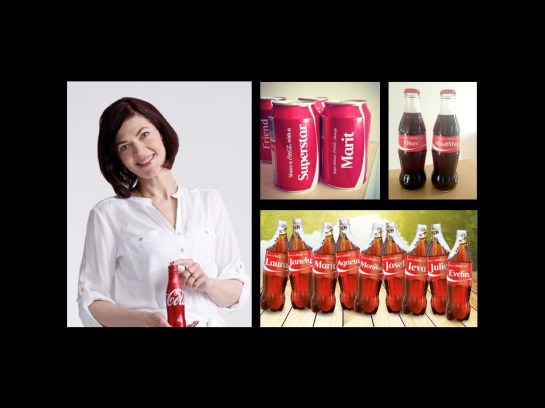
HP Barca Event Fotocollage Coke 2013.002

Case study: How to innovate a global brand

  • Share a Coca-Cola, Share the Best Summer Ever!
  • By Marit Kroon, Marketing Manager Central and Southern Europe, Coca-Cola

This summer will be unforgettable for millions of Coca-Cola fans in Europe as Coca-Cola invites consumers to engage with the brand in a new, exciting and very personal way. For the first time in Europe, we are replacing our iconic “Coca-Cola” script with 150 of the most popular consumer names in each market.

The idea is brought to life by challenging several rules and stereotypes in marketing, soft drinks, packaging and digital print industries. Over one billion cans and bottles of Coca- Cola, Coca-Cola Zero, and Coca-Cola light — including multi-packs — will carry the names, in a feat of system-wide logistics and hi-tech product personalisation.

In Europe it actually means covering over 30 markets with over 40 languages and culture groups. We have created over 10,000 artworks, featuring over 3,000 different names. For those who can’t find their names on a pack, the “Share a Coke” campaign is also brought to life online, where personalized virtual Coca-Cola cans can be created and shared with friends. Consumers will also be able to visit roadshows where they can use a customization kiosk to print their own name on a can. Using the power of people’s names and the joy of sharing in a playful and social way, the campaign inspires people to join new and existing friends, enjoying a “Coke moment” by sharing one together.

Launching the program with these amazing labels and strong marketing support after 18 months of hard work makes us feel very proud about changing the mind-set of hundreds of marketing, finance and packaging specialists, and challenging our suppliers to innovate together with us.

“Innovation is creativity that generates value. It is a mind-set driven by curiosity, crazy ideas and business skills that makes it all happen. Innovation is nota program that can be switched on and off.”

Marit Kroon, Marketing Manager Central & Southern Europe, Coca-Cola

NOTE: Please read as well our Value Marketing Check for additional information.

HP Barca Event Fotocollage 4 2013.004

Case study: How to enrich agencies creative approach:
All Hail the Digital Color Queen

This is the story of how HP Indigo technology enabled Pantone to celebrate the Diamond Jubilee with Her Majesty the Queen — by Blake Waters & Will Thacker, Creatives at Leo Burnett, London

Having a fun idea is only half the battle; realizing it is always the most difficult part. After sitting on one of their fun ideas for around two years – making a Pantone Swatch Book of the Queen, known for always wearing the color blue – Leo Burnett creative duo Will Thacker and Blake Waters seized their chance to make it real: The Queen’s Jubilee. Despite a few bumps along the way, ranging from seeking Buckingham Palace’s approval to meeting some ultra-tight deadlines, they were able to do just that – with a little help from HP digital printers.

See video documentation as well.

“Looking at what we have. And imagining what we could have. Thinking this is good. But it could be better. Squinting your eyes and seeing things that others don‘t. Turning the world sideways just so you can look at life from a different angle. That‘s innovation.”

Blake Waters, Creative, Leo Burnett

“Changing something for the better. The everlasting expedition for new ways to look, touch, even experience something. Innovation has the power to change opinions, and even lives.”

Will Thacker, Creative, Leo Burnett
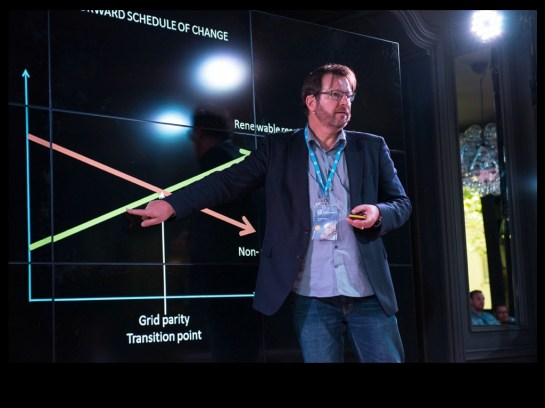
HP Barca Event Fotocollage 4 2013.005

Case study: How to change agencies behavior:
Sustainable Innovations in the Field of Production

By Steffen Gentis, Chief Production Officer, BBDO Germany

We are the lucky ones who get to experience the very brief and fortunate episode in human history known as the fossil-fuel economy. In the near future oil and energy supplies will not meet demand, which makes this is an opportunity for those who can change early.

But our assumptions often stand in the way of achieving such sustainable innovation. The way to sustainable innovation is by actually measuring – not just assuming. The interesting insight is all the other gre- at stuff that comes along with sustainable change.

“Innovation is about exploring ideas and inventing ways of adding value
in a better and sustainable manner. Innovation is an on-going process that demands initiative, ideas and an open attitude to change.“

Steffen Gentis, Chief Production Officer, BBDO Germany

HP Barca Event Fotocollage 4 2013.006

Case study: How to change agencies business model and strategy:
How Integration of Targeted Direct Mail WORKS

Intuitive Relevancy and Other Animals: Leveraging Psychology for Direct Marketing — by Richard Perry, Managing Partner, Founded

Personalisation is one thing, relevancy is everything. How we use consumer insight and buyer behaviour to guide consumers to purchase is vital in driving consumer transactions. Combining online and offline techniques allows marketers to create not only better experiences, but also much better results.

We showed you a recent campaign and ROI details from a ZipCar acquisition campaign. ZipCar is an hourly car club that was purchased by Avis for $500 million in January 2013.

“Innovation is a cultural outcome, not just a creative one.“

Richard Perry, Managing Partner, Founded
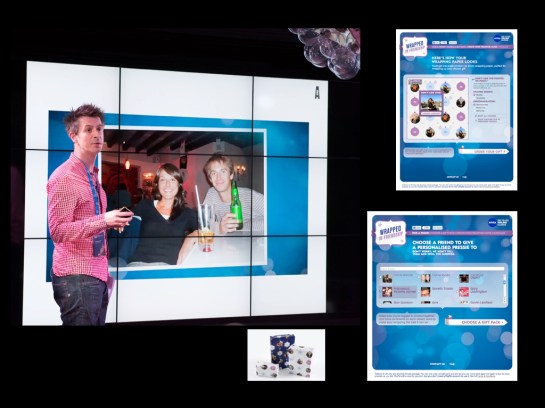
HP Barca Event Fotocollage 4 2013.007

Case study: How to lead agencies to hybrid communication (Social Media & Print)

The Power of Personalized Print in Social Media
By Alistair Campbell, Executive Creative Director, Agency Republic

While the rise of digital technology and social media may not have instantly seemed like an opportunity for the world of print, the ability to create one-off, personalized, printed products with very short lead times has opened up a whole new area of engagement for both digital agencies and printers alike. Doing so rewards fans of brands by putting something unique and tangible into their hands. And takes digital and social media far beyond the screen.

Best-in-class case: Nivea. Users could create their own wrapping paper to use Nivea products as a gift. See: video documentation as well.

“Innovation is being prepared to take a leap of faith.“

Alistair Campbell, Executive Creative Director, Agency Republic

HP Barca Event Fotocollage 4 2013.008

Case study: How to innovate print

No Limits: The Art of Premium Printing
By Tatjana Müksch, Marketing & Christopher C. Mickelthwate, CEO, dygy gmbH, Frankfurt am Main/Germany

One of the major changes the commercial print industry is currently facing stems from the evaluation of customer data and cross-media applications. Targeted, individualized and multilingual print runs of up to 100,000 are becoming more and more standard for medium-sized businesses and brands.

To meet their markets’ demands, digital processes are already the norm in the mass-mailing and photo-book print industries but premium and luxury brands must be persuaded to use digital print techniques.

Many premium brands desire and need to offer outstanding, highly-differentiated products. HP Indigo technology, with various possibilities of substrate choice and ennobling capabilities, allows them to combine traditional quality and innovation — giving them that „distinct taste“ the market longs for today. Transforming intangible customer data — gathered at diverse touch points of current premium brands — into tangible, individualized, high-quality prints is complex, fast and fascinating.

Therefore future commercial printers must become more of a consultant than a pure technician, functioning as a partner to agencies, marketers and producers. The impact of interdisciplinary teamwork within the planning and printing process does, by all means, result in great applications and innovative concepts.

“Traditionally, any innovation starts with a change of perspective. In the information era innovation is merely a technical term. Innovation takes place where engaged people use even the flimsiest, uncharted space of freedom they have to make new perspectives visible.“

Tatjana Müksch, Marketing, dygy gmbh

HP Barca Event Fotocollage 4 2013.010

Case studies by HP EMEA Graphic Arts Experience Center

HP shares unique applications from around the world, including L’Oréal, Heineken and Kimberly Clarke. — by Marcelo Akierman, HP

L’Oréal case study

“No tangles” is an important promise in the children’s hair care category. But to impart L’Oréal Kids’ shampoos with even more must-have appeal, the company wanted to redesign its labels in North America.

Partnering with Disney, L’Oréal produced limited edition, shrink-wrapped bottles with themes of newly released children’s movies. The only snarls in the project were ensuring the label colors and quality were top-notch, which flexible digital printing made possible. HP Indigo was the natural choice.

The Challenge

Provide L’Oréal Kids’ shampoo labels that stay up-to-date with the biggest children blockbusters. And do it quickly enough to meet the shelves in time and maintain the characters’ original colors.

The Strategy

L’Oréal turned to Sancoa International Company L.P. in Lumberton, NJ and its HP Indigo digital presses. HP digital presses are ideal for unique production demands.

The Results

“We thought digital would be too expensive for our long run lengths,” a L’Oréal representative said. “While there was a per unit price increase, when we did a cost/pricing analysis, the total system cost was better than traditional processes. What’s more, we got the quality we needed, and our lead time was cut dramatically, so we achieved faster delivery times to market.”

To leverage the possibilities of digital printing, L’Oréal extended the line to include a series of products with Car Story and Madagascar characters. They are also using a multi-channel marketing approach to boost interest in the shampoos. And they have set up a special website (www.lorealkids.com) where children can register for a sweepstakes and see a trailer from Toy Story.

“Innovation is about challenging the status quo to get a WOW effect out of it.”

Marcelo Akierman, HP

HP Barca Event Fotocollage 4 2013.011

Case studies by HP EMEA Graphic Arts Experience Center

No Limits: The Art of Sign and Display

HP presents graphic solutions power to unleash creativity and relevance in sign and display — with new opportunities and innovations for cutting-edge localized campaigns — by Simon Addinall, HP

The Challenge

– Connect with French drivers.
– Communicate benefits of Smart car’s

subcompact size.
– Reflect the spirit of the car: fun.
– Execute the campaign in 15 days.

The Strategy

– Create a series of outdoor versioned bus shelter signs that communicate with humor the problems related to the city, neighborhood or street in which they are displayed.

– By using an online app & SoMe outreach, enlist the community to contribute content for these versioned messages.

The Results

– Over 8,500 individualized posters in 10 bold colors placed in 26 cities

– Hundreds of press articles & TV appearances

– Expanded to include car wraps, retail window decals, print ads and user- generated content from a Facebook application

  • Numerous accolades for the campaign — Increased traffic at showrooms and on website

“Our customers never stop innovating. Neither do we.”

Simon Addinall, HP

Further Information: www.hp.com/go/discoverdigital
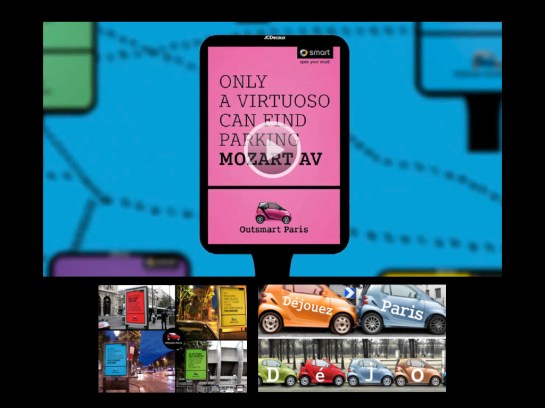
HP Barca Event Fotocollage 4 2013.012

Andreas Weber had a great interview with Mark Lawn, European Marketing Director, Professional Print Solutions, Canon Europe. It dates from end of 2011, but is still valid.

Andreas Weber: The printing industry is in a deep and ongoing crisis (affected as well by the bad economic situation).  What in your opinion are the opportunities for a turn-around?

Mark Lawn: The European graphic arts market remains a challenging environment for printing companies, whose key priorities should be to manage costs and cash and to automate technology for efficiency gains.  Nevertheless, I still see business opportunities for those companies that are also prepared to adopt a more entrepreneurial approach to new business.  In the same way that Canon looks to inspire and support our customers to make a leap to new areas of business they may not have previously considered,  senior management teams need to demonstrate strong business leadership and to have a vision for their company’s future growth, particularly through the addition of new services.  For example, for those companies that are redefining their businesses as ‘marketing communications’ service providers rather than ‘print’ service providers, the increasing adoption of a ‘multimedia’ or ‘crossmedia’ approach to content delivery for companies’ integrated marketing campaigns is proving to be a great opportunity.

Companies need to clarify exactly who they are going to target, how they are going to differentiate themselves and how they are going to add value. They should review their business plan to ensure it’s still in line with the development of their business. And if they don’t have a business plan, they need to write one.  It doesn’t have to be a complex document, but it should cover where the business is now, where the owners want to take it, how they are going to take it there and what they need to take it there.

I’d also urge printers to read the ten-point action plan that Professor Frank Romano laid out in the Canon Insight Report, The Redefinition of the Digital Printer, which was published last year.  One action he recommends is to “challenge the status quo” by investigating each print job for opportunities to add value. For example, a targeted direct mail piece may only partially be a printing job; it will also include database services, personalised URL and Internet services, and mailing services—three new areas for revenue enhancement.

Andreas Weber: Do you realize a gap between the excellent shape of print as an innovative media technology and the service level of the printing industry in general? Because most of the printers miss the possibility to make profit anymore.

I am wondering, how the innovation level and speed driven by a company like Canon could be covered by printers/Canon customers. Canon is offering ideal (state-of-the-art) solutions to make Print as Medium powerful and modern.  But coming down to the printer’s world, there seems to be an “innovation speed slow-down”…

Example: Two years ago Canon was pushing web-to-print. And Canon did that survey figuring out that most of the European printers don’t deal with web-to-print as line extension of their business model (and by the way: today, two years later we have still the same situation!).

Do we have a communication problem between printers and print buyers?  Are DMO-regions/countries in a better position than mature markets like Western Europe? Is there another innovation spirit in developing countries?

Mark Lawn: In relation to the life of the printing industry as a whole, digital printing has existed for a very short time.  Nevertheless, it’s clear that once an industry has been impacted by digital technology (e.g. photography) and the rapid pace of innovation it enables, it can be difficult to keep up with technological developments and the opportunities they create.  Acknowledging our responsibility to support our customers as much as we can, we’ve sought their views through a number of surveys.   Responding to their input, we have then developed a number of value-added services — Canon’s Insight Reports, our Essential Business Builder Program and our customer magazine, Think Digital — to try to ensure that our customers are as informed as they can be about industry trends and technologies, are aware of best practices, and are inspired to consider new directions in which to take their business.

If we take the example of web-to-print, potential users should always evaluate it properly to ensure that it is right for their business.  If it is only used as a delivery mechanism, its adoption is less likely to be successful.  If, however, it is fully integrated into the business, the technology can offer a wealth of opportunities to those print businesses looking for ways to add value to the print services that they offer their customers,

Andreas Weber: From your point of view: what are the key issues to successfully re-position print as a medium in cross-media scenarios?  Beyond technical aspects?

Means: What is the strength of print in the digital age related to the needs of corporate communication demands (by which is meant all the communication activities of a company: push and pull, internally and externally, including marketing communication, advertising, social media and crossmedia)?  A special focus is shareholder and financial community communication

Mark Lawn: I think that we need to continue to strongly promote print as a fundamental part of any cross media scenario – if print is omitted from the mix, the impact is likely to be less successful.  As the only medium to reach all five senses, print remains the most powerful and ideally complements the likes of online communications and telemarketing.  In fact, in the case of direct mail, research by the UK’s Direct Marketing Association shows that print’s effectiveness is growing: open rates for printed DM have increased from 88% to 91% since 2006, whereas email acquisition open rates have fallen from 21% to 11% since 2007.

Online media better meets a requirement for fast, direct information, but where a company needs to communicate a mass of information and complex messages, an appealing, well produced, printed document (e.g. a company’s annual report) is the superior vehicle and is likely to hold the reader’s attention for longer than its digital equivalent. Nevertheless, it’s also clear that, by taking a multi-channel approach that includes print, an organisation’s corporate communications will be more compelling and produce a higher response than by using any one medium on its own.

[German version published in Value Journal, autumn/winter 2011,
and Value iPad App, preview and download for free on Apple iTunes]

Watch as well the video conversation.
(Andreas Weber interviewing Mark Lawn)