Archive

Tag Archives: Marketing Communication

drupa Analyse Visuals ENG.001

Value Talk by Andreas Weber,
CEO Value Communication AG, Mainz
Photo/Graphics by Messe Düsseldorf
Painting of Johannes Gutenberg: Ying Lin-Sill, Mainz/Beijing


This report is important for you because it deals with crucial issues:

  • How to recognize relevant trends and developments at an early stage
  • How to change the public reception of the printing industry
  • How to move from old to new 


Introduction

In an email written on 24 October, 2010, Steve Jobs, legendary Apple CEO, put his finger on a crucial problem when he identified what he called the “innovation dilemma” and stated that adhering to old paradigms for too long can jeopardize entire companies. What does this imply for the traditional printing industry?  How can it make the leap from its established market into the new (digital) world? An exciting starting point for a new take on the next drupa trade show.

The dilemma: high innovative speed – middling adaptation rate

The innovation dilemma that bothered Steve Jobs at a time when Apple became one of the most valuable brands in the world, is already affecting the print industry – and its markets. Major flagship fairs such as the Print in Chicago and the IPEX, now in London, have fallen upon hard times. Fewer exhibitors, fewer visitors, less relevant public potential — despite the high innovative speed of the producers. The printing market and its customers seem reluctant to respond. Sluggish replacement investment and a general scepticism among German customers towards innovative products.  Messe Düsseldorf has therefore decided to explore new avenues in order to establish the drupa as the flagship fair for the global printing and paper industry. All the more reason to have a Value Talk in the interval between drupa 2012 and drupa 2016. Central question: Quo vadis, drupa?

“In turbulent times, a flagship fair like the drupa takes on a key role,“ Sabine Geldmann points out right at the start of our Value Talk. She was appointed drupa Director of Messe Düsseldorf at the beginning of 2012 and is responsible for the “Olympic Games of the printing and paper industry”. Her focus is not only on organising trade fairs, a skill which she learned from the bottom up. She also mines global visitor contacts and profiles for valuable market information. Since the beginning of 2014, information on global trends and intelligence on the industry are being documented by studies/reports. About 4,900 participants from three segments (Print Service Provider, Print Buyers, Suppliers) were selected, 2,600 of which are key executives from printing works, which is the main target group for now. The representative panel is comprised of members from 119 countries.


Bildschirmfoto 2014-04-16 um 16.46.46


Innovation is the key…
…and an important benefit for drupa preparations.

“As organisers of the drupa fair, our focus is on spotting new trends in order to identify solid quality developments on a global scale,“ Sabine Geldermann explains. The objective is not just to find a drupa concept and position that suits the market, but also to provide manufacturers with solid, topical facts, whether they attend as exhibitors or as visitors. The preliminaries were established in February 2014, when the drupa Global Trend Report was issued. Updates will be carried out at the end of every year until 2016. The Special Topical Focus will appear in the drupa Global Insights at six-monthly intervals. The results of these analyses will be widely distributed via digital channels such as social media, press mailing lists/specialist media, PDF summaries as web downloads and of course through word of mouth.

These trend studies and analyses are innovative because “by providing information they also allow additional in-depth analyses”, Sabine Geldermann explains. This is possible because of the unique data structures that distinguish different regions, countries, specific target group profiles, market segments and many more from each other.“ The main focus is on the situation in printing works.  Market trends can be identified and analysed with a quasi-microscopic view. National developments can be analysed in an international context – a major benefit as there are vast differences in the print business.

As expected, the results of the baseline measurement issued in the 1st drupa Global Trend Report are far from spectacular – apart from the prognosis that investments are on the increase. Many findings confirmed what was known already, be it from media reports or from several individual studies. However, Sabine Geldermann and her team are more interested in creating a complete picture from individual pieces of the puzzle and systematically updating this picture at regular intervals. With its sixty-year old tradition, the drupa provides sufficient material to act as a reliable market, economic and investment barometer – and deliver the latest trends in technology and application.

The agenda and activities of the drupa 2016 will be inspired by this exclusive compilation of market intelligence. “Because of structural changes and the ongoing market consolidation, we need to address not only our regular drupa audience but also find new target groups “, Sabine Geldermann explains. We need to act as a seismograph for these changes. In addition to printed publications, the digital communication channels provided by Messe Düsseldorf are of major importance for our publication efforts. The focus is on comprehensive interaction that yields measurable results after valid analysis. Because “we cannot know what we do not know”, the drupa needs to identify new target groups which are not or not fully informed about the technical benefits of current printing technology.


Bildschirmfoto 2014-04-16 um 16.46.03


The printing industry is facing one major challenge:
Lack of information 

Because the vast potential of printing technology is not known among key executives, it is not part of their “relevant set of options”. In fact, they often perceive the printing industry and printing works as anachronistic. There is a significant lack of knowledge among buyers and key executives from the marketing communication segment about the perfect interaction between printing, IT and web technology, (for example: the automated production of printed books from social media platforms). Only few people know that social media contents and printed media can be combined to create communication campaigns by means of digital printing.

Sabine Geldermann wants to change this by publicizing the relevant technical information in the drupa Global Insights Reports. Innovative application options for printed material in inter-media scenarios must be published and made popular in an informative manner: “There is a vast potential for innovation in printed communication. With new insights and information, we can determine how the printing segment is perceived“, Sabine Geldermann points out. These preliminary measures to make the drupa more relevant by inciting a cross-segmental discussion of new issues “beyond print” will substantially enhance to position of the drupa as an international flagship fair that acts as a beacon for the global market. Sabine Geldermann puts it in a nutshell: “We present the new technical options provided by the printing industry to a wider audience. There are so many innovative and important applications that involve printing technology which need to be pushed onto the international stage.”


Bildschirmfoto 2014-04-16 um 16.46.28


Exploring new avenues:
Communication on printing technology is as important as communication via print.

Would it not make sense to host a virtual drupa as an internet communication and market platform in addition to the real event? This question is of particular interest as every segment of the industry will benefit from innovations in the printing industry? There is much potential for optimisation in the printing industry and room for more communication – this is an excellent opportunity for the drupa! [See ValueCheck: Communication as a driving force for new business models].

Sabine Geldermann sees a special advantage in the fact that the products of the printing industry are widely used but also require a lot of information: printing works have an extremely heterogeneous customer base with very different target group profiles. The same applies to the service portfolio of printing works, which has to be highly innovative and specialised. The products of the printing industry will always be an indispensible and elementary part of our communication requirements, but printing service providers are no longer mere producers of printed matter, however they need to acquire better consultancy skills. Potential solutions include workflow architectures, variable data printing, finishing services, freight management/supply-chain services, response analysis and many more.


Bildschirmfoto 2014-04-16 um 16.45.42


The incredible service variety offered by the printing industry provides
major potential for the future!

Sabine Geldermann is not worried by the increasingly exacting requirements faced by her customers: “Promoting the variety of the printing industry provides an exciting range of options: there is an incredible range of communication services provided to all industrial segments by the printing industry, even beyond its value-added chain. The printing industry is by no means finished or one-dimensional; it is expanding into all different levels of day-to-day life and business.“ Messe Düsseldorf’s preparatory work in the run-up to the drupa 2016 focuses on relevant facts and information which will promote the industry and its services and improve its presence in the virtual market so that it can be found easily – everywhere in the world.

Sabine Geldermann explains the main objective of the drupa 2016 preparations: “We want to create publicity on the web by using devices such as blogs and effective tagging. This is the only way to draw the attention of new target groups to the important innovations provided by our exhibitors and their customers.“ A growing number of drupa exhibitors supports this approach to promote the awareness of the services provided by printing works among its customers. Agencies, marketing experts and brand companies are actually an important driving force and have to be involved more strongly. This means that all printing service providers that offer market-oriented, modern and networkable printing communication solutions must be easily found using Google. Descriptions and sampling of innovative applications during face-to-face presentations alone are not longer sufficient; the industry has to present or better still, permanently stage value enhancing factors and verifiable results in the media.


Our opinion 

Messe Düsseldorf has chosen a successful course which also benefits the printing industry: as flagship fair for the printing and paper industry, the drupa can only be successful and have a global effect if the issues and the exhibition agenda are perfectly synchronized with the specific situation of the visitors (and the exhibitors’ customers). The new trend analyses are an ideal communication tool for sustaining a qualified dialogue with market partners. Not only during the drupa but also in the run-up and in the wake of this major event!

One exciting challenge for the drupa 2016 is certainly its approach to the vast and ongoing structural changes in the printing market. After an extended pit stop, market leader Heidelberger Druckmaschinen will now present its new digital strategy. This will benefit the entire industry. [See Value Analysis on Heidelberg Digital Sneak Peek, April 2014]

The printing industry has to think far outside the box. Many new businesses and companies that moved into the field from a different segment, e.g. those who deal with high-performance inkjet and/or variable data printing for industrial production, with organics or 3D/4D printing, cannot be counted as part of the printing segment in the strictest sense. But it is important to note: Effective communication about printing issues is necessary and the innovation-driven business of printing service providers must be publicized in order to create sufficient demand.


Value New Years Event 2014 Key Visuals.001


At a glance:
drupa Global Trends – Results from February 2014

Despite national differences, the “drupa Global Trends Report” reveals substantial – and sometimes even surprising – trends and insights, which affect all economic regions and printing-related segments (publishing, packaging, commercial). As expected, the report confirmed the presumption that the global printing industry is still undergoing structural changes, which is documented by rising costs, price deterioration and shrinking margins. But even more significant are the study’s three central findings:

  • There are clear signals for an economic upturn: over the next twelve months, all areas of the global printing industry, be it commercial, publishing or packaging, will make substantial investments. In the industrialized nations, the driving factors for this investment are the need for more efficiency and the introduction of new services. In this area, the US printing industry seems to have a certain leadership role or acts as a model. In emerging nations however, the investments are driven by the order volume.
  • The printing industry is changing from a product- or technology-driven to a service-driven industry. The latest trends are new solutions and business models that accommodate customer requirements.
  • As expected, digital printing plays a major role in the technology mix that is used by the printing industry. A total of 65 % of all printing service providers operate conventional as well as digital production. More than 30 % of commercial printers generate one fourth of their profit margin with digital printing services. But conventional printing (especially sheet offset) remains to be an important cornerstone for the industry. This is reflected by the reported investment intentions: in 2014, a total of 29% of all printing service providers want to invest in the area of sheet offset.

Source and more information

Value Check Offer mit Logo.008

© 2014 by Value Communication AG, Mainz/Germany


 ValueCheck Audits: Fast-track your communication success


Kommunikation ist (k)eine Kunst.

Es klingt fast profan, ist es letztlich aber doch nicht: Kommunikation setzt Dinge in Bewegung. Und werthaltige Kommunikation stellt den nachhaltigen profitablen Geschäftsverlauf sicher. In unserem Marketing-getriebenen Digital-Zeitalter sind neue Marketing-Kommunikationskonzepte, -maßnahmen und -wege gefragt, die Innovationen in den Fokus stellen. Doch leicht gerät die Suche nach Innovation zur  “Jagd nach dem Goldenen Kalb”. Zu viele “Buzz Words” und dubioses Experten-Kauderwelsch schaffen eher Verwirrung als Ordnung.

Abhilfe tut not.


Die zentrale Frage lautet:
Wie kann man die Kommunikationsfähigkeit eines Unternehmens bewerten? 

Die Analyse und Bewertung der Kommunikationsfähigkeit einer Unternehmung ist für ein erfolgreiches Marketing eine Grundvoraussetzung, um profitable Geschäfte und prosperierendes Wachstum zu ermöglichen. Bislang erfolgt dies in der Praxis aber nicht. Getestet und analysiert wird vielmehr, welche Kommunikationsmaßnahmen bei Image-/Markenaufbau und -pflege sowie bei verkaufs- und absatzfördernden Kampagnen welche Effekte bringen. Für jeden Kommunikationskanal gibt es eigene, spezifisch ausgelegte Auswertungskriterien.

Wir wissen zudem durch aktuelle Forschungsergebnisse, dass Sonderwerbeformen, ›Special Effects‹ oder Crossmedia-Kampagnen in der sog. ›werblichen Kommunikation‹ stets mehr bringen, aber auch stets mehr kosten [vgl. u. a. Dr. Peter Haller, GfK: ›Building Best Brands‹, München 2009]. Die Frage nach der bestmöglichen Wirkung spezifischer Kommunikationsmaßnahmen beantwortet aber noch nicht die nach der Qualität der Kommunikationsfähigkeit eines Unternehmens. Hier sind ganz andere Faktoren und Einflussgrößen zu bewerten, die weit über das Spektrum der klassischen Werbewirkungsforschung oder von ›Media-Audits‹ hinausführen.


Werthaltigkeit mit System

Die Werthaltigkeit der Kommunikation muss durch systematische Erforschung, kontinuierliche qualitative Überwachung und die zentrale Steuerung der Geschäftskommunikation erfolgen. Innerhalb unserer Value-Communication-Methodik erfolgt dies durch ein ›Value Check Audit‹.

Hier wird zunächst per ›ValueCheck‹ ein Fragenkatalog abgearbeitet, der acht zentrale Themenbereiche umfasst, die jeweils mit Detail-Fragen unterfüttert werden und deren Beantwortung im ›Ja-Nein-Keine-Angaben‹-Rhythmus abgearbeitet werden. Die Ergebnisse werden im ›Value Score Index‹ dargestellt. Die Befragung wird vom Value-Auditor mit Unternehmensentscheidern innerhalb von 45 bis 90 Minuten durchgeführt. Die Auswertung ergibt schlüssige, konkrete Anhaltspunkte für die Verbesserungs- und Innovationsmöglichkeiten der Organisation und Strukturen, der Kommunikationsarchitektur, der Kommunikationsprozesse, der Kommunikationskanäle und -mittel. 


Value System Implementation

© 2014 by Value Communication AG, Mainz/Germany


Weiterer Schritt: Vom Audit zum Benchmark

In Value Profile-Workshops können die Ergebnisse vorgestellt, diskutiert und in Handlungsempfehlungen inklusive einer Roadmap umgesetzt werden. Auf dieser Basis ist eine ganzheitliche Bewertung der Kommunikationsfähigkeit möglich; regelmäßige Updates erlauben, Verbesserungen vorzunehmen.

Zweckdienlich ist es, die ValueCheck Audits auf Branchen und Wirtschaftsbereiche auszudehnen, um über Benchmark-Vergleiche die eigenen Fähigkeiten kritisch prüfen und optimieren zu können. Über ValueCheck und ValueProfile erfolgt die strategische Analyse, die im Ergebnis das Design einer neuen Kommunikationsarchitektur liefert. Die Performanz der Kommunikationsarchitektur hängt von der Güte des Value Scoutings ab, dass heisst dem Aufspüren geeigneter, relevanter Kommunikationsinnovationen, die kontinuierlich auf Basis von Wissensvermittlung mit Best-Practice-Auswertungen in der Value Academy darstellbar sind. Das Aufspüren, die Auswahl und die Implementierung von Kommunikationsinnovationen muss als iterativer Prozess verstanden werden, der durch die Value Audits auf seine Wertigkeit und Wirkung überprüft und permanent optimiert werden kann.


Bei Interesse steht Andreas Weber für Fragen und Anregungen zur Verfügung.

Kontakt:
a.weber(at)value-communication.com 


Hier bitte klicken für weitere Informationen (in englischer Sprache)!


Hinweis

Unser einzigartiges Value Academy-Programm bietet passende Wissenmodule, die in die Methodik der Value Audits inkl. Value Check einführen und ad hoc erste Ergebnisse liefern. 


Value Eco-System Value Check.002

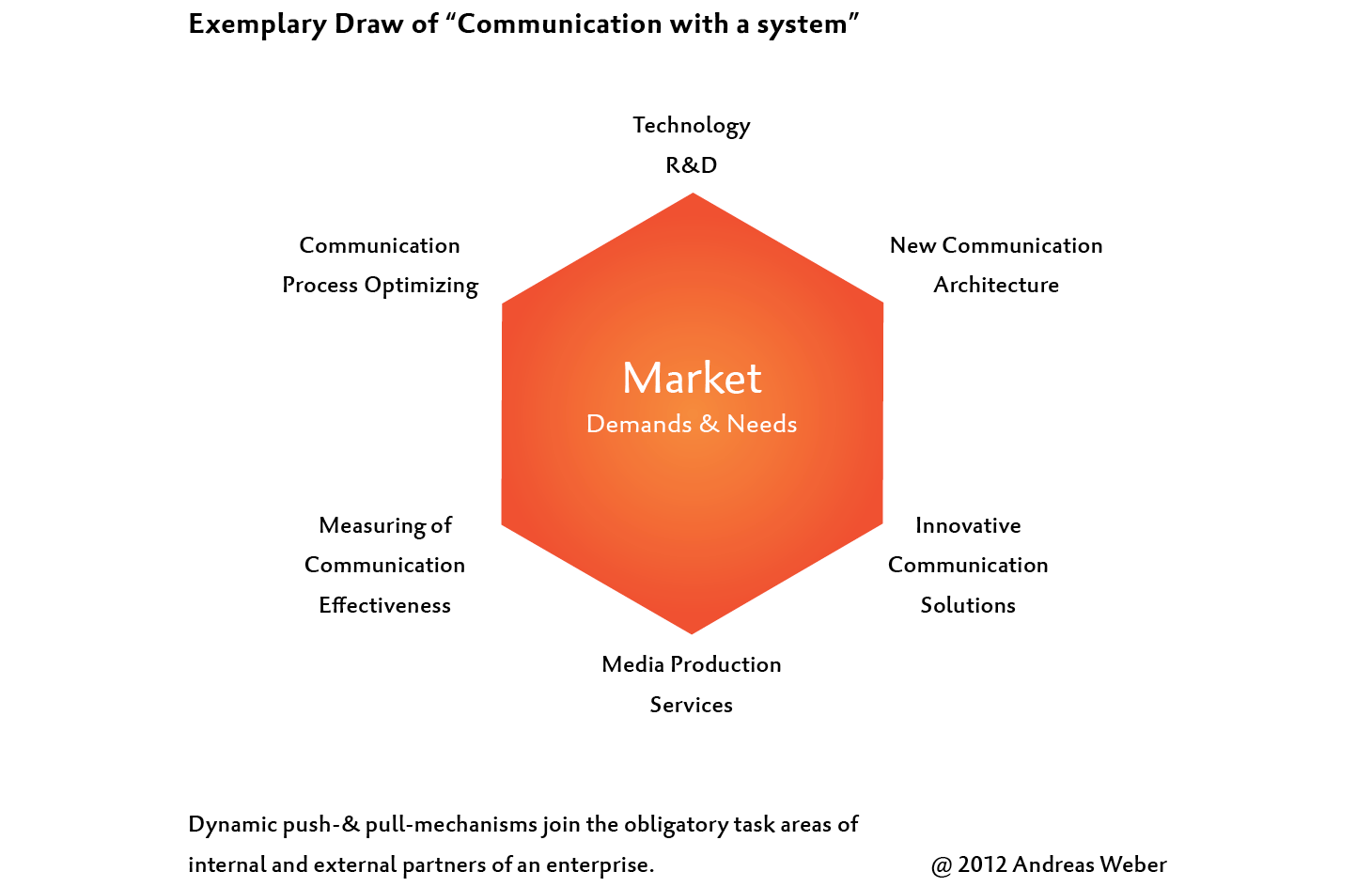
The basic principle of valuable graphic communication is the return to the values, characteristics and qualities of creative discourses within a community. The maxim is: communication is made by people for people that come together on the basis of their communicative abilities and go into exchange with each other.

If a community grows or splits, the communication must be supported through media, whereas personal media effects — supported form of lecturers, storyteller etc. — have the highest importance.

Media profits from the art of rhetoric in order to present thoughts/content through language, tone, facial expression and gestures to an audience (auditorium), to offer discussion and to convince with arguments, speech and objection. [Cf. Wilfried Stroh: “Die Macht der Rede”. Berlin 2009]. Decisive are the factors empathy, the interaction with the audience, the creative-dialectic impetus, as well as the readiness for discourse that requires the ability of criticism. Technical (devices, electronic) media as we know them from the era of the Industrial Age partially cover what personal media is able to offer: book and magazine printing, telegraph, radio and television enable the distribution of content on the basis of push mechanisms to draw attention, spread news or messages, or to entertain. Media offers received a stronger presence through this method. The options offered by technical media primarily target the achievement of a media echo.

This has the effect: Communication is mainly mistaken for response, as the philosopher Peter Sloterdijk determines. It is increasingly less about the mediation of content but more about its display. Because it seems to be no longer important what you say, but that you say something at all, the content turns into platitudes more and more, usually without saying anything relevant about the sender. The striving for response creates a rush that prevents anything sophisticated. Instead, we practise constant, meaningless contacting. The expansion of contacting through digital media had the effect that the contacts could no longer be filled with quality oriented content.

The conclusion:

Graphic Communications may not be reduced to staccato-like presented messages lacking context and any form of empathy, if value of the graphic communication is needed in a knowledge society.

Value EcoSystem Com with a system

Wenn der Druckereimarkt profitabel wachsen soll, braucht es ein neues Value Eco-System, wie die Grafik zeigt.

© 2013 Andreas Weber, Value Communication AG, Mainz. Infografik: Lidia Lukianova, SF Bay Area
Märkte und Kunden gemeinsam gewinnen!

In seiner vorangegangenen Exklusiv-Kolumnen beschäftigte sich Andreas Weber mit den durch Social Media hervorgerufenen Veränderungen. Nunmehr rückt die Situation im Druckereimarkt in den Fokus. Der Autor gilt international als renommierter Analyst für Unternehmenskommunikation und Innovationsexperte. Er arbeitet seit über drei Jahrzehnten in der Gutenberg-Stadt Mainz.

Seit Jahrhunderten stellt sich die Druckereibranche als eine der innovativsten und investitionsfreudigsten Wirtschaftszweige überhaupt dar. Das Prinzip, immer in Puncto Technikinnovation die Nase vor zu haben, war äußerst profitabel. Trotz nach wie vor hohem Innovationstempo und vielen (neuen) exzellenten Technik-Lieferanten hat die Druckereibranche aber an Boden verloren. Die Zahl der Druckereibetrieb geht drastisch zurück. Unklar ist, wie profitables Wachstum erzielt werden kann, um nicht nur per Preisnachlass zu retten, was mühsam aufgebaut wurde.

Die logisch wirkende Idee, um aus dem Dilemma dieser Branchenmisere herauszukommen: Im Druckereimarkt bietet sich das größte Potenzial für Digitaldruck. Doch lange haderten die Drucker mit dem Digitaldruck, weil die Qualität nicht stimmte. Der anfänglichen Skepsis im Druckereisektor folgten Angst und Ablehnung, geschürt durch die Marktmacht der neuen Player. Was wiederum neue Dienstleistungstypen und Quereinsteiger auf den Plan rief. 

Die meinten, mit rein digitalen Drucktechniken, die besser ins Internet-Zeitalter passen, den etablierten Druckereien den Garaus zu machen. Zudem finden sich immer mehr Digitaldrucksysteme bei (ehemaligen) Kunden der Druckereien; respektive Managed Print Services bilden eine neue Brücke zwischen Angebot und Nachfrage für Druckprodukte.

Umdenken empfiehlt sich

Die Drucktechnikentwicklung muss nüchtern und vor allem sehr differenziert betrachtet werden. Digitaldruck in all seinen Facetten war unbestritten das Top-Thema der letzten 20 Jahre und vor allem der Leitmesse drupa 2012. Aber nach wie vor werden über 80 Prozent aller weltweiten Druckprodukte in klassischen Drucktechniken hergestellt (allen voran im Offsetdruck). Der Offsetdruck hat sich durch die Digitaltechniken dynamisch weiterentwickelt, inklusive der Prozessoptimierung und Produktivität für Druckereibetriebe.

Evident ist: Druckereien leiden primär keinesfalls unter Finanzierungsproblemen; auf der drupa 2012 sind hohe Investitionen sowohl in Digitaldruck- als auch (wieder) in Offsetdrucktechniken geflossen. Hersteller wie auch Dienstleister versuchen vielmehr, probate Wege zu finden, um ihre Strategie zu überdenken und der Marktsituation anzupassen. Neue Perspektiven und Visionen fehlen aber und werden dringend benötigt.

Mein Tipp:

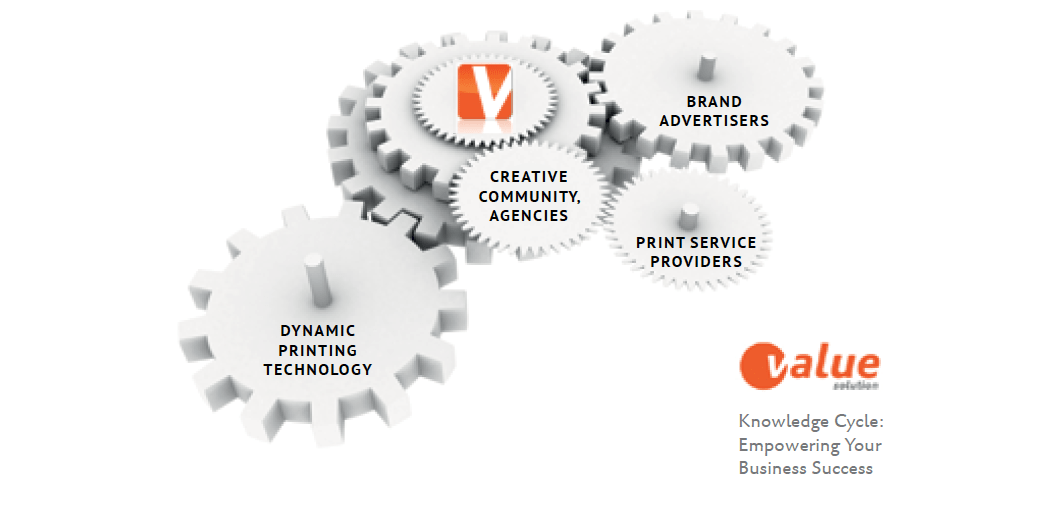
Druckereien profitieren von umfassenden Lösungspartnern, die nicht nur digitale Drucktechnik anbieten und installieren, sondern Mehrwert durch Kompetenz, Weitsicht, Kontinuität, Wissenstransfer und Services liefern. Druckereien müssen sich fragen, welche Hersteller das leisten können und welche nicht. Und daran ihre Strategie und Investitionsentscheidungen ausrichten. Dies gelingt optimal, wenn ein neues ›Eco System‹ etabliert wird, das Techniklieferant und Druckerei zu Partnern werden lässt, die gemeinsam für Märkte und Kunden Lösungen entwickeln, die Marken und Werbungtreibenden helfen, den individuell besten Kommunikationsmix zu finden und zu nutzen.

Kontakt: Andreas Weber

Twitter @zeitenwende007

HP Barca Event Fotocollage 4 2013.001

Illustration/Key visual by Lidia Lukianova, SF Bay Area
Text/editorial work by Andreas Weber, Value Communication AG

Ob Sie es glauben oder nicht, wir haben es geschafft! Es hat zwar fast 20 Jahre gedauert, aber nunmehr wurde ein wahrhaft historisches Momentum geschaffen. Zum aller ersten Mal bewies eine internationale Fach-Konferenz erfolgreich und sehr effektiv, wovon wir lange Zeit nur reden konnten: Die Vorzüge des Digitaldrucks sind auf breiter Front in der Marken- und Agenturwelt angekommen und spiegeln alle Dimensionen sowie Facetten der kreativen Kommunikation wieder.  

Was passiert ist: HP Graphic Arts und GWA als führender Verband von Kommunikationsagenturen präsentierten gemeinsam in Barcelona nachhaltige und Aufsehen erregende Innovationslösungen. Auf spezielle Einladung nahmen über 70 Führungskräfte und Kreative aus acht europäischen Ländern an der “No Limits: The Art of Innovation“-Tour teil.  Eine Reihe von erstklassigen Sprechern präsentierten erstklassige Fallstudien und teilten ihr profundes Wissen. „Wir freuen uns auf die Zusammenarbeit mit Ihnen, während Sie Techniken kennenlernen, die einen echten Mehrwert für Print-Kampagnen bieten“, erklärte Ronan Zioni, EMEA Marketing Director, HP GSB, Gastgeber der Veranstaltung, die Ende Mai 2013 stattfand.

Der neue Ansatz: HP und GWA stellten vor, wie Technologien, Kreativität und Marketingdenken miteinander verschmelzen können, um die Kunst der Innovation auf ein neues Niveau zu heben.

Der Status Quo: HP setzt zielstrebig auf die Innovation im Print. Mit dem (laut HP) breitesten Portfolio von Graphic Solutions, liefert HP Innovationen für alle Aspekte der gedruckten Kommunikation — von der einfachen Briefmarke bis hin zu Verpackungen. Digitaldruck (made by HP) fördere die Produktionseffizienz mit der „Nebenwirkung“ einer umfassenden Umweltfreundlichkeit. Das Ziel ist es, Inhalte zu personalisieren und innerhalb von durchgehend digitalen Medienproduktionsprozessen zu kommunizieren. Digitaldruck erlaube, die größtmögliche Flexibilität von Inhalten. Flexibilität von Inhalten bedeute Relevanz. Relevanz bedeute Ergebnisse.

Das neue Leistungsversprechen von Technik- und Produktseite aus muss lauten: Es bieten sich unbegrenzt viele Möglichkeiten für Marken, besser mit den Verbrauchern zu kommunizieren, wenn physische und digitale Welten aufeinander treffen. „Die hohe Kunst besteht darin, kreative Ideen und Innovation ohne Einschränkungen zu neuen hybriden Lösungen zu vereinen”, sagte Simon Addinall, HP GSB EMEA’s Market Development Manager, Planer und Manager des Events. Und führt weiter aus: „HP  und GWA kooperieren, um erstens neue kreative Gedanken zu wecken und zweitens die GWA Plattform Need for Brains ins Leben zu rufen“. Need for Brains wird vom GWA als eine erstklassige digitale Weiterbildungsplattform für die Agenturbranche ausgebaut werden.

HP Barca Event Fotocollage 4 2013.002

Die Herausforderung: Technologien und Wissen haben sich noch nie so schnell verändert wie heutzutage. Aus diesem Grund muss der Wissensaustausch intensiviert werden. Experten und Technologieführer wie HP teilen künftig ihr Wissen mit den Need for Brains-Teilnehmern aus GWA-Agenturen und präsentieren Innovationen in der Planung, Programmierung und Produktion von Werbemitteln und Kampagnen. Die Kenntnis der technologischen Veränderung und die Möglichkeit der Anwendung für das Geschäft ihrer Kunden sollen Werbeagenturen einen wichtigen Wettbewerbsvorteil bieten. 

Die wichtigsten Ergebnisse: Die Zukunft der Kommunikation wird aus hybrid Kommunikationskampagnen bestehen, immer in Kombination aus Social Media, Web-to-Print und Digitaldruck! In Barcelona wurden rund ein Dutzend hochaktuelle Fallbeispiele vorgestellt und besprochen. U. a von Top-Marken wie Coca-Cola, Nivea, Smart, L‘Oréal. Alistair Campbell, Executive Creative Director bei der Agentur Republic, London, traf es auf den Punkt durch die Beantwortung von Andreas Webers Frage “Ist das, worüber wir heute gesprochen haben schon ‘mainstream’?“. Alistair erklärte: “Nein, noch nicht. Aber es wird sehr bald der Fall sein “- Übrigens: Alistair weiß wovon er redet. Seine Agentur wurde in Großbritannien fünfmal in Serie als “Social Media Agency of the Year” ausgezeichnet.

Zusammenfassung einiger der vorgestellten Fallstudien
(in englischer Sprache)

SELECTED CASE STUDIES AND QUOTES

HP Barca Event Fotocollage Coke 2013.002

Case study: How to innovate a global brand

  • Share a Coca-Cola, Share the Best Summer Ever!
  • By Marit Kroon, Marketing Manager Central and Southern Europe, Coca-Cola

This summer will be unforgettable for millions of Coca-Cola fans in Europe as Coca-Cola invites consumers to engage with the brand in a new, exciting and very personal way. For the first time in Europe, we are replacing our iconic “Coca-Cola” script with 150 of the most popular consumer names in each market. The idea is brought to life by challenging several rules and stereotypes in marketing, soft drinks, packaging and digital print industries. Over one billion cans and bottles of Coca- Cola, Coca-Cola Zero, and Coca-Cola light — including multi-packs — will carry the names, in a feat of system-wide logistics and hi-tech product personalisation.

In Europe it actually means covering over 30 markets with over 40 languages and culture groups. We have created over 10,000 artworks, featuring over 3,000 different names. For those who can’t find their names on a pack, the “Share a Coke” campaign is also brought to life online, where personalized virtual Coca-Cola cans can be created and shared with friends. Consumers will also be able to visit roadshows where they can use a customization kiosk to print their own name on a can.

Using the power of people’s names and the joy of sharing in a playful and social way, the campaign inspires people to join new and existing friends, enjoying a “Coke moment” by sharing one together. Launching the program with these amazing labels and strong marketing support after 18 months of hard work makes us feel very proud about changing the mind-set of hundreds of marketing, finance and packaging specialists, and challenging our suppliers to innovate together with us.

“Innovation is creativity that generates value. It is a mind-set driven by curiosity, crazy ideas and business skills that makes it all happen. Innovation is nota program that can be switched on and off.” Marit KroonMarketing Manager Central & Southern Europe, Coca-Cola

NOTE: Please read as well our Value Marketing Check for additional information.

HP Barca Event Fotocollage 4 2013.004

Case study: How to enrich agencies creative approach


All Hail the Digital Color Queen

This is the story of how HP Indigo technology enabled Pantone to celebrate the Diamond Jubilee with Her Majesty the Queen — by Blake Waters & Will Thacker, Creatives at Leo Burnett, London

Having a fun idea is only half the battle; realizing it is always the most difficult part. After sitting on one of their fun ideas for around two years – making a Pantone Swatch Book of the Queen, known for always wearing the color blue – Leo Burnett creative duo Will Thacker and Blake Waters seized their chance to make it real: The Queen’s Jubilee. Despite a few bumps along the way, ranging from seeking Buckingham Palace’s approval to meeting some ultra-tight deadlines, they were able to do just that – with a little help from HP digital printers. See video documentation as well.

“Looking at what we have. And imagining what we could have. Thinking this is good. But it could be better. Squinting your eyes and seeing things that others don‘t. Turning the world sideways just so you can look at life from a different angle. That‘s innovation.” Blake WatersCreative, Leo Burnett

“Changing something for the better. The everlasting expedition for new ways to look, touch, even experience something. Innovation has the power to change opinions, and even lives.” Will ThackerCreative, Leo Burnett

Note: Leo Burnett was awarded at Cannes Lions Festival 2013 for the Pantone Swatch Book of the Queen. 

HP Barca Event Fotocollage 4 2013.005

Case study: How to change agencies behavior

Sustainable Innovations in the Field of Production
By Steffen Gentis, Chief Production Officer, BBDO Germany

We are the lucky ones who get to experience the very brief and fortunate episode in human history known as the fossil-fuel economy. In the near future oil and energy supplies will not meet demand, which makes this is an opportunity for those who can change early. But our assumptions often stand in the way of achieving such sustainable innovation. The way to sustainable innovation is by actually measuring – not just assuming. The interesting insight is all the other gre- at stuff that comes along with sustainable change.

“Innovation is about exploring ideas and inventing ways of adding value in a better and sustainable manner. Innovation is an on-going process that demands initiative, ideas and an open attitude to change.“ Steffen GentisChief Production Officer, BBDO Germany

HP Barca Event Fotocollage 4 2013.006

Case study: How to change agencies business model and strategy

How Integration of Targeted Direct Mail WORKS Intuitive Relevancy and Other Animals: Leveraging Psychology for Direct Marketing — by Richard Perry, Managing Partner, Founded

Personalisation is one thing, relevancy is everything. How we use consumer insight and buyer behaviour to guide consumers to purchase is vital in driving consumer transactions. Combining online and offline techniques allows marketers to create not only better experiences, but also much better results. We showed you a recent campaign and ROI details from a ZipCar acquisition campaign. ZipCar is an hourly car club that was purchased by Avis for $500 million in January 2013.

“Innovation is a cultural outcome, not just a creative one.“ Richard PerryManaging Partner, Founded

HP Barca Event Fotocollage 4 2013.007

Case study: How to lead agencies to hybrid communication (Social Media & Print)

The Power of Personalized Print in Social Media
By Alistair Campbell, Executive Creative Director, Agency Republic

While the rise of digital technology and social media may not have instantly seemed like an opportunity for the world of print, the ability to create one-off, personalized, printed products with very short lead times has opened up a whole new area of engagement for both digital agencies and printers alike. Doing so rewards fans of brands by putting something unique and tangible into their hands. And takes digital and social media far beyond the screen. Best-in-class case: Nivea. Users could create their own wrapping paper to use Nivea products as a gift. See: video documentation as well.

“Innovation is being prepared to take a leap of faith.“ Alistair CampbellExecutive Creative Director, Agency Republic

HP Barca Event Fotocollage 4 2013.008

Case study: How to innovate print No Limits

The Art of Premium Printing
By Tatjana Müksch, Marketing & Christopher C. Mickelthwate, CEO, dygy gmbH, Frankfurt am Main/Germany

One of the major changes the commercial print industry is currently facing stems from the evaluation of customer data and cross-media applications. Targeted, individualized and multilingual print runs of up to 100,000 are becoming more and more standard for medium-sized businesses and brands. To meet their markets’ demands, digital processes are already the norm in the mass-mailing and photo-book print industries but premium and luxury brands must be persuaded to use digital print techniques. Many premium brands desire and need to offer outstanding, highly-differentiated products.

HP Indigo technology, with various possibilities of substrate choice and ennobling capabilities, allows them to combine traditional quality and innovation — giving them that „distinct taste“ the market longs for today. Transforming intangible customer data — gathered at diverse touch points of current premium brands — into tangible, individualized, high-quality prints is complex, fast and fascinating. Therefore future commercial printers must become more of a consultant than a pure technician, functioning as a partner to agencies, marketers and producers. The impact of interdisciplinary teamwork within the planning and printing process does, by all means, result in great applications and innovative concepts.

“Traditionally, any innovation starts with a change of perspective. In the information era innovation is merely a technical term. Innovation takes place where engaged people use even the flimsiest, uncharted space of freedom they have to make new perspectives visible.“ Tatjana MükschMarketing, dygy gmbh

HP Barca Event Fotocollage 4 2013.010

Case studies by HP EMEA Graphic Arts Experience Center

HP shares unique applications from around the world, including L’Oréal, Heineken and Kimberly Clarke.
By Marcelo Akierman, HP
L’Oréal case study

“No tangles” is an important promise in the children’s hair care category. But to impart L’Oréal Kids’ shampoos with even more must-have appeal, the company wanted to redesign its labels in North America. Partnering with Disney, L’Oréal produced limited edition, shrink-wrapped bottles with themes of newly released children’s movies. The only snarls in the project were ensuring the label colors and quality were top-notch, which flexible digital printing made possible. HP Indigo was the natural choice.

The Challenge

Provide L’Oréal Kids’ shampoo labels that stay up-to-date with the biggest children blockbusters. And do it quickly enough to meet the shelves in time and maintain the characters’ original colors.

The Strategy

L’Oréal turned to Sancoa International Company L.P. in Lumberton, NJ and its HP Indigo digital presses. HP digital presses are ideal for unique production demands.

The Results

“We thought digital would be too expensive for our long run lengths,” a L’Oréal representative said. “While there was a per unit price increase, when we did a cost/pricing analysis, the total system cost was better than traditional processes. What’s more, we got the quality we needed, and our lead time was cut dramatically, so we achieved faster delivery times to market.” To leverage the possibilities of digital printing, L’Oréal extended the line to include a series of products with Car Story and Madagascar characters. They are also using a multi-channel marketing approach to boost interest in the shampoos. And they have set up a special website (www.lorealkids.com) where children can register for a sweepstakes and see a trailer from Toy Story.

“Innovation is about challenging the status quo to get a WOW effect out of it.” Marcelo AkiermanHP

HP Barca Event Fotocollage 4 2013.011

Case studies by HP EMEA Graphic Arts Experience Center

No Limits: The Art of Sign and Display HP presents graphic solutions power to unleash creativity and relevance in sign and display — with new opportunities and innovations for cutting-edge localized campaigns.
By Simon Addinall, HP

The Challenge

– Connect with French drivers.
– Communicate benefits of Smart car’s subcompact size.
– Reflect the spirit of the car: fun.
– Execute the campaign in 15 days.

The Strategy
– Create a series of outdoor versioned bus shelter signs that communicate with humor the problems related to the city, neighborhood or street in which they are displayed.
– By using an online app & SoMe outreach, enlist the community to contribute content for these versioned messages.

The Results
– Over 8,500 individualized posters in 10 bold colors placed in 26 cities
– Hundreds of press articles & TV appearances
– Expanded to include car wraps, retail window decals, print ads and user-generated content from a Facebook application
– Numerous accolades for the campaign
– Increased traffic at showrooms and on website

“Our customers never stop innovating. Neither do we.” Simon AddinallHP

Further Information: www.hp.com/go/discoverdigital

HP Barca Event Fotocollage 4 2013.012

HP Barca Event Fotocollage 4 2013.001

Illustration/Key visual by Lidia Lukianova, SF Bay Area
Text/editorial work by Andreas Weber, Value Communication AG

Believe it or not: We made it! It took almost 20 years. But now we touched a historical momentum. For the very first time, an international conference ended successful and highly effective to demonstrate the fully impact of state-of-the-art digital printing technologies on all dimension of creative communication services. 

What happened: HP Graphic Arts and GWA as Europe’s leading association of communication agencies showcased in Barcelona the road to sustainable innovation. By invitation only, 70+ executives and creatives from eight european countries joined the ”No Limits: The Art of Innovation“–tour to Barcelona. A range of first class speakers presented first class case studies and shared their insights and knowledge.

The approach: HP and GWA shared with us how technology, creativity and marketing brains fuse together to drive the art of innovation. The only limit: Attendee’s imagination!

The status quo: HP is committed to innovating every day. With the broadest portfolio of graphic solutions, HP delivers print innovation in all aspects of print, from postage stamps to building wraps. Printing digitally both drives production efficiency with added benefits for the environment and allows us to customize content and interact with other digital medias. Digital print means flexibility of content; flexibility of content means relevance; relevance means results. There are endless possibilities for brands to better connect with consumers where physical and digital worlds meet.

”The Art of Innovation day is about sharing ideas and stimulating innovation. Which is why we brought you together with industry leaders who are actually making things happen“, said Simon Addinall, HP GSB EMEA’s market development manager, who planned and managed the event.


HP Barca Event Fotocollage 4 2013.002

The challenge: Technology and knowledge has never changed faster than it is today. GWA therefore developed the online education program, Need for Brains. Experts and technology leaders like HP share their knowledge with Need for Brains scholars and present innovations in planning, programming and producing advertising material. Knowing the technological changes and using them for their clients ́ business will be the major competitive advantage for advertising agencies. 

The main results: In fact, the future of communication campaigns will be hybrid, always combining Social Media and Digital Print! — Alistair Campbell, Executive Creative Director at Agency Republic, London, hit the point by answering Andreas Weber’s question ”Is what we talked about today already mainstream?“. Alistair stated: ”No, not yet. But it will be quite soon!“ — By the way: Alistair is smart enough to know what he is talking about. Agency Republic was awarded five times in series as the „Social Media Agency of the Year“ in the UK.

SELECTED CASE STUDIES AND QUOTES

HP Barca Event Fotocollage Coke 2013.002

Case study: How to innovate a global brand

  • Share a Coca-Cola, Share the Best Summer Ever!
  • By Marit Kroon, Marketing Manager Central and Southern Europe, Coca-Cola

This summer will be unforgettable for millions of Coca-Cola fans in Europe as Coca-Cola invites consumers to engage with the brand in a new, exciting and very personal way. For the first time in Europe, we are replacing our iconic “Coca-Cola” script with 150 of the most popular consumer names in each market.

The idea is brought to life by challenging several rules and stereotypes in marketing, soft drinks, packaging and digital print industries. Over one billion cans and bottles of Coca- Cola, Coca-Cola Zero, and Coca-Cola light — including multi-packs — will carry the names, in a feat of system-wide logistics and hi-tech product personalisation.

In Europe it actually means covering over 30 markets with over 40 languages and culture groups. We have created over 10,000 artworks, featuring over 3,000 different names. For those who can’t find their names on a pack, the “Share a Coke” campaign is also brought to life online, where personalized virtual Coca-Cola cans can be created and shared with friends. Consumers will also be able to visit roadshows where they can use a customization kiosk to print their own name on a can. Using the power of people’s names and the joy of sharing in a playful and social way, the campaign inspires people to join new and existing friends, enjoying a “Coke moment” by sharing one together.

Launching the program with these amazing labels and strong marketing support after 18 months of hard work makes us feel very proud about changing the mind-set of hundreds of marketing, finance and packaging specialists, and challenging our suppliers to innovate together with us.

“Innovation is creativity that generates value. It is a mind-set driven by curiosity, crazy ideas and business skills that makes it all happen. Innovation is nota program that can be switched on and off.”

Marit Kroon, Marketing Manager Central & Southern Europe, Coca-Cola

NOTE: Please read as well our Value Marketing Check for additional information.

HP Barca Event Fotocollage 4 2013.004

Case study: How to enrich agencies creative approach:
All Hail the Digital Color Queen

This is the story of how HP Indigo technology enabled Pantone to celebrate the Diamond Jubilee with Her Majesty the Queen — by Blake Waters & Will Thacker, Creatives at Leo Burnett, London

Having a fun idea is only half the battle; realizing it is always the most difficult part. After sitting on one of their fun ideas for around two years – making a Pantone Swatch Book of the Queen, known for always wearing the color blue – Leo Burnett creative duo Will Thacker and Blake Waters seized their chance to make it real: The Queen’s Jubilee. Despite a few bumps along the way, ranging from seeking Buckingham Palace’s approval to meeting some ultra-tight deadlines, they were able to do just that – with a little help from HP digital printers.

See video documentation as well.

“Looking at what we have. And imagining what we could have. Thinking this is good. But it could be better. Squinting your eyes and seeing things that others don‘t. Turning the world sideways just so you can look at life from a different angle. That‘s innovation.”

Blake Waters, Creative, Leo Burnett

“Changing something for the better. The everlasting expedition for new ways to look, touch, even experience something. Innovation has the power to change opinions, and even lives.”

Will Thacker, Creative, Leo Burnett

HP Barca Event Fotocollage 4 2013.005

Case study: How to change agencies behavior:
Sustainable Innovations in the Field of Production

By Steffen Gentis, Chief Production Officer, BBDO Germany

We are the lucky ones who get to experience the very brief and fortunate episode in human history known as the fossil-fuel economy. In the near future oil and energy supplies will not meet demand, which makes this is an opportunity for those who can change early.

But our assumptions often stand in the way of achieving such sustainable innovation. The way to sustainable innovation is by actually measuring – not just assuming. The interesting insight is all the other gre- at stuff that comes along with sustainable change.

“Innovation is about exploring ideas and inventing ways of adding value
in a better and sustainable manner. Innovation is an on-going process that demands initiative, ideas and an open attitude to change.“

Steffen Gentis, Chief Production Officer, BBDO Germany

HP Barca Event Fotocollage 4 2013.006

Case study: How to change agencies business model and strategy:
How Integration of Targeted Direct Mail WORKS

Intuitive Relevancy and Other Animals: Leveraging Psychology for Direct Marketing — by Richard Perry, Managing Partner, Founded

Personalisation is one thing, relevancy is everything. How we use consumer insight and buyer behaviour to guide consumers to purchase is vital in driving consumer transactions. Combining online and offline techniques allows marketers to create not only better experiences, but also much better results.

We showed you a recent campaign and ROI details from a ZipCar acquisition campaign. ZipCar is an hourly car club that was purchased by Avis for $500 million in January 2013.

“Innovation is a cultural outcome, not just a creative one.“

Richard Perry, Managing Partner, Founded

HP Barca Event Fotocollage 4 2013.007

Case study: How to lead agencies to hybrid communication (Social Media & Print)

The Power of Personalized Print in Social Media
By Alistair Campbell, Executive Creative Director, Agency Republic

While the rise of digital technology and social media may not have instantly seemed like an opportunity for the world of print, the ability to create one-off, personalized, printed products with very short lead times has opened up a whole new area of engagement for both digital agencies and printers alike. Doing so rewards fans of brands by putting something unique and tangible into their hands. And takes digital and social media far beyond the screen.

Best-in-class case: Nivea. Users could create their own wrapping paper to use Nivea products as a gift. See: video documentation as well.

“Innovation is being prepared to take a leap of faith.“

Alistair Campbell, Executive Creative Director, Agency Republic

HP Barca Event Fotocollage 4 2013.008

Case study: How to innovate print

No Limits: The Art of Premium Printing
By Tatjana Müksch, Marketing & Christopher C. Mickelthwate, CEO, dygy gmbH, Frankfurt am Main/Germany

One of the major changes the commercial print industry is currently facing stems from the evaluation of customer data and cross-media applications. Targeted, individualized and multilingual print runs of up to 100,000 are becoming more and more standard for medium-sized businesses and brands.

To meet their markets’ demands, digital processes are already the norm in the mass-mailing and photo-book print industries but premium and luxury brands must be persuaded to use digital print techniques.

Many premium brands desire and need to offer outstanding, highly-differentiated products. HP Indigo technology, with various possibilities of substrate choice and ennobling capabilities, allows them to combine traditional quality and innovation — giving them that „distinct taste“ the market longs for today. Transforming intangible customer data — gathered at diverse touch points of current premium brands — into tangible, individualized, high-quality prints is complex, fast and fascinating.

Therefore future commercial printers must become more of a consultant than a pure technician, functioning as a partner to agencies, marketers and producers. The impact of interdisciplinary teamwork within the planning and printing process does, by all means, result in great applications and innovative concepts.

“Traditionally, any innovation starts with a change of perspective. In the information era innovation is merely a technical term. Innovation takes place where engaged people use even the flimsiest, uncharted space of freedom they have to make new perspectives visible.“

Tatjana Müksch, Marketing, dygy gmbh

HP Barca Event Fotocollage 4 2013.010

Case studies by HP EMEA Graphic Arts Experience Center

HP shares unique applications from around the world, including L’Oréal, Heineken and Kimberly Clarke. — by Marcelo Akierman, HP

L’Oréal case study

“No tangles” is an important promise in the children’s hair care category. But to impart L’Oréal Kids’ shampoos with even more must-have appeal, the company wanted to redesign its labels in North America.

Partnering with Disney, L’Oréal produced limited edition, shrink-wrapped bottles with themes of newly released children’s movies. The only snarls in the project were ensuring the label colors and quality were top-notch, which flexible digital printing made possible. HP Indigo was the natural choice.

The Challenge

Provide L’Oréal Kids’ shampoo labels that stay up-to-date with the biggest children blockbusters. And do it quickly enough to meet the shelves in time and maintain the characters’ original colors.

The Strategy

L’Oréal turned to Sancoa International Company L.P. in Lumberton, NJ and its HP Indigo digital presses. HP digital presses are ideal for unique production demands.

The Results

“We thought digital would be too expensive for our long run lengths,” a L’Oréal representative said. “While there was a per unit price increase, when we did a cost/pricing analysis, the total system cost was better than traditional processes. What’s more, we got the quality we needed, and our lead time was cut dramatically, so we achieved faster delivery times to market.”

To leverage the possibilities of digital printing, L’Oréal extended the line to include a series of products with Car Story and Madagascar characters. They are also using a multi-channel marketing approach to boost interest in the shampoos. And they have set up a special website (www.lorealkids.com) where children can register for a sweepstakes and see a trailer from Toy Story.

“Innovation is about challenging the status quo to get a WOW effect out of it.”

Marcelo Akierman, HP

HP Barca Event Fotocollage 4 2013.011

Case studies by HP EMEA Graphic Arts Experience Center

No Limits: The Art of Sign and Display

HP presents graphic solutions power to unleash creativity and relevance in sign and display — with new opportunities and innovations for cutting-edge localized campaigns — by Simon Addinall, HP

The Challenge

– Connect with French drivers.
– Communicate benefits of Smart car’s

subcompact size.
– Reflect the spirit of the car: fun.
– Execute the campaign in 15 days.

The Strategy

– Create a series of outdoor versioned bus shelter signs that communicate with humor the problems related to the city, neighborhood or street in which they are displayed.

– By using an online app & SoMe outreach, enlist the community to contribute content for these versioned messages.

The Results

– Over 8,500 individualized posters in 10 bold colors placed in 26 cities

– Hundreds of press articles & TV appearances

– Expanded to include car wraps, retail window decals, print ads and user- generated content from a Facebook application

  • Numerous accolades for the campaign — Increased traffic at showrooms and on website

“Our customers never stop innovating. Neither do we.”

Simon Addinall, HP

Further Information: www.hp.com/go/discoverdigital

HP Barca Event Fotocollage 4 2013.012

Bildschirmfoto 2013-06-10 um 15.51.14

Von Jenny Krepp,
Value Marketing Fellow

Something old: Um den Unternehmensverlauf erfolgreich zu gestalten, muss man die Werthaltigkeit des Produktes und der Services über die Marketing-Kommunikation des Unternehmens umfassend und jederzeit erkennen können. Denn nur ein werthaltiges kommuniziertes Produkt schafft einem Unternehmen einen nachhaltigen Wettbewerbsvorteil gegenüber seinen Konkurrenten.

Something new: Die Value Communication AG hat drei Faktoren identifiziert, die nicht nur den Wert eines Produktes hervorheben, sondern auch eine Verbindung zwischen den Kernelement von Produkten und Services herstellt. Diese Elemente sind Teil des Value Eco-Systems.

Das Value Eco-System skizziert die wesentlichen Faktoren, die notwendig sind, um wertvolle Kommunikation zu schaffen. Es ist wichtig, zu überlegen, was stärkt die Kommunikation von Mensch-zu-Mensch und macht sie bedeutend. Dies muss in jede Form der medialen Kommunikation und Kommunikations-Prozesse übertragen werden.

Let’s consider: 

Wir brauchen: Gespräche, Resonanz auf Diskussionen, Dialoge, Diskurse und Interaktionen.

• Wir müssen innovative Technik verstehen, um Innovation in relevante Marketing Kommunikation zu übertragen.

• Wir brauchen nachhaltige Sinnhaftigkeit bei was wir tun und wie wir kommunizieren.

Let’s illustrate: 

#Coca-Cola — Das Unternehmen The Coca-Cola Company ist über hundert Jahre alt und hat einen phänomenalen Bekanntheitsgrad von über 99 Prozent weltweit. Im Frühsommer 2013 präsentierte Coca-Cola neue Flaschen in 32 Ländern Europas, auf denen das berühmte ‘red label’ mit den meist verwendeten 150 Vornamen der einzelnen Länder bedruckt ist. Obwohl die Idee der Individualisierung von Produktverpackungen in der Branche der Fast Moving Consumer Goods nicht neu ist und von Coca-Cola in Australien und Neuseeland in 2011/2012 schon durchgeführt wurde, nimmt die neue Kampagne von Coca Cola ein unglaubliches Ausmaß an. Letztendlich werden innerhalb kurzer Zeit hunderte Millionen Etiketten im Digitaldruck produziert.

Value Communication EcoValue Chart

Der Value Eco System Check & Coca-Cola:

Dialektik: Durch die Individualisierung und personalisierte Erscheinungsform des Produkts interagiert Coca-Cola aufs Persönlichste mit den Verbrauchern. Via Facebook sind Unternehmen wie Coca-Cola in der Lage, in einen Dialog mit den Verbrauchern zu treten und haben die Möglichkeit auf Feedback zu reagieren. “Für diejenigen, die ihren Namen nicht auf einem Etikett finden können, wird die Coke-Kampagne auch online zum Leben erweckt, wo personalisierte, virtuell kreierte Coca-Cola-Dosen erstellt und mit Freunden geteilt werden können. Die Verbraucher werden auch auf Roadshows die Möglichkeit haben, wo sie Automaten nutzen können, ihren eigenen Namen auf eine Dose drucken zu lassen”, bestätigt Marit Kroon, Coca-Cola Marketing Managerin für Zentral-und Südeuropa. Dieses Szenario ist eine klassische Win-Win-Situation für beide Parteien, Marke und Konsument.

Innovatik: Der innovative Aspekt der neuen personalisierten Coca-Cola Etiketten  liegt in dem enormen Arbeitsaufwand den die Firma für diese Kampagne investieren muss. Es werden Regierungsdokumente benötigt, die systematisch analysiert wurden, um die gängigsten 150 Vornamen jedes Landes auszuwählen. Je nach Land und Ort war die Einsicht und Auffindbarkeit der benötigten Dokumente eine anspruchsvolle und zeitintensive Aufgabe für Coca-Cola. Hinter der technischen Umsetzung, hunderte Millionen von Etiketten digital so genau und so schnell wie möglich zu drucken, setzte Coca-Cola auf HP GSB als Partner.

Hermeneutik: Über die Sinnhaftigkeit von Coca-Cola lässt sich sicher diskutieren. Es kann argumentiert werden dass eine Cola nicht die gesündeste Wahl eines Getränkes ist. Allerdings genießen viele Menschen den Geschmack und das Gefühl, welches Cola bei Ihnen auslöst. Aus der Sicht von Coca-Cola steckt die Sinnhaftigkeit hinter der neuen Kampagne darin, die Kunden noch enger an das Produkt zu binden und mit ihnen in einen Dialog zu treten.

Value Eco-System Check –– Resultat:

Coca-Cola besteht den Value Eco-System-Check mit Bravour. Das Unternehmen macht einen großen Schritt nach vorne und übernimmt eine Führungsrolle was das Thema werthaltige Marketing-Kommunikation angeht.

Bildschirmfoto 2013-06-10 um 15.51.14

By Jenny Krepp
Value Marketing Fellow


Something old: To be a successful company, you need a product that is valuable to its consumers. The value of a product plays a core part in the sustainable competitive advantage which a company strives to achieve over its competitors.

Something new: The Value Communication AG not only identifies three factors that are core elements of what makes a product valuable, but also connects them. These elements are part of the Value Eco System.

The Value Eco System outlines the essential factors that are necessary to create valuable communication. It is critical to consider what makes the communication from human-to-human important. This can be compared and transferred to every form of media communication and other communication processes.

Let’s consider: 

We need: discussions, resonance on discussions, dialogues, discourses and interactions.

We need to understand innovative technology to transfer innovation into relevant marketing communication.

We need a sustainable sense of purpose of what we do, about what, and how we communicate.


Value Communication EcoValue Chart

Graphic by Lidia Lukianova, SF Bay Area, CA  

Let’s illustrate: 

Coca-Cola – The Coca-Cola Company is over one hundred years old and has a phenomenal brand awareness of over 99% worldwide. A few weeks ago, Coca-Cola introduced new bottles featuring the most common 150 first names of selected countries across Europe on its famous ‘red label’. While the idea of personalising a product is not new in the industry of fast moving consumer goods and has been done by Coca-Cola in Australia and New Zealand in 2011/2012, it has never been done with this kind of magnitude.

The Value Eco System Check & Coca-Cola:

Dialectic: Through the individualisation and personalisation of the product, Coca-Cola interacts with its consumers. Also, via Facebook companies like Coca-Cola are able to partake in a dialogue with its consumers and react on feedback. “For those who can’t find their names on a pack, the ‘Share a Coke’ campaign is also brought to life online, where, personalised virtual Coca-Cola cans can be created and shared with friends. Consumers will also be able to visit roadshows where they can use a customisation kiosk to print their own name on a can” which Marit Kroon, Coca-Cola Marketing Manager Central and Southern Europe states. This scenario is a classical win-win situation for both parties, brand and consumer.

Innovatic: The innovative aspect behind Coca-Cola’s new personalised printed labels lies in the work input executed by the company. Government records needed to be systematically analysed to select the most common 150 first names of each country. Depending on the country and the location of the records, this was a challenging task for Coca-Cola. Furthermore, the technical conversion to print millions of labels digitally as fast and as accurately as possible had to be solved by Coca-Cola and their partner HP Graphic Solution Busienss.

Hermeneutic: The sense of purpose of Coca-Cola is relatively debatable. It can be argued that a Coke is not your healthiest choice of a drink. However, many people enjoy the taste and the feeling it triggers. From Coca-Cola’s point of view, the sense of purpose of its new packing campaign is to bind the customer to the product.

Value Eco-System Check – Result: 

Coca-Cola has achieved the desired result. For the company, it is a great step forward to become a valuable marketing communication leader.

© 2014 by Andreas Weber, Value Communication AG, Mainz/Germany


As a suggestion

1. Rethink. The technology development advances us by taking us back to the origin of valuable communication.

2. Rate differently. Service providers or mediators in communication work are less relevant than creative innovation partners with Smart Technology competence in order to define and establish a new communication understanding in the team.

3. Rebalance. Technology ignorance is just as fatal as technology infatuation.

4. Experiment without inhibitions. Find ways and options of being able to consistently have a dialogue about the value of your relationships with customer and partners.

5. Act differently. Communication with a system makes the relevance, attractiveness, and consistent presence of mutual content the key criteria per personal and economic success.

6. Network correctly. Knowledge work profits from the striving or valuable communication and networking.

7. Philosophise. Descartes’ principle that made clarity and sophistication of thinking the maxim needs an “Update” as a contemporary version to flee from the claws of a pseudo pluralism. Suggestion: The “Cogito ergo sum” (“I think/doubt, therefore I am”) changes into “Communico ergo sumus” (“I communicate, therefore we are”).


++++++++++++++++++++++

About ValueCheck! and how it works

ValueCheck! is a unique approach. It unifies Communication, art and culture in three steps via Analysis, Audits and Coaching. 

Our POV: It’s time for a disruptive approach via ValueCheck!: The performance promise of Value Communication is “connect innovation to profit”. In order to realize this promise, a questionnaire including eight different parts is organized so that customers get an opportunity to check out their companies’ marketing communication level by answering ValueCheck questions.

After receiving answers, Value Communication promises to provide customers with the results based on Value Score Index. In this way, customers become more aware of their tendencies and inadequacies on track of making benefits in the market. They get a chance to increase the effectiveness of all communication activities with regard to the success of their companies.

Your benefits

• ValueCheck! is something like a fitness check-up to be prepared for The Age of the Customer.
• ValueCheck! delivers orientation how to optimize all dimensions of your internal and external business communication success.
• ValueCheck! guides you through the digital world to accelerate your profitable growth.

You want to check it out?

Just send us an email!
Or contact us via Facebook or Twitter!

a.weber{at)value-communication.com

https://www.facebook.com/ValueCommunicationAG

@ValueCommAG

More Information about Value Communication
http://valuetrendradar.com/about/